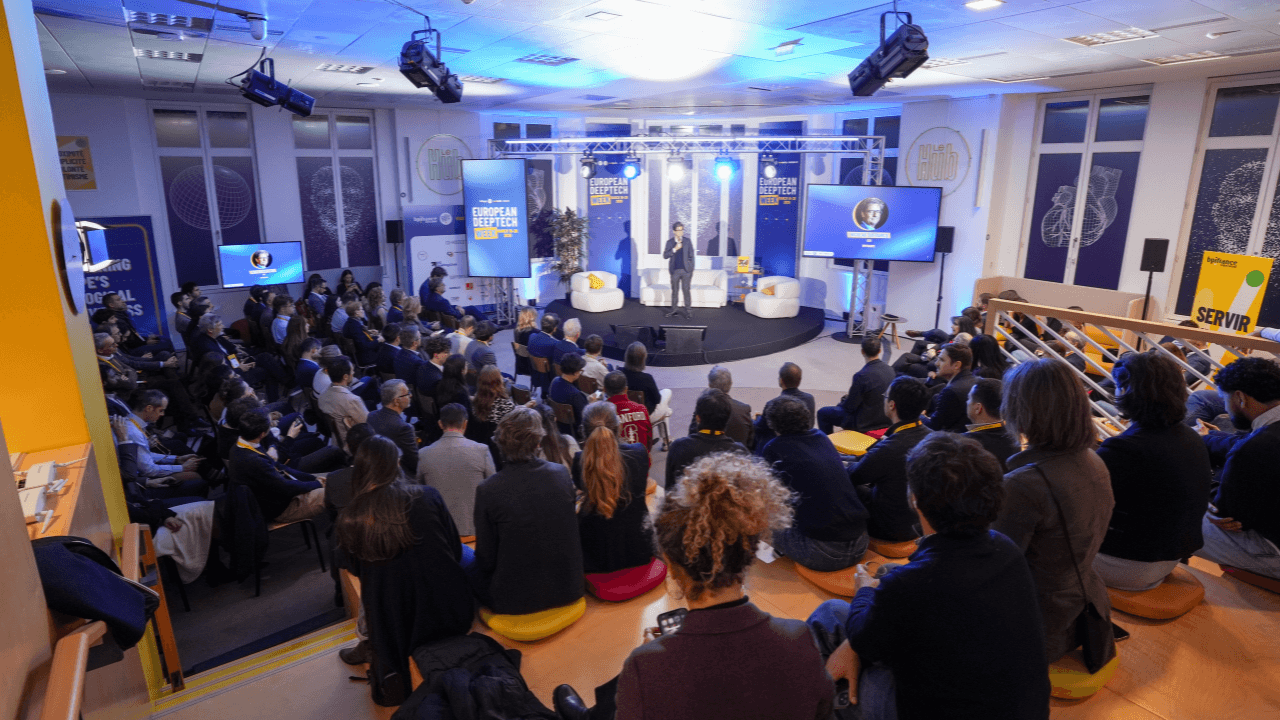
European Deeptech Week: A Hub for European Strategic Innovation
From March 16 to 20, Paris hosted the European Deeptech Week, transforming into a nerve center for the future of deep innovation in Europe. The event, held at Bpifrance's headquarters, brought together startup founders, industry leaders, investors, and public decision-makers, with the primary goal of accelerating the transition of deep technologies from scientific labs and startup studios to commercial markets.
This initiative is part of a broader context aimed at consolidating European scientific leadership and translating it into robust industrial and strategic strength. The ambition is clear: to make disruptive innovation a direct lever for the continent's sovereignty, competitiveness, and resilience.
Convergence of Key Players and Strategic Sectors
Conceived by Bpifrance and INSKIP, with the support of over thirty partners, the European Deeptech Week welcomed more than 2,500 ecosystem stakeholders. For five days, the French capital hosted conferences, workshops, closed-door sessions, and investor-startup meetings, facilitating connections between national and pan-European initiatives, sharing best practices, and promoting cross-border partnerships.
The event's program covered fundamental strategic sectors for Europe's next generation of globally competitive industries. These include AI and quantum computing, space and defense technologies, industrial technologies and Industry 4.0, energy and climate innovation, and life sciences and health technologies. Participation included representatives from the European Commission, national innovation agencies, and major deeptech-focused venture capital firms such as Eurazeo, Elaia, Supernova Invest, and Wind Capital.
The Crucial Role of Industrial Deployment and Data Sovereignty
The dynamism of the French deeptech sector provided a backdrop for the event, with 410 deeptech startups created in France in 2025 and €4.1 billion raised. The event showcased founders building across quantum computing, climate technology, advanced materials, space, and carbon capture, featuring speakers such as Jean-Luc Maria of Exotrail and Maud Vinet of Quobly.
The presence of major corporates like Airbus, Safran, Thales Group, VINCI, EDF, Siemens, AstraZeneca, Sanofi, Dassault Systèmes, Bosch, and STMicroelectronics underscored the growing role of large industrial groups in adopting, procuring, and deploying deep technologies developed by startups and research institutions. For organizations operating in these strategic sectors, the choice of infrastructure deployment—whether on-premise, hybrid, or cloud—is of paramount importance. Factors such as data sovereignty, regulatory compliance, and the need for air-gapped environments for sensitive workloads, particularly for Large Language Models or high-performance computing solutions, can drive decisions towards self-hosted architectures. AI-RADAR, through its analyses on /llm-onpremise, offers frameworks to evaluate the trade-offs between these different strategies, considering TCO and concrete hardware specifications.
Towards a Cohesive European Deeptech Ecosystem
The event demonstrated how intentional coordination can transform European deeptech excellence into collective momentum, overcoming the fragmentation that often characterizes the innovation landscape. Ecosystem leaders, such as Constantijn van Oranje-Nassau of Techleap and innovation hub leaders from Station F, contributed to discussions on strengthening Europe's startup ecosystems.
The European Deeptech Week thus stands as a fundamental event for shaping the continent's technological future. The alignment between capital, policies, and ecosystem players is essential to ensure that Europe can continue to innovate and maintain a competitive advantage, leveraging deeptech as a pillar for its strategic autonomy and economic development.



💬 Comments (0)
🔒 Log in or register to comment on articles.
No comments yet. Be the first to comment!