Geopolitics and the Future of AI Silicon
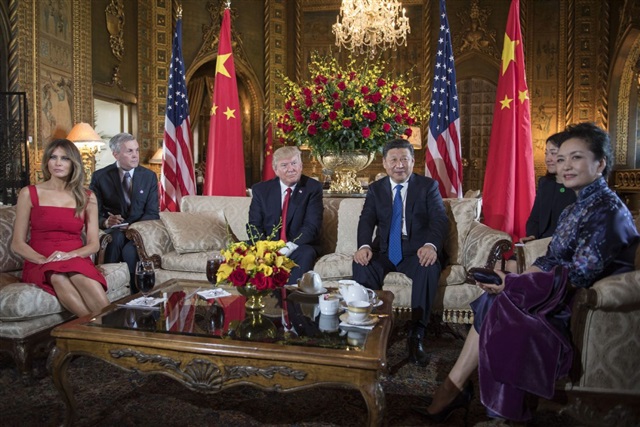
Recent geopolitical dynamics, such as those emerging from international summits, place Taiwan's semiconductor industry at the center of global attention. This scenario is not merely a matter of foreign policy; it has profound and direct repercussions on the technology sector, particularly for companies planning or managing artificial intelligence infrastructures. The world's reliance on Taiwan for advanced chip production makes its stability a critical factor for the continuity and development of the computing capabilities required for Large Language Models (LLM) and other AI applications.
For organizations evaluating on-premise LLM deployment, the stability of the silicon supply chain is not a minor detail. The ability to acquire and maintain specific hardware, such as high-performance GPUs with ample VRAM, is fundamental to ensuring the throughput and low latency demanded by AI workloads. Geopolitical uncertainties can translate into delivery delays, cost increases, and general unpredictability that complicates long-term planning.
Taiwan's Crucial Role in AI Silicon
Taiwan holds a dominant position in cutting-edge semiconductor manufacturing, which is essential for the artificial intelligence ecosystem. Taiwanese foundries are responsible for fabricating a significant share of the world's most advanced chips, including those powering the GPUs and AI accelerators indispensable for training and inference of complex LLMs. This geographical concentration of production creates a strategic point of vulnerability for the entire global technology industry.
The availability of these hardware components is a prerequisite for any AI strategy aiming to maintain control over its data and operations. For self-hosted deployments, access to processors with high specifications – such as GPUs with 80GB or more of VRAM per model – is non-negotiable. Without a reliable supply chain, even the most sophisticated architectures and optimized serving frameworks for local inference risk remaining theoretical.
Implications for On-Premise Deployments and Data Sovereignty
Geopolitical tensions involving Taiwan have direct implications for on-premise deployment decisions. Companies opting for self-hosted infrastructures often do so for reasons related to data sovereignty, regulatory compliance (such as GDPR), and the need for air-gapped environments for security. However, reliance on a global and potentially unstable supply chain introduces a new level of risk.
The Total Cost of Ownership (TCO) of an on-premise AI infrastructure is not limited to the initial CapEx for hardware and software acquisition. It also includes risks related to the future availability of components, their maintenance, and upgrades. A disruption in chip supply could not only halt expansion but also compromise the resilience of existing operations. This scenario pushes organizations to carefully evaluate the trade-offs between the flexibility and scalability offered by the cloud and the control and security guaranteed by a local deployment, now also considering the geopolitical factor.
Future Outlook and Mitigation Strategies
Facing these uncertainties, companies and governments are exploring various strategies to mitigate risks. These include diversifying supply sources, investing in local or regional production capabilities, and designing more resilient AI architectures that can adapt to different hardware configurations. The pursuit of solutions that optimize the use of existing resources, for example through quantization techniques or efficient serving frameworks, becomes even more pressing.
For those evaluating on-premise deployments, AI-RADAR offers analytical frameworks on /llm-onpremise to assess the trade-offs between costs, performance, security, and geopolitical risks. The ability to understand and anticipate the impact of external factors on the silicon supply chain is now an essential element for the strategic planning of any AI infrastructure. The challenge is to balance technological innovation with the need for resilience and control in an increasingly complex global landscape.







💬 Comments (0)
🔒 Log in or register to comment on articles.
No comments yet. Be the first to comment!