
The psychological threshold of one trillion ringgit was shattered in four months. This is not a statistical footnote: Malaysia’s external trade hit RM1.127 trillion between January and April 2026, driven by demand for AI hardware that is redrawing the map of global technology production. Exports of AI-enabling products surged 42.9%, now representing 52.4% of all outbound shipments. The numbers point to a structural transformation, not a cyclical bounce.
Assembly is the new design
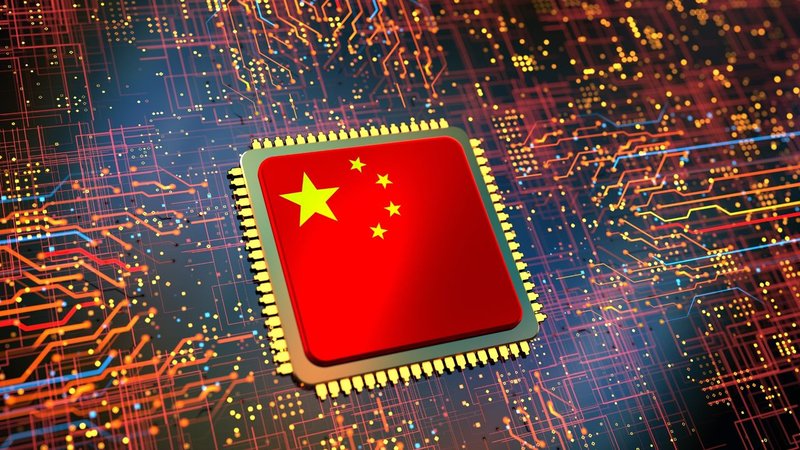
For anyone tracking Large Language Model evolution and the infrastructure required to serve inference at scale, Malaysia’s numbers are a litmus test. The computing power demanded by modern models has shattered the single-chip paradigm. Next-generation processors are built by placing separate components—CPUs, GPUs, high-speed memory—closely together on a single protective substrate, using advanced packaging techniques that demand engineering precision and specialised facilities. This is precisely where Malaysia has turned decades of manufacturing experience into irreplaceable leverage.
According to data released by MATRADE, the national trade promotion agency, growth was anchored by electrical and electronic (E&E) products, which expanded by RM71 billion (+32.1%). The real leap, however, lies in goods classified by the World Trade Organisation as foundational hardware for AI development and deployment: these reached RM319.05 billion in exports, more than half of the country’s total outbound shipments. Without the assembly, testing, and physical interconnection of chips into finished server units, cloud data centres—and any on-premise deployment relying on standard hardware—simply cannot be built.
The impact on deployment choices
For an organisation considering self-hosted AI infrastructure, these figures raise clear flags. The geographic concentration of the assembly stage in a small number of hubs (with Malaysia at the forefront) introduces a supply chain variable that feeds directly into Total Cost of Ownership. It’s no longer just about picking the best silicon for a workload; it’s about assessing the actual availability and lead times of finished hardware. Malaysia’s boom signals that global demand is saturating real production capacity: anyone planning an on-premise expansion must contend with a market where supplier pressure is extreme and delivery times are stretching.
The phenomenon also touches data sovereignty in an indirect but concrete way. When hardware assembly is controlled by a limited number of players, diversifying the supply base becomes harder. Projects aiming for air-gapped servers or custom bare metal configurations may hit obstacles rooted not in technology itself, but in physical production capacity. Unsurprisingly, MATRADE is actively pushing a geographic diversification strategy, with emerging markets in Africa and Eastern Europe recording exponential growth: a way to balance the trade footprint and mitigate exposure to regional bottlenecks.
Beyond “low cost”: a pillar of global infrastructure
“Our edge lies in the value we export, not merely the quantity,” said MATRADE CEO Abu Bakar Yusof. The statement captures the definitive shift from low-cost workshop to critical infrastructure node. Global buyers are no longer chasing cheap labour; they seek manufacturing reliability, technical depth, and speed of execution. This makes Malaysia an unavoidable piece in the puzzle for anyone planning to put AI models into production, whether in the cloud or in private server rooms.
The lesson for those operating in the on-premise inference space is clear: the hardware supply chain is not background context but a first-order strategic variable. Monitoring the health of Malaysia’s production ecosystem—and that of the few equivalent hubs—becomes as integral to capacity planning as choosing a quantization level or memory bandwidth. The age of AI is shifting the bottleneck from silicon to substrate: ignoring that reality means exposing infrastructure to procurement risks that no software can compensate for.









💬 Comments (0)
🔒 Log in or register to comment on articles.
No comments yet. Be the first to comment!