
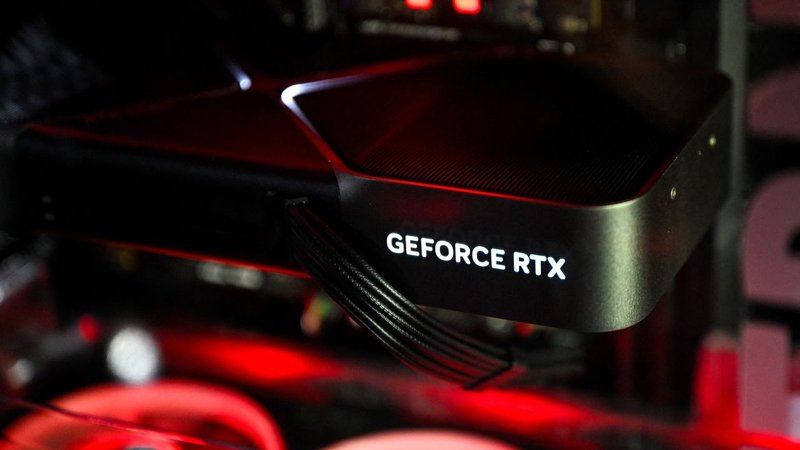
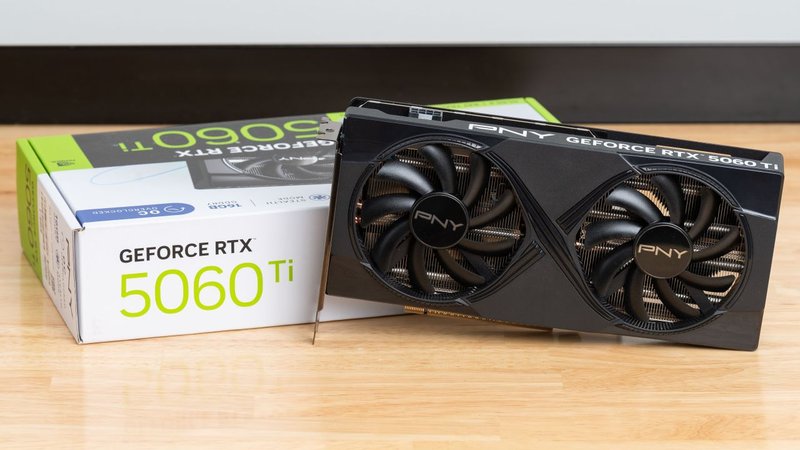
The disappearance of Nvidia's GeForce RTX 5090 from U.S. online retailers is a story that matters far beyond gaming. When a retail channel empties and third-party sellers ask up to $9,500 for Nvidia's fastest GPU, price stops being a technical indicator and becomes a thermometer for the pressure the AI ecosystem puts on consumer hardware.
For anyone working with local LLMs, the issue is not the card itself but the availability and cost regime. High-end consumer cards have long been part of self-hosted configurations for inference with open-weight models: they offer significant compute capacity without cloud contracts. Yet the empty U.S. shelves show that the consumer channel no longer guarantees predictable pricing. If market price can multiply overnight, any project planning a local cluster based on new GPUs must include a scarcity premium, not just the list price.
This changes the math more deeply than it first appears. A team evaluating an on-premise deployment for data sovereignty or infrastructure control cannot simply compare the cost of a GPU with the cost of a cloud instance. It has to factor TCO under volatile supply conditions: a component that is unavailable or only sold by third parties is not a purchase, it is a speculative position. As a result, those with previous-generation GPU machines may gain residual value, while newcomers face a higher barrier.
The phenomenon has second-order effects as well. Third-party sellers raising prices are not adding technical value: they are monetizing the bottleneck between AI acceleration demand and retail supply. This incentive can push manufacturers to favor higher-margin segments such as data center accelerators, further reducing consumer GPU availability. For independent labs and small teams that cannot buy enterprise volumes, the risk is being stuck between a cloud that may not be desirable and local hardware that keeps getting more expensive.
In this scenario, the RTX 5090 becomes a case study in how local inference demand is reshaping the components market. There is no need to hypothesize precise token or bandwidth figures: it is enough to observe that scarcity has shifted from the professional segment to the consumer segment, and that third-party prices signal a parallel market with its own rules. For those evaluating on-premise deployment, AI-RADAR offers analytical frameworks at /llm-onpremise to map these trade-offs without reducing the decision to a single product.
The structural lesson is that hardware for local LLMs is no longer a commodity with stable pricing. And when the official channel disappears, infrastructure control partially shifts to whoever holds inventory.




💬 Comments (0)
🔒 Log in or register to comment on articles.
No comments yet. Be the first to comment!