
The surge in API costs from OpenAI and Anthropic is no longer a footnote for US Chief Technology Officers: it is becoming the lever driving a tangible shift toward Chinese models. This dynamic, flagged in recent weeks by multiple market observers, warrants an analysis that goes beyond the superficial metric of cost per token — because what is unfolding carries deep implications for anyone designing enterprise-scale AI stacks.
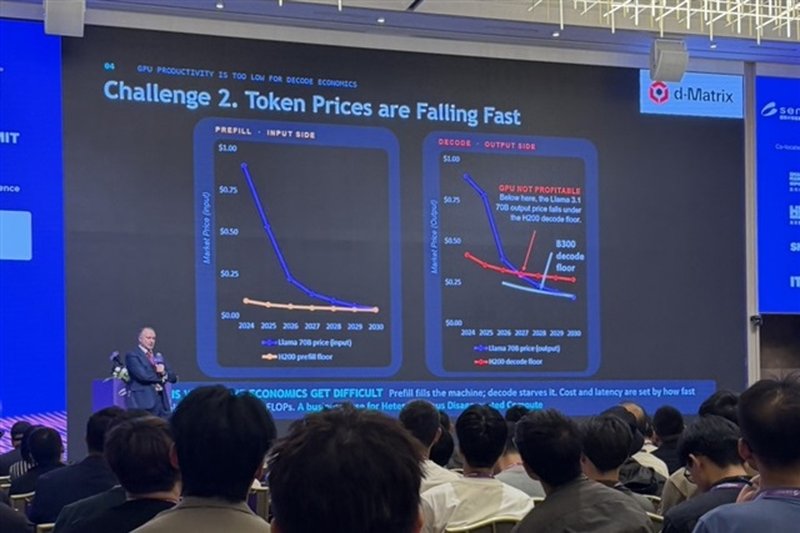
The starting point is the visible increase in pricing for flagship models such as GPT-4o or Claude 3.5 Sonnet. Large-scale inference, combined with the hardware needed to sustain ever-wider context windows, has squeezed provider margins, which have begun passing costs onto end users. In parallel, Chinese labs like Alibaba (Qwen), DeepSeek, and Zhipu AI have released models under permissive licenses, sometimes with APIs priced significantly lower. The structural fact is not the price itself, but that the cost gap is widening to the point where it becomes rational for a US company to evaluate alternatives once relegated to the fringe.
The first-order consequence is sovereign in nature. Using Chinese model APIs means routing prompts — and often sensitive data — to servers outside Western jurisdiction. For organizations subject to GDPR or sector-specific regulations, this poses a concrete compliance risk. Yet many enterprises are finding a compromise: not abandoning OpenAI or Anthropic entirely, but routing less critical workloads to Chinese models, or — and this is the key shift — bringing those models inside their own perimeter.
This is where the issue moves to the infrastructure plane. Several Chinese models are available with open weights and can be run on-premises. In a self-hosting scenario, the company avoids recurring API costs altogether, in exchange for an upfront investment in hardware (GPUs with adequate VRAM, fast storage, internal networking). TCO calculations become more complex: if inference volume is high, hardware depreciation can beat cloud pricing within months. Moreover, quantization and modern serving frameworks allow large models to run on non-bleeding-edge infrastructure, lowering the barrier to entry.
This shift signals a structural change in the AI market. We are witnessing not just a price war, but a reconfiguration of incentives that rewards those with direct infrastructure control. The beneficiaries are enterprises with in-house MLOps expertise and inference hardware suppliers (from NVIDIA with its GPUs to alternative chips). Western API providers, on the other hand, are compelled to differentiate beyond the model itself: offering data residency guarantees, security audits, and vertical integrations that a self-hosted model cannot match without additional investment. Otherwise they risk losing their customer base precisely in the segment that consumes the most tokens.
The ascent of Chinese models is therefore not a fleeting fad or a simple quest for savings. It is a sign of market maturation, in which deployment decisions are again weighing as much as — if not more than — model quality. And in this game, data sovereignty and total cost of ownership are the real trump cards.







💬 Comments (0)
🔒 Log in or register to comment on articles.
No comments yet. Be the first to comment!