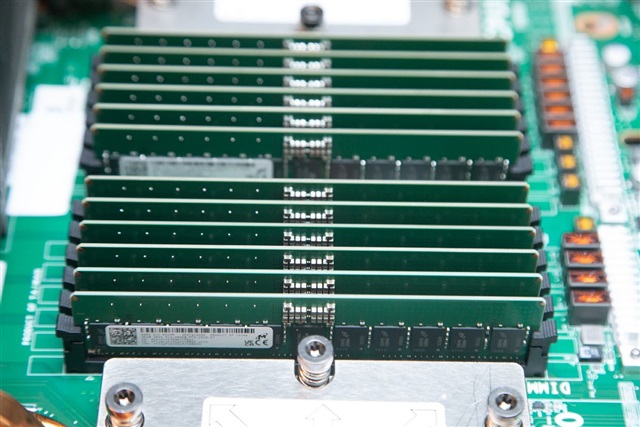
The picture from DIGITIMES shows a sharp rise in shipments of general-purpose servers, the x86 workhorses that form the backbone of enterprise data centers. The ripple effect is directly boosting Taiwanese connector manufacturers – a sensitive link in the electronics component chain – whose volumes are growing in lockstep with new system assembly.
Behind the cyclical data lies a broader repositioning. Demand for compute capacity is no longer the exclusive domain of cloud workloads: more organizations are choosing to host inference workloads for Large Language Models locally, driven by data sovereignty, latency, and total cost of ownership control. And when you build an on-premise node, you don’t just buy GPUs. You need a machine that integrates storage, memory, high-speed networking, and all those passive components – connectors, precisely – that ensure signal integrity on-board and between racks.
Choosing general-purpose hardware rather than relying solely on GPU-accelerated systems reflects a maturing market. Quantization techniques now allow running models with 7 or 13 billion parameters on CPUs with acceptable performance for many enterprise use cases, from document classification to data extraction. This lowers the barrier to entry for local inference and widens the pool of potential buyers for standard servers, which in turn drives demand for connectors, power supplies, and interconnect boards.
The Taiwanese component ecosystem acts as a leading indicator: before we see new nodes powered on, we observe orders for connectors, cables, and backplanes. If the numbers are climbing, it means the production chain is preparing substantial server volumes – a signal that should not be overlooked by those planning on-premise deployments. The current expansion phase is also pushing manufacturers to invest in connectors for ever-wider signal bandwidth, essential when pairing next-generation PCIe accelerators or configuring mesh network topologies.
The impact on the self-hosted world is twofold: on one hand, a more plentiful supply of general-purpose servers reduces lead times and mitigates vendor pricing power; on the other, pressure on components could create temporary bottlenecks precisely on high-end connectors, forcing system integrators to evaluate alternative configurations.
For those tracking the evolution of on-premise stacks, the vitality of the general-purpose segment tells much more than a simple market statistic. It confirms that AI infrastructure is spreading horizontally, beyond hyperscalers, and that the next wave of more efficient models will find a home in servers under direct enterprise control. We will continue to monitor these trends on AI-RADAR, because the true thermometer of digital sovereignty is also measured by the number of servers landing in corporate data centers.





💬 Comments (0)
🔒 Log in or register to comment on articles.
No comments yet. Be the first to comment!