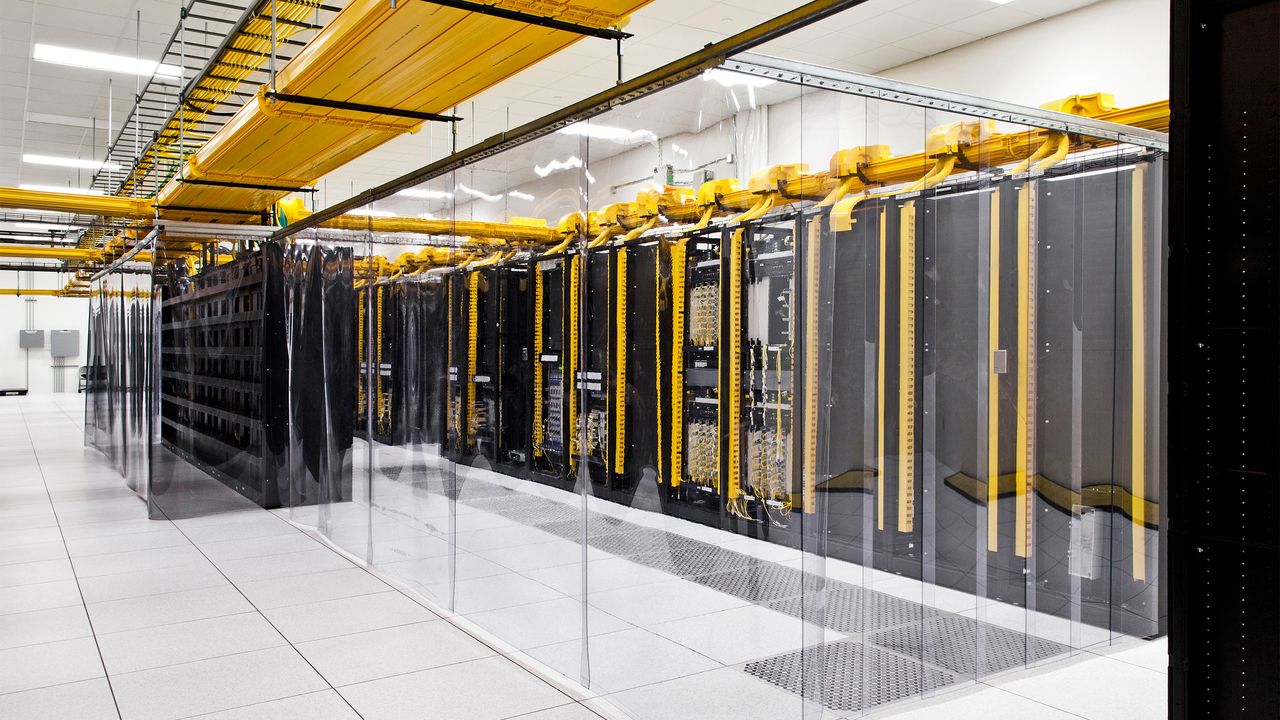
The latest Top500 list has an unexpected winner and a technical milestone that will keep infrastructure architects talking: LineShine, a Chinese supercomputer built entirely on CPUs, has snatched first place from the US-based El Capitan, becoming the first machine in the ranking’s history to sustain over 2 ExaFLOPS of double‑precision (FP64) performance without the help of GPUs.
This is no marginal upset. The 2‑EF barrier had previously been the preserve of hybrid systems blending general‑purpose processors with graphic accelerators. LineShine proves that a CPU‑only architecture can compete at the highest level, with deep implications for those designing scientific datacenters and, increasingly, inference platforms for on‑premise Large Language Models.
The anatomy of a record
The Top500 measures performance using LINPACK, the classic 64‑bit floating‑point benchmark. Reaching 2 EF means executing 2×10^18 operations per second at full precision—a workload traditionally entrusted to GPUs like NVIDIA’s A100 or H100 families. LineShine reverses the trend, relying on a massive density of CPU cores, presumably of advanced architecture, to scale horizontally without memory or communication bottlenecks.
Ditching accelerators changes the cost profile and system complexity. Fewer specialized components mean less dependence on constrained supply chains, a non‑trivial factor in a geopolitical landscape where access to high‑end GPUs is subject to restrictions. For those managing on‑premise environments, this approach suggests that dense CPU clusters might become a concrete alternative for intensive computing, especially when combined with quantization techniques and inference‑optimized frameworks.
Why it matters for on‑prem AI
Although LINPACK does not directly measure AI performance, LineShine’s milestone casts new light on LLM deployments in local or air‑gapped settings. The CPU‑based inference community—from llama.cpp to OpenVINO—has already demonstrated that models quantized to 4 or 8 bits can run efficiently on multi‑socket servers without GPUs, cutting CapEx and energy consumption. A supercomputer that scales beyond 2 EF using CPUs alone confirms that the x86 or ARM ecosystem has significant headroom, even for large‑scale distributed inference.
The trade‑offs remain clear: GPUs still hold an edge in per‑token throughput and energy efficiency on the matrix‑vector workloads typical of transformers. Yet CPU evolution—with dedicated matrix‑multiply instructions (AMX, SVE) and high‑bandwidth memories—is narrowing the gap. For an organization evaluating self‑hosted LLMs, being able to rely on existing CPU nodes in the datacenter, without buying expensive accelerator cards, reshapes the TCO equation.
A shifting global chessboard
Overtaking El Capitan also sends a geopolitical signal. The United States has dominated the Top500 for years with systems like Summit, Sierra, and Frontier, often powered by NVIDIA or AMD GPUs. The rise of a CPU‑only champion made in China reflects a targeted investment in alternative architectures, possibly to circumvent semiconductor export controls.
From a data‑sovereignty standpoint, having national supercomputers with no dependence on external vendors strengthens the ability to process sensitive workloads entirely in‑house—a theme that resonates with European enterprises grappling with GDPR. In this light, LineShine is not just a technical feat; it is a reminder that hardware for large‑scale computing can follow different paths, with direct repercussions for those deciding where and how to run their models.
Beyond the benchmark, toward operational reality
It remains to be seen whether LINPACK performance will translate into effectiveness on real‑world workloads such as molecular simulations, fluid dynamics, or neural network training. The HPC community awaits application‑level benchmark results, while the on‑premise systems market watches with interest. Should LineShine confirm its versatility, the CPU‑only route could accelerate the spread of private AI infrastructure, reducing lock‑in to GPU‑centric ecosystems.
In the meantime, the news reinforces a conviction that has long guided AI‑RADAR’s analysis: local deployment of language models is not a GPU‑dominated monolith, but a rapidly evolving landscape where architectural choices must be weighed case by case. LineShine reminds us that sometimes the road less traveled can lead straight to the top.






💬 Comments (0)
🔒 Log in or register to comment on articles.
No comments yet. Be the first to comment!