
It’s not a matter of talent, but of mindset. With a blunt post on X, Lovable CEO Anton Osika pulled back the curtain on what many in Europe’s tech scene think privately: the problem isn’t a shortage of engineers — it’s self-belief. «Founders are repeatedly told to move to San Francisco if they want to build a serious AI company,» he wrote, «but the real barrier has never been a lack of skills.» Those words land on an ecosystem where the flight of capital and talent to California is almost taken for granted.
The investor mental trap
The confidence deficit isn’t an emotional issue — it’s a financial feedback loop. When European VCs internalize the myth that innovation must flow through the Bay Area, funding follows that path, and startups that stay on the continent struggle to raise competitive rounds. A vicious cycle takes hold: less local capital means fewer experiments, fewer successful exits and fewer role models, reinforcing the idea that the only way forward is to land in the United States.
The urgency of sovereign infrastructure
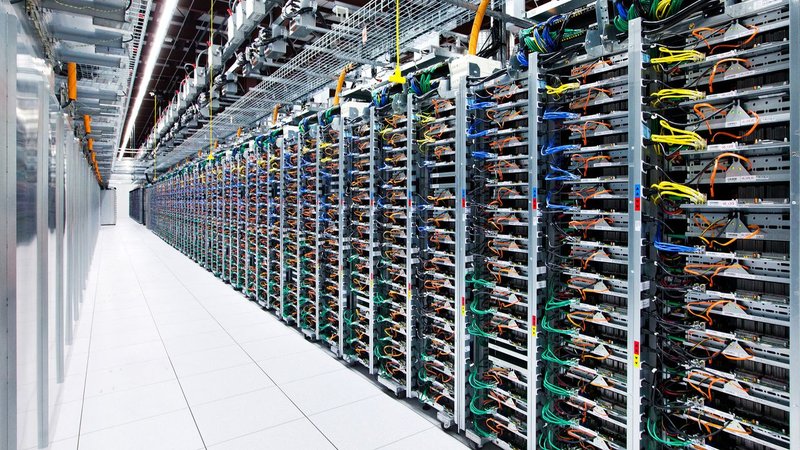
In this landscape, data sovereignty and control become crucial. Europe has clear rules — from GDPR to the upcoming AI Act — that reward on-premise architectures and self-hosted stacks. Yet if confidence is missing at the start, there is a risk of outsourcing even infrastructure management to non-European cloud providers, losing the competitive advantage of those who can combine powerful LLMs with data residency within EU borders. AI-RADAR provides analytical frameworks for those evaluating on-premise deployments — at /llm-onpremise — and shows how the true total cost of ownership (TCO) is not just economic but also cultural: an ecosystem that does not trust itself to build in-house ends up paying a strategic price.
Beyond the Silicon Valley myth
Osika’s statement opens a window onto what is really needed: not an imitation of the Valley, but a European path to AI. Startups like Mistral AI and Aleph Alpha are already proving that cutting-edge models can emerge outside California, but turning exceptions into the norm requires a collective mindset shift. It’s not about ignoring the US ecosystem, but about overcoming the psychological dependency that turns competition into flight. Confidence, after all, is the first component of a successful on-premise stack: without the will to keep data and inference under one’s own control, even the best hardware remains idle. And the game, today, is won first in the minds of founders, and only later in data centers.







💬 Comments (0)
🔒 Log in or register to comment on articles.
No comments yet. Be the first to comment!