Meta's Unconventional Approach to AI Infrastructure
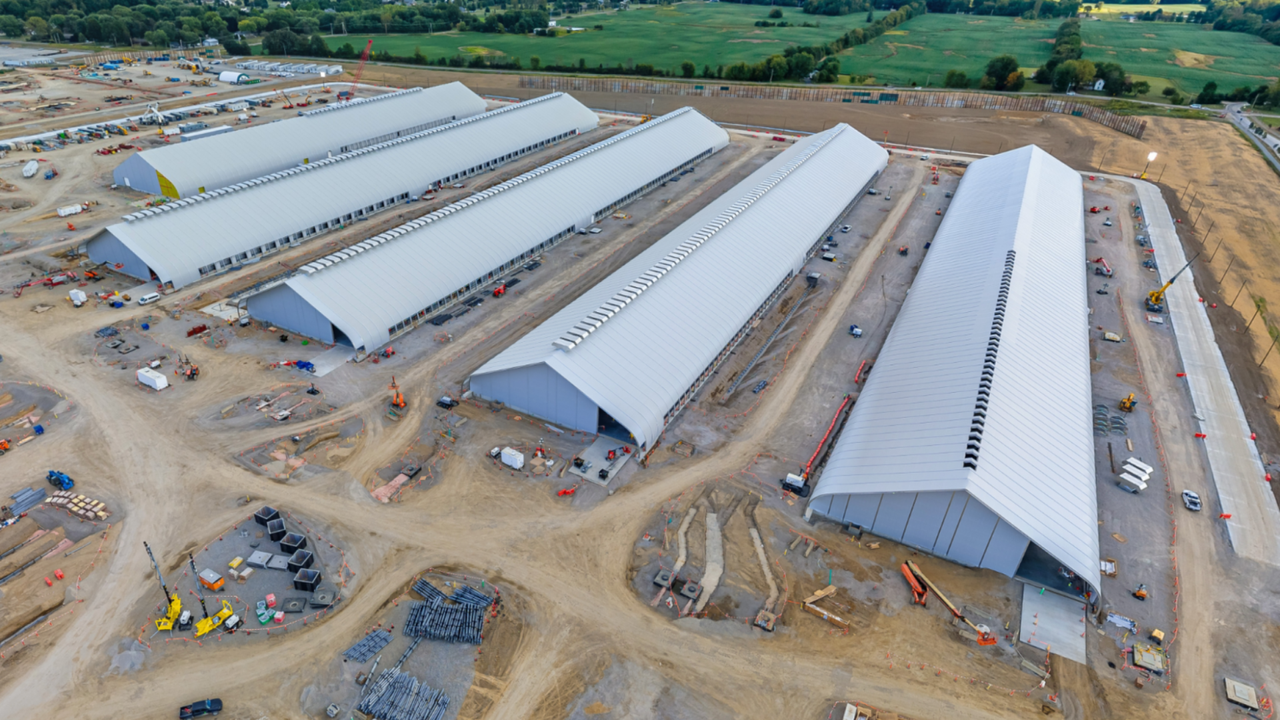
The expansion of artificial intelligence capabilities demands increasingly massive computing infrastructures, and Meta is exploring innovative solutions to meet this demand. The company has begun deploying temporary data centers across the United States, characterized by tent-like structures, as observed at the Prometheus site in New Albany, Ohio. This approach, described by some as a scene out of a post-apocalyptic movie, underscores the growing pressure on infrastructural resources to support the development and deployment of Large Language Models (LLM) and other AI workloads.
Speed of deployment and flexibility appear to be key drivers behind this strategy. The construction of these structures takes approximately three months, a relatively short timeframe compared to traditional data centers, which can take years to design and build. This agility allows Meta to rapidly scale its computing capacity in response to the evolving needs of AI projects, a crucial aspect in a fast-moving industry.
Energy and Cooling Challenges for Large-Scale AI
A particularly striking detail of these installations is their power source: Meta's temporary data centers use jet engines to generate the necessary energy. This choice highlights the immense power requirements of modern AI workloads, which push the limits of conventional electrical infrastructures. Jet engines offer a solution for large-scale and rapid power generation, albeit with implications for efficiency, operational costs, and environmental impact.
Beyond power, cooling represents another critical challenge. AI servers, especially those equipped with high-performance GPUs, generate significant amounts of heat. The temporary structures and the use of unconventional power sources suggest that Meta is also adopting ad-hoc solutions for thermal management, likely prioritizing deployment speed over the long-term optimization typical of permanent data centers. This trade-off is common in the industry when seeking to accelerate the introduction of new capabilities.
Implications for On-Premise Deployment and Data Sovereignty
Meta's approach, though on a hyperscaler scale, offers insights for companies evaluating on-premise or hybrid deployments for their AI workloads. The need for rapid, high-density power solutions is a pervasive theme. Enterprises aiming to maintain data sovereignty and full control over their infrastructure must consider not only the acquisition of specific hardware like GPUs with high VRAM, but also the related infrastructural challenges, such as the availability of adequate electrical power, efficient cooling systems, and the ability to scale rapidly.
For those evaluating on-premise deployment, there are significant trade-offs between initial costs (CapEx) and operational costs (OpEx), including those related to energy and maintenance. The flexibility offered by modular or temporary solutions, like those adopted by Meta, could inspire similar approaches for specific needs, while still requiring a careful analysis of the Total Cost of Ownership (TCO) and long-term implications. AI-RADAR offers analytical frameworks on /llm-onpremise to evaluate these trade-offs, providing tools for informed decisions without direct recommendations.
The Future of AI Infrastructure: Between Innovation and Extreme Necessity
Meta's initiative underscores how the industry is pushing the boundaries of data center design to meet the insatiable demands of AI. The pursuit of solutions that balance speed, scalability, and power is relentless. Whether it's temporary structures powered by jet engines or underwater data centers, innovation in physical infrastructure is as crucial as advancements in algorithms and models themselves.
These developments suggest that companies, large and small, will need to continue exploring unconventional options for hosting AI workloads. The ability to adapt quickly and deploy agile infrastructural solutions will be a determining factor for success in the artificial intelligence landscape, where the demand for computing resources continues to grow exponentially, requiring equally rapid and, at times, extreme responses.









💬 Comments (0)
🔒 Log in or register to comment on articles.
No comments yet. Be the first to comment!