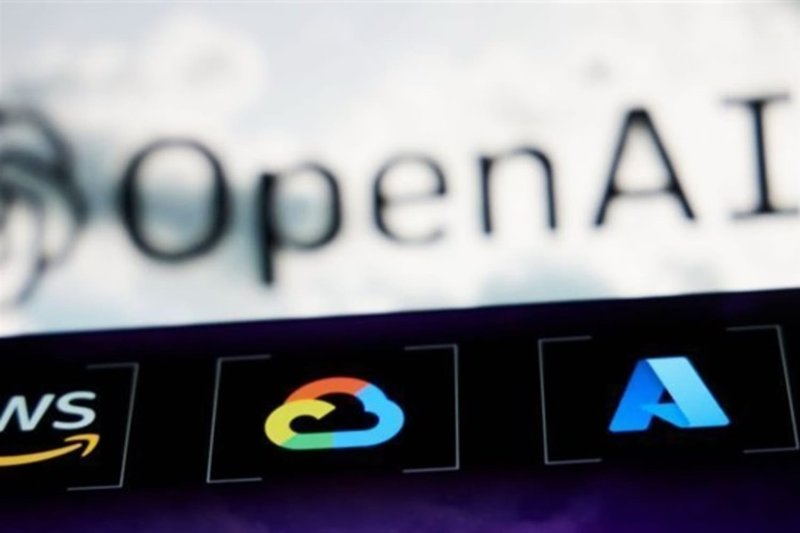
Microsoft has begun swapping OpenAI and Anthropic models for its own in applications, as reported by the APF news agency. It’s not just a technical reshuffle: it’s the most tangible signal that the AI API strategy — on which many companies built their offerings — might be just an intermediate phase. For those who own the platform, the real game is about model ownership.
Although details are scarce, the move fits a clear pattern: over the past two years Microsoft invested billions in OpenAI, while simultaneously developing its Phi family of models and others, optimized for consumer devices and servers with modest hardware requirements. Now those models are entering production, displacing third-party providers. This is no longer just research.
The most relevant aspect extends beyond Redmond. When a giant like Microsoft internalizes inference, incentives shift for the entire ecosystem. Companies that developed models counting on API resale lose a heavyweight client — and with it, a market share that justified certain investments. At the same time, the vertically integrating company gains full data sovereignty, cuts latency by eliminating external calls, and controls operational costs far more precisely. This leverage can push other large enterprises to follow suit, accelerating the fragmentation of model supply.
For those tracking on-premise architectures, the move carries a dual meaning. First: if in-house models are used in widely deployed apps like Office or Teams, Microsoft has a massive incentive to make them efficient even on less extreme hardware — perhaps through aggressive quantization or inference on NPUs embedded in enterprise laptops. Second: the decision to bring inference in-house is exactly what many companies are evaluating for GDPR compliance and supply-chain control. That Microsoft is taking this step after years of promoting Azure OpenAI Service as a cloud solution is a structural confirmation: self-hosted models are not a workaround for regulated environments, but a strategic lever for independence and TCO.
Of course, the move raises questions about the future of partnerships. OpenAI and Anthropic won’t stand idle: they will likely differentiate on advanced capabilities or agents. Yet if the trend solidifies, the AI API market will take on more polarized contours: a few large providers of cutting-edge models on one side, and a broad fabric of lightweight models managed directly by their users on the other. In between, hardware infrastructure becomes the true enabler: local GPUs, hybrid solutions, on-device NPUs. The signal from Microsoft is clear: the AI race is also decided at the silicon level and in runtime control. Not just through APIs.





💬 Comments (0)
🔒 Log in or register to comment on articles.
No comments yet. Be the first to comment!