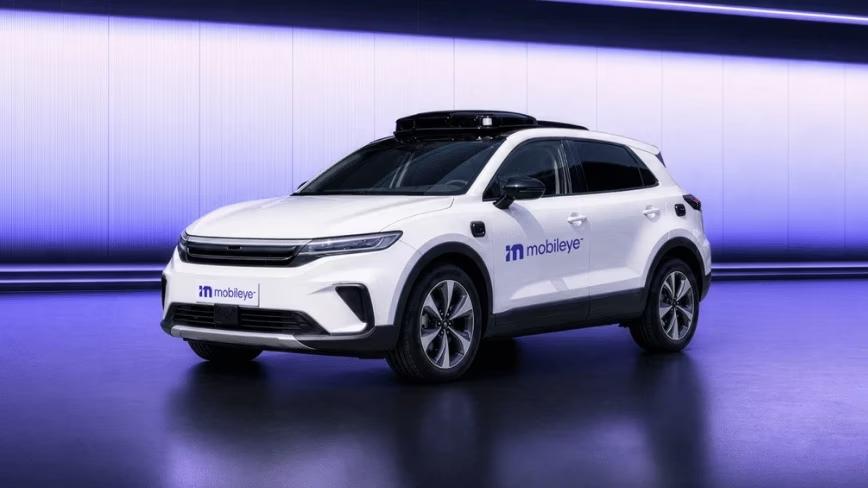
Mobileye: A New Chapter in Autonomous Driving
Mobileye, a Jerusalem-based company with a quarter-century of experience in the autonomous driving sector, has announced a significant shift in its strategy. For years, the company has positioned itself as a key technology provider, equipping over 230 million vehicles with its cameras, chips, and software. This business model saw it act as a true “arms dealer” for the automotive industry, leaving the direct management of autonomous driving services to others.
On June 16, however, Mobileye declared its intention to directly enter the driving business, planning to launch its own robotaxi services. This move represents a notable turning point for the company, transitioning from a technological enabler to a service operator, directly addressing the challenges and opportunities of the autonomous mobility market.
From Supplier to Operator: The Evolving Business Model
Mobileye's success has been built on its ability to develop and commercialize essential components for advanced driver-assistance systems (ADAS) and autonomous driving. Its technology, integrated into millions of cars globally, has enabled vehicle manufacturers to offer safety and automation features without having to develop the entire technology stack in-house. This approach allowed Mobileye to achieve impressive market penetration, solidifying its position as a leader in the sector.
The decision to launch its own robotaxi service implies a vertical expansion of its value chain. It's no longer just about selling hardware and software, but about managing vehicle fleets, optimizing routes, addressing local regulations, and ensuring a seamless user experience. This requires deeper control over the entire pipeline, from on-board hardware to fleet management systems and backend infrastructure for Inference and real-time monitoring.
Industry Implications and Parallels with AI Deployments
Mobileye's transition from provider to direct operator reflects a broader trend in the technology sector, where companies seek to capitalize on their technological assets by extending their reach. For the AI-RADAR ecosystem, this evolution offers interesting insights. Similar to Mobileye deciding to “self-host” its mobility service, many companies are evaluating the Deployment of Large Language Models (LLM) on-premise or in hybrid environments, rather than relying solely on third-party cloud services.
This choice is often driven by the pursuit of greater data control, the need to ensure data sovereignty and regulatory compliance, and the desire to optimize the Total Cost of Ownership (TCO) in the long term. Direct management of the infrastructure, including Inference hardware (such as GPUs with adequate VRAM) and orchestration Frameworks, allows companies to customize solutions and retain intellectual property. For those evaluating on-premise Deployments, analytical frameworks on /llm-onpremise can help assess these trade-offs, considering factors like latency, Throughput, and security requirements for air-gapped environments.
Future Prospects and Operational Challenges
Mobileye's entry into the robotaxi market places it in direct competition with established players and new startups. The challenges will be multifaceted, ranging from the need to obtain operating licenses in various jurisdictions to managing the logistical complexity of an autonomous vehicle fleet. Mobileye's ability to integrate its proven expertise in chip and software development with the operational demands of a transportation service will be crucial.
This strategic step could redefine Mobileye's role in the future mobility landscape, transforming it from a technology partner to a direct player offering an end-to-end service. Success will depend not only on the robustness of its technology but also on its agility in adapting to a rapidly evolving market and its ability to scale operations while maintaining high standards of safety and reliability.







💬 Comments (0)
🔒 Log in or register to comment on articles.
No comments yet. Be the first to comment!