
Monumental’s bricklaying robots just got their US visa. The Amsterdam-based company closed a $32 million Series B led by Khosla Ventures, with Plural and Hummingbird—the same backers of its $25 million round in early 2024—participating again. The funds will deploy more machines on British construction sites and, for the first time, across the Atlantic.
On the surface, it reads as a standard robotics startup funding story. In practice, the scaling move reveals much more about the state of construction automation and, by extension, the infrastructure choices that builders will be forced to make. Monumental’s robots don’t operate in controlled factory settings; they work on open-air sites, often in adverse weather, with intermittent connectivity and an absolute requirement to run without cloud dependency. This is, at every level, an edge deployment problem.
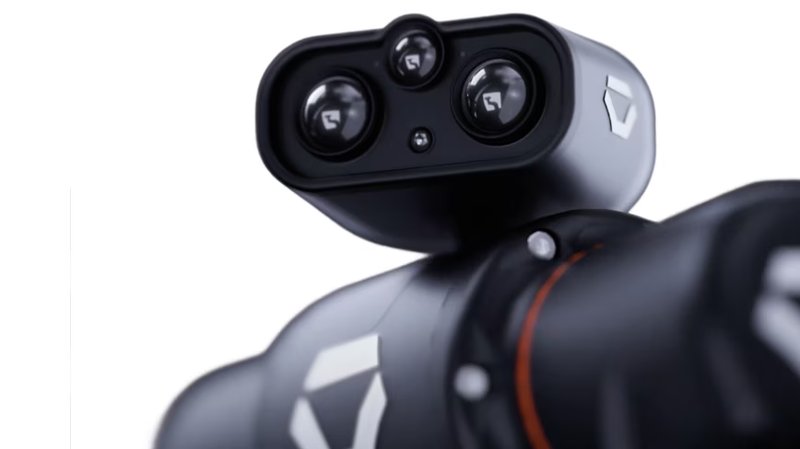
The competitive edge of these machines isn’t just mechanical precision or bricklaying speed. It lies in the ability to process sensor data—cameras, lidar, inertial measurement units—onboard, in real time, adapting to an environment that shifts hour by hour. Every brick must be placed with millimeter accuracy on a surface that may have settled overnight. That means inference must run locally, with no round-trip to remote servers. It’s not an architectural preference; it’s a physical constraint. And that constraint demands robust embedded hardware, likely system-on-module designs with integrated GPUs or custom accelerators, capable of handling computer vision and path planning workloads at low power.
It’s no coincidence that the round materializes now. Over the past three years, the availability of edge compute modules with sufficient inference capacity for 3D perception tasks has crossed a threshold of cost and energy efficiency that makes it economically viable to place an actual autonomous robot on a jobsite instead of a team of skilled masons—who are increasingly hard to find. Monumental capitalizes on this window, but the structural signal runs deeper: on-premise AI hardware is becoming an enabling commodity, not a lab luxury.
A second layer touches on data sovereignty. A construction site generates vast quantities of design, structural, and logistical data that, for public clients or large contractors, represent sensitive assets. Uploading that data to the cloud for analysis or remote coordination introduces compliance risks, especially when working on critical infrastructure. Monumental’s approach—robots operating locally, with selective transmission of only aggregated metadata—aligns the deployment with the growing demand for data residency and tight control over digital assets. This is no nuance: in sectors like construction, where public tenders impose strict information security requirements, proving that data never leaves the site can become a bidding prerequisite.
Who gains from this shift? Medium-to-large builders who can internalize the management of robotic fleets and see robotics as a lever to reduce labor dependency, stabilize delivery timelines, and control costs. Those at risk are the specialized masonry subcontractors lacking the capital or know-how to integrate autonomous machines into their workflow. At the ecosystem level, Monumental’s US entry also pushes regulators to tackle questions around certification, workplace safety, and interoperability with existing construction systems.
For anyone evaluating on-premise deployment in other industrial domains, Monumental’s trajectory offers a clear lesson: the tipping point doesn’t arrive when the technology works in a lab, but when the entire stack—hardware, software, connectivity, field support—becomes repeatable at geographic scale. And that moment, for robotic bricklaying, appears to have arrived right now.






💬 Comments (0)
🔒 Log in or register to comment on articles.
No comments yet. Be the first to comment!