The Evolution of Portable Hardware with Integrated AI
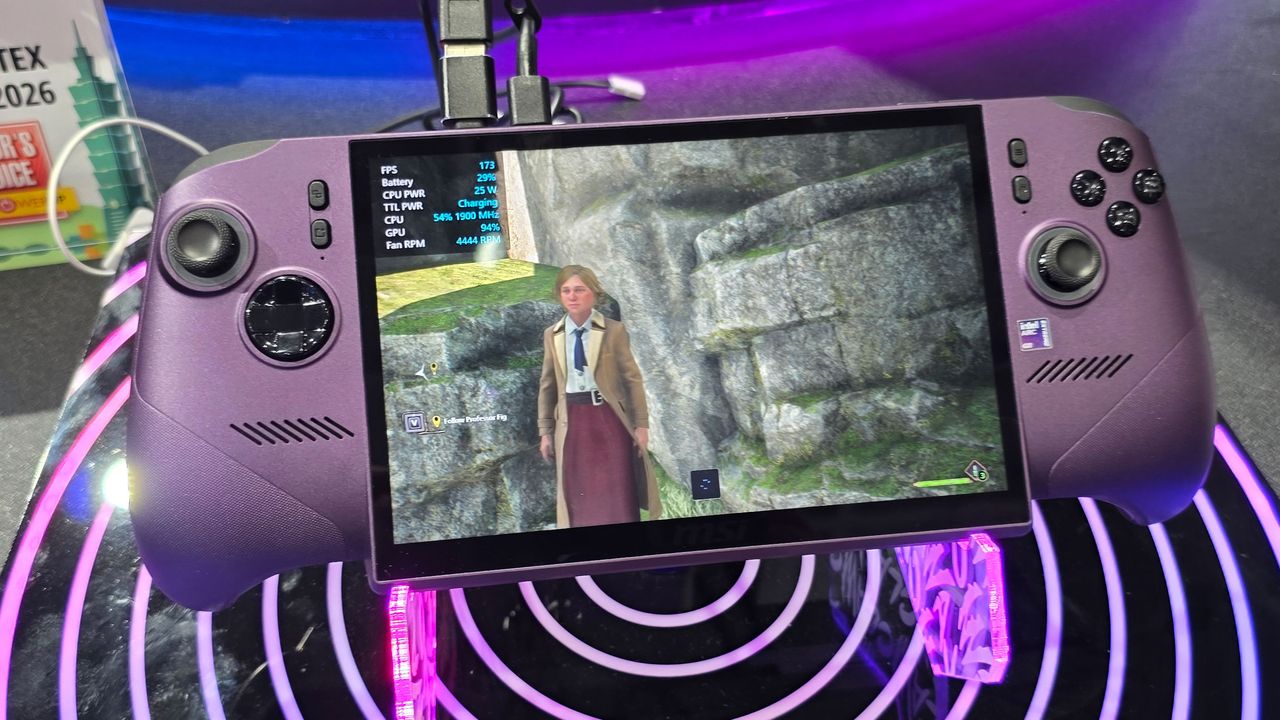
MSI recently unveiled the Claw 8 EX AI+, a new gaming handheld that promises to redefine the user experience through significant hardware integration. The device stands out for adopting the Intel Arc G3 Extreme GPU, an 8-inch display with a 120 Hz refresh rate, and a redesigned chassis with new ergonomic grips. The addition of the "AI+" suffix in its name is not coincidental; it underscores a clear market direction: the integration of artificial intelligence functionalities directly into hardware, even in consumer contexts like portable devices.
This trend reflects a broader strategy within the technology industry, aiming to shift part of the AI computational load from the cloud to the edge. For IT professionals and decision-makers evaluating architectures for AI/LLM workloads, the emergence of AI-capable hardware, even in compact form factors, offers interesting insights into the potential of local processing and data sovereignty.
Intel Arc G3 Extreme: Silicon for On-Device Inference
The core of the MSI Claw 8 EX AI+ is the Intel Arc G3 Extreme GPU. While specific details regarding its VRAM or throughput capabilities for AI workloads have not been disclosed at this stage, its presence in a handheld device is indicative. Dedicated GPUs, even in mobile-optimized versions, are crucial for accelerating AI model inference, from graphics upscaling tasks to more compact language models or neural networks for pattern recognition.
Silicon efficiency in these contexts is critical. For on-device inference, it is necessary to balance computational power, energy consumption, and thermal dissipation. The ability to run AI models locally reduces reliance on network connectivity and cloud services, offering advantages in terms of latency and privacy. This approach is particularly relevant for scenarios where data sovereignty is a priority or where internet access is limited or non-existent.
Context and Implications for Enterprise Edge AI
The integration of AI capabilities into consumer devices like the MSI Claw 8 EX AI+ is not an isolated phenomenon but part of a macro-trend towards Edge AI. For CTOs, DevOps leads, and infrastructure architects, this development highlights the maturation of technologies that enable AI workloads to run directly on devices or in close proximity to the data source. Benefits include reduced latency, enhanced data security through local processing, and a potential reduction in long-term TCO by avoiding recurring cloud costs for certain operations.
However, deploying AI at the edge also presents significant challenges. Managing a distributed fleet of devices, optimizing models for hardware with limited resources (such as available VRAM or computational power), and the need for efficient update pipelines are critical aspects. The choice between self-hosted on-premise solutions and adopting cloud services for AI depends on a careful evaluation of these trade-offs, considering factors such as compliance, performance requirements, and scalability.
Final Perspective: The Future of Distributed AI Processing
The introduction of devices like the MSI Claw 8 EX AI+ with its Intel Arc G3 Extreme GPU marks a step forward in the democratization of AI, bringing advanced processing capabilities directly into users' hands. This trend is not limited to gaming but has broader implications for the entire technology ecosystem, pushing towards more distributed AI solutions less reliant on centralized infrastructures.
For businesses, understanding and leveraging the potential of on-device and edge AI means being able to develop new applications that require real-time responses, greater privacy, and operation in disconnected environments. While consumer devices lead the way, the lessons learned in terms of hardware and software optimization for local inference will be invaluable for designing robust and scalable enterprise AI architectures capable of ensuring data sovereignty and control over their workloads.





💬 Comments (0)
🔒 Log in or register to comment on articles.
No comments yet. Be the first to comment!