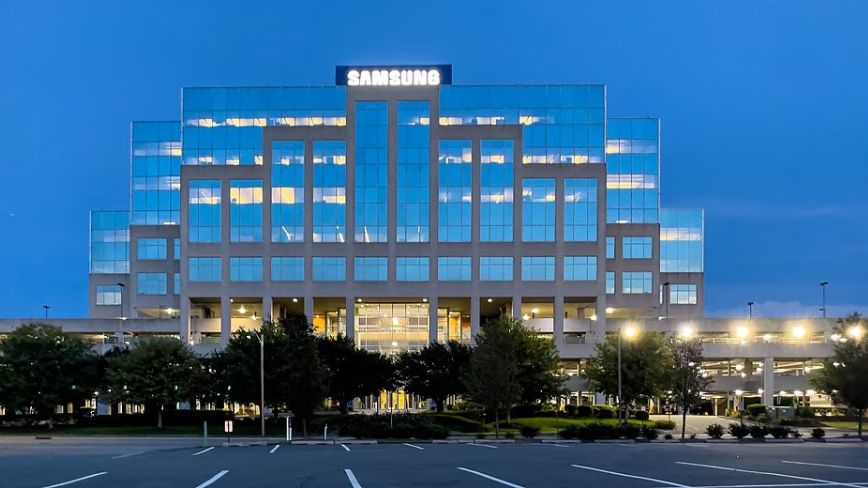
Crucial Negotiations for Samsung: Chip Factory Strike Threatens Supply Chain
Samsung Electronics and its largest labor union returned to the negotiating table on Monday, in a meeting described by South Korean Prime Minister Kim Min-Seok as "virtually the last chance" to avert a strike. The stakes are high: an 18-day production halt at the world's largest memory chipmaker.
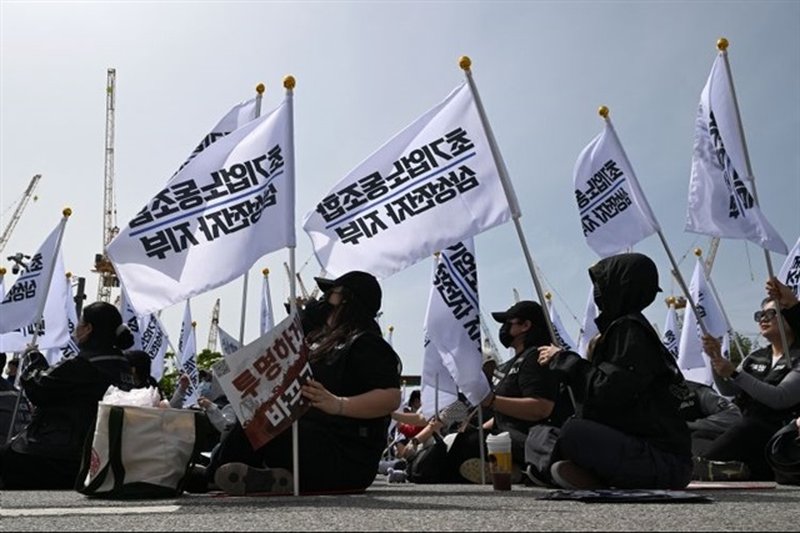
Should the talks fail, over 41,000 confirmed union participants, a number expected to exceed 50,000, will walk off the job. This scenario raises significant concerns not only for Samsung but for the entire global tech industry, given the company's dominant position in the memory chip sector.
The Impact on the Global Supply Chain
A prolonged disruption in memory chip production by a player as significant as Samsung could have cascading repercussions across the entire technology supply chain. Memory chips, including those used as VRAM in GPUs and as RAM in servers, are fundamental components for a wide range of devices and infrastructures, from data centers to artificial intelligence systems.
For organizations planning or managing on-premise Large Language Models (LLM) deployments, the stability of the hardware supply chain is a critical factor. The availability of silicon, particularly high-performance memory modules, directly influences the ability to scale infrastructure, keep costs under control, and ensure operational continuity.
Considerations for On-Premise Deployments
Volatility in the availability of key components, such as memory chips, can have a direct impact on the Total Cost of Ownership (TCO) of self-hosted AI deployments. Delays in deliveries or unexpected price increases can significantly alter expenditure projections, making long-term planning more complex.
Companies opting for on-premise solutions for reasons of data sovereignty, compliance, or the need for air-gapped environments must carefully consider supply chain risks. A robust procurement strategy, including supplier diversification and inventory management, becomes essential to mitigate these risks and ensure that infrastructure can be built and maintained without interruption. The ability to source specific hardware, such as GPUs with high VRAM, is often a primary constraint for the efficient implementation of complex LLMs.
Outlook and Future Scenarios
The outcome of the negotiations between Samsung and its union will be closely watched by the entire industry. Regardless of the immediate result, the situation highlights the fragility of global supply chains and their susceptibility to external factors, including labor disputes.
For CTOs, DevOps leads, and infrastructure architects evaluating self-hosted alternatives versus cloud solutions for AI/LLM workloads, this scenario reinforces the need for thorough risk assessment. Supply chain resilience is a key element in deployment decisions, influencing not only initial costs but also the long-term sustainability and scalability of AI infrastructure. AI-RADAR offers analytical frameworks on /llm-onpremise to evaluate these complex trade-offs.







💬 Comments (0)
🔒 Log in or register to comment on articles.
No comments yet. Be the first to comment!