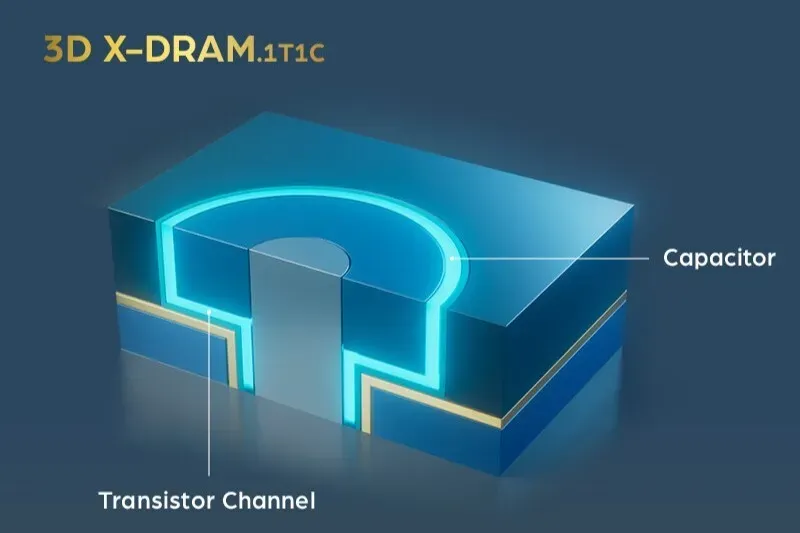
NEO Semiconductor: 3D X-DRAM validata, un'alternativa HBM per i processori AI
NEO Semiconductor ha annunciato un significativo passo avanti nel campo delle memorie ad alte prestazioni per l'intelligenza artificiale. L'azienda ha infatti validato il proof-of-concept della sua tecnicia 3D X-DRAM, una soluzione innovativa progettata specificamente per i processori AI. Questo sviluppo segna un potenziale punto di svolta per l'architettura della memoria nei sistemi dedicati ai carichi di lavoro di intelligenza artificiale, offrendo una nuova prospettiva rispetto alle attuali soluzioni dominanti.
La validazione del proof-of-concept non è solo una conferma della fattibilità tecnica, ma anche un segnale che la tecnicia è pronta per le fasi successive di sviluppo. L'azienda ha inoltre comunicato di aver ottenuto finanziamenti mirati a portare avanti lo sviluppo di questa memoria di nuova generazione, che si propone come un'alternativa alla High Bandwidth Memory (HBM), attualmente uno standard de facto per gli acceleratori AI più performanti.
Il Dettaglio Tecnico della 3D X-DRAM
La 3D X-DRAM di NEO Semiconductor si distingue per la sua architettura tridimensionale, che promette di superare i limiti delle memorie DRAM tradizionali in termini di densità e bandwidth. Mentre la DRAM convenzionale è tipicamente planare, l'approccio 3D consente di impilare verticalmente gli strati di memoria, aumentando significativamente la capacità e la velocità di trasferimento dei dati all'interno di un ingombro fisico ridotto. Questo è un fattore cruciale per i processori AI, che richiedono un accesso rapidissimo a enormi quantità di dati per l'elaborazione di LLM e altri modelli complessi.
Attualmente, la High Bandwidth Memory (HBM) è la soluzione preferita per le GPU e gli acceleratori AI di fascia alta, grazie alla sua capacità di fornire un'ampia larghezza di banda e una bassa latenza. Tuttavia, la HBM presenta anche sfide legate ai costi di produzione, alla complessità di integrazione e al consumo energetico. La 3D X-DRAM si propone di affrontare queste sfide, offrendo un'alternativa che potrebbe combinare i vantaggi di alta bandwidth con una maggiore efficienza o costi di produzione potenzialmente inferiori, rendendola attraente per un'adozione più ampia.
Implicazioni per i Deployment AI On-Premise
Per le organizzazioni che valutano deployment on-premise di carichi di lavoro AI, l'emergere di alternative alla HBM come la 3D X-DRAM è di grande interesse. La disponibilità di memorie con maggiore densità e bandwidth può influenzare direttamente la capacità di eseguire LLM più grandi o modelli più complessi su hardware self-hosted. Questo si traduce in una migliore performance per token/sec, una maggiore batch size e una latenza ridotta, fattori critici per applicazioni enterprise che richiedono risposte rapide e scalabilità.
Un'alternativa HBM più efficiente o meno costosa potrebbe avere un impatto significativo sul Total Cost of Ownership (TCO) delle infrastrutture AI. Riducendo i costi hardware iniziali o migliorando l'efficienza energetica, le aziende potrebbero trovare più conveniente costruire e mantenere i propri cluster AI, rafforzando la sovranità dei dati e il controllo sull'intera pipeline. Per chi valuta deployment on-premise, esistono trade-off complessi tra CapEx, OpEx, performance e requisiti di compliance, e nuove tecnicie di memoria possono spostare l'ago della bilancia.
Prospettive Future e Impatto sul Mercato
Il finanziamento assicurato da NEO Semiconductor è un chiaro indicatore della fiducia del mercato nel potenziale della 3D X-DRAM. Lo sviluppo di una memoria di nuova generazione che possa competere con la HBM è un'impresa ambiziosa, ma il successo del proof-of-concept suggerisce che l'azienda è sulla buona strada. Se la 3D X-DRAM dovesse raggiungere la maturità commerciale, potrebbe non solo offrire una nuova opzione per i produttori di processori AI, ma anche stimolare l'innovazione nell'intero settore delle memorie.
L'impatto potenziale si estende oltre le sole prestazioni, toccando aspetti come la densità di integrazione, il consumo energetico e, in ultima analisi, il costo per bit. Questi fattori sono fondamentali per l'adozione su larga scala dell'AI, sia nei data center che in scenari edge. L'evoluzione delle tecnicie di memoria come la 3D X-DRAM sarà cruciale per sbloccare le prossime generazioni di capacità di calcolo AI, supportando modelli sempre più grandi e complessi.





💬 Commenti (0)
🔒 Accedi o registrati per commentare gli articoli.
Nessun commento ancora. Sii il primo a commentare!