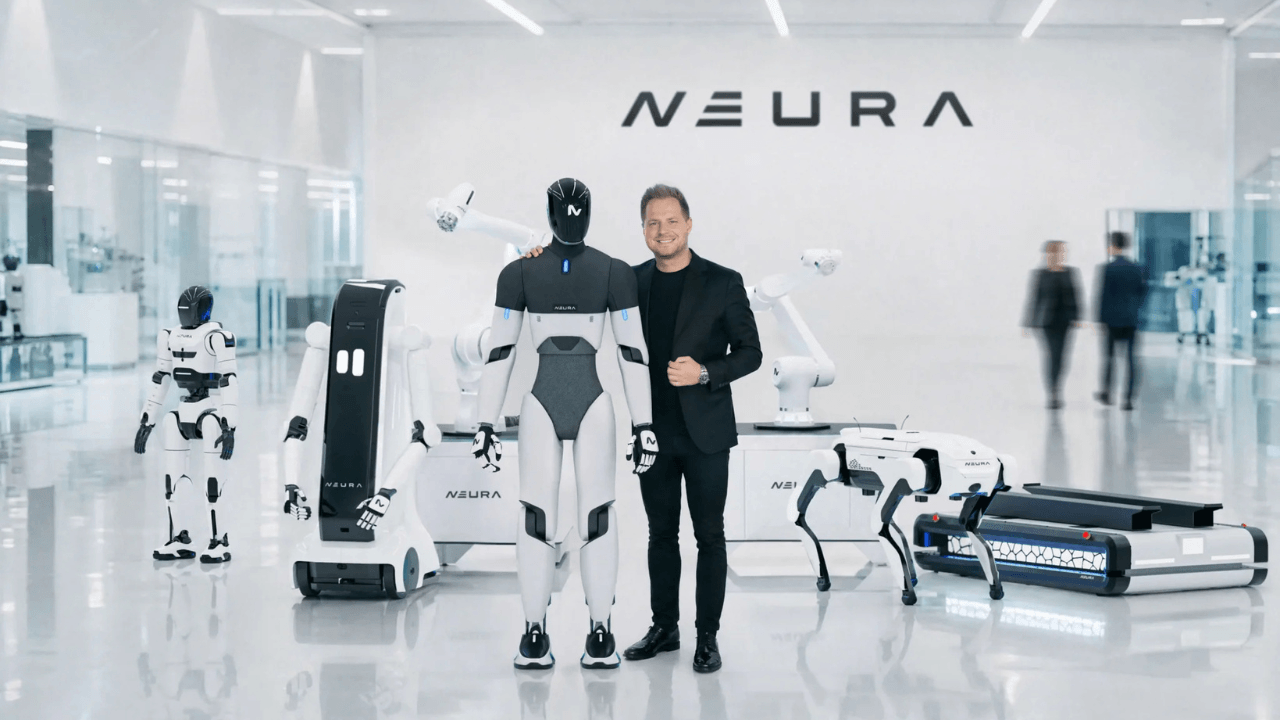
NEURA Robotics Raises $1.4 Billion for Physical AI
NEURA Robotics, a pioneering company in the robotics sector, recently announced a significant Series C funding round, reaching $1.4 billion. This investment represents the largest ever recorded for a "full-stack" robotics company, underscoring the enormous potential investors see in NEURA's vision for the future of artificial intelligence. The primary goal of this capital is to accelerate the development and scalability of its "physical AI" and cognitive robotics platform.
Among the investors who participated in this round are prominent names in the technological and financial landscape, including Tether, Qualcomm Technologies, Amazon, NVIDIA, imec.xpand, Bosch, Schaeffler, the European Investment Bank, Lingotto Horizon, and InterAlpen Partners. The presence of key players in the semiconductor and cloud sectors, such as NVIDIA and Amazon, highlights the strategic intersection between AI, hardware, and large-scale learning infrastructures.
The Unified Platform for Cognitive Robots
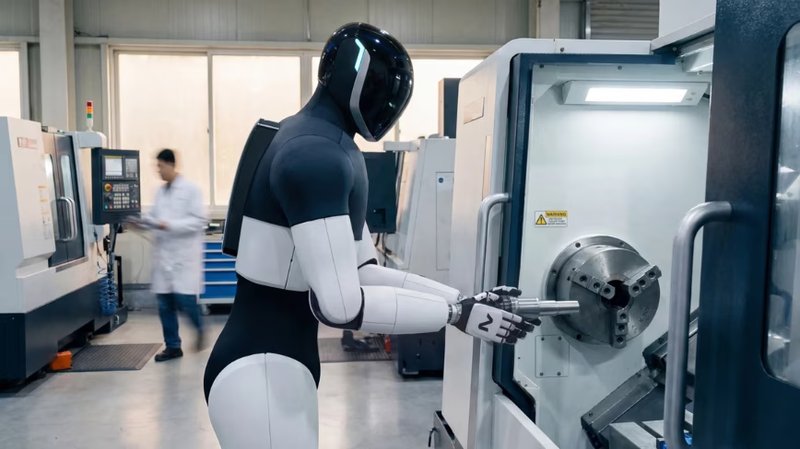
At the core of NEURA Robotics' proposition is the creation of a new category of AI infrastructure, centered on cognitive robots. These systems are designed to continuously learn, collaborate, and operate in real-world environments, all on an intelligent, shared platform the company calls "Neuraverse." This vision distinctly differs from traditional robotics approaches, which often rely on isolated machines or industrial automation with limited capabilities.
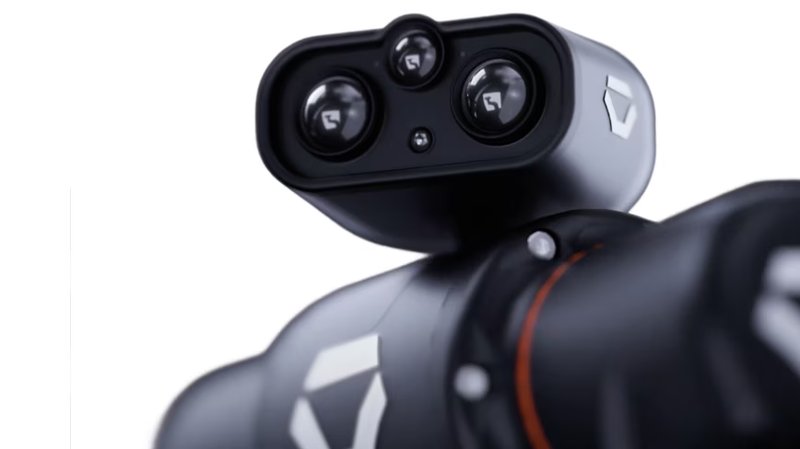
NEURA's platform synergistically integrates robotics, AI, sensors, edge computing, and large-scale learning infrastructures, creating a unified architecture that can be deployed globally. The emphasis on edge computing is particularly relevant for companies evaluating on-premise or hybrid deployments, as it enables data processing and AI execution closer to the point of physical interaction, reducing latency and ensuring greater data control. This approach is fundamental for data sovereignty and compliance in sensitive sectors.
Scalability and Deployment Implications
With this significant capital infusion, NEURA Robotics intends to scale mass production to reach millions of robots by 2030. Concurrently, the company will accelerate the global rollout of "NEURA Gyms," the world's first real-world training environments dedicated to cognitive robots and physical AI. These "Gyms" represent a crucial innovation for training AI systems that must interact with the complexity of the physical world, providing a practical context for continuous learning.
NEURA's strategic partnerships with industrial and AI leaders, such as Bosch, Schaeffler, Kawasaki, Qualcomm Technologies, Amazon, and NVIDIA, position the company at the intersection of robotics, industrial automation, and artificial intelligence. The current strategic deployment pipeline and order backlog already exceed $1 billion, demonstrating the growing demand for physical AI solutions. For CTOs and infrastructure architects, the advancement of these technologies raises new considerations regarding hardware requirements, data management, and distributed deployment strategies.
The Vision of an Interactive Future
David Reger, founder and CEO of NEURA Robotics, emphasizes that the future of AI will not be confined to screens but will manifest in the real world, interacting, learning, and working alongside us. This transition to physical AI and cognitive robotics is seen as one of the biggest technological leaps of the coming decades, poised to fundamentally transform key sectors such as manufacturing, logistics, healthcare, services, and household robotics.
The company believes its next decisive competitive advantage lies in combining intelligence with real-world interaction, advanced sensing, and scalable infrastructure. As Reger states, in the future, people will not just ask what AI can "tell" them, but what it can "physically accomplish." This vision aligns with the need for robust and controllable AI systems that can operate in complex and critical environments, a fundamental aspect for those evaluating AI solutions with a focus on data sovereignty and operational control.





💬 Comments (0)
🔒 Log in or register to comment on articles.
No comments yet. Be the first to comment!