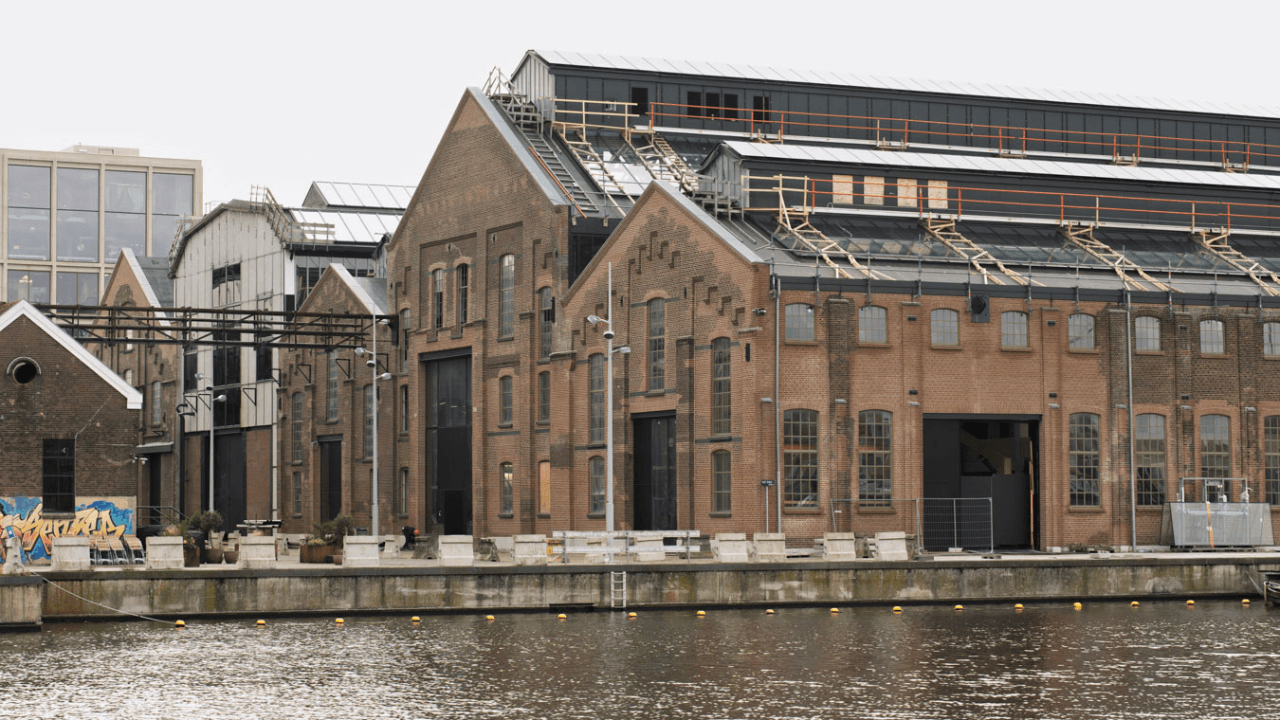
Norrsken Evolve, the pre-seed fund born within the Norrsken Foundation ecosystem, has closed its second vehicle at €62 million, well above its initial €40 million target. At the same time, it is formalizing its presence in Amsterdam at Norrsken House, a hub that will host startups and investors from September 2026. The financial news contains a detail worth highlighting for those tracking AI infrastructure: among the sectors the fund will invest in — writing tickets up to €500,000 per company across 20 to 30 deals a year — AI infrastructure is explicitly listed, alongside robotics, biotech, next-generation materials and renewable energy.
That detail is not trivial. In Europe, pre-seed capital for startups building hardware, networking or frameworks for AI is scarce. Large institutional funds tend to step in after technical de-risking, when multi-million checks are needed to scale. But the building blocks of an on-premise stack — from inference-optimized servers to cooling systems, to runtime environments for orchestrating quantized LLMs — almost always come from small teams with modest early-stage capital needs. Norrsken Evolve, with its ability to provide first institutional money to companies that would otherwise struggle to get started, could become an enabler of solutions designed for local data control and energy efficiency.
The choice of Amsterdam is not random. The Netherlands is becoming a data center hub for Europe, thanks to its geographic position and renewable energy availability. Yet the Dutch pre-seed ecosystem, as General Partner Alex Bakir acknowledges, has “real gaps” precisely at the stage where institutional capital pulls back. The fund estimates it will allocate about 5% of its capital — around €3 million — to Dutch startups, targeting 5 to 8 investments. Two deals have already closed: New Dawn Bio (wood alternatives) and Spiral Hydrogen (green hydrogen), with a third expected by end of 2026. Neither is AI infrastructure, but the team’s track record — 75% of portfolio companies have raised follow-on rounds — suggests the network and the in-house sprint program can be extended to AI infrastructure ventures.
What does this mean for those evaluating on-premise LLM deployment? Europe suffers from chronic dependence on components designed elsewhere, especially GPUs and high-bandwidth switches. Accelerating the birth of startups working on open alternatives or hybrid architectures (edge-cloud, self-sufficient micro-datacenters) could, over the medium term, diversify supply. It is not science fiction: there are already European companies developing low-power inference hardware, but they often remain stuck in research labs for lack of initial funding. A fund like Norrsken Evolve, with a Limited Partner base that includes the European Investment Fund and public funds from Sweden and Estonia, can activate that virtuous cycle of patient capital and technical expertise that Europe lacks compared to the United States.
The oversubscribed close — at a time when European tech venture capital is under pressure — signals that demand for autonomous and resilient infrastructure is no passing fad. Digital sovereignty constraints, GDPR regulations and cloud cost volatility are pushing enterprises and public administrations to look more seriously at self-hosted solutions. If pre-seed capital consistently reaches those building the physical and software bricks of such solutions, we could see a narrowing of the time-to-market for on-premise stacks that are genuinely competitive on TCO.
It remains to be seen whether Norrsken Evolve — and similar funds — will pick the right startups in a field, AI hardware, where development cycles are long and technical risks high. But the Amsterdam news is one more building block in constructing a European alternative to the dominance of major cloud providers. Readers following these dynamics on AI-RADAR know that moving from prototype to production-ready systems takes time, but without that first check, the path never even begins.




💬 Comments (0)
🔒 Log in or register to comment on articles.
No comments yet. Be the first to comment!