
NSA Adopts Claude Mythos for Offensive Cyber Operations: An Air-Gapped LLM for Intelligence
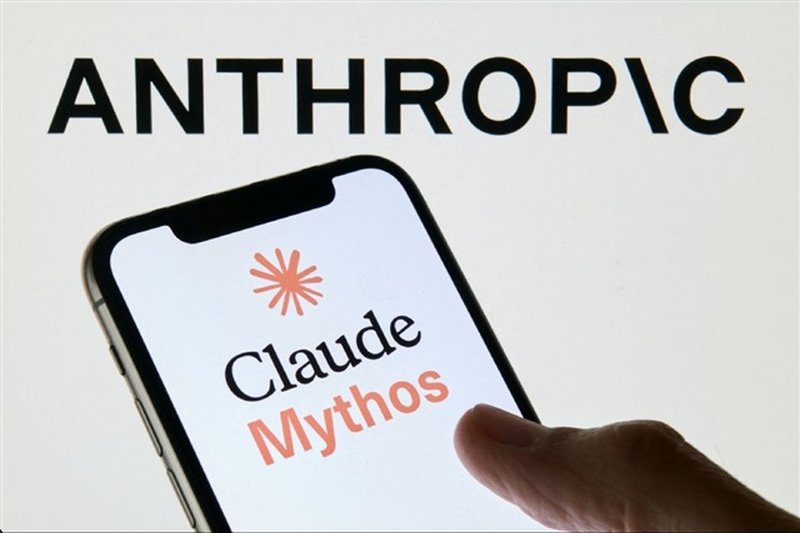
A recent report by The Intercept has raised significant questions about the integration of advanced artificial intelligence into national security operations. According to the publication, the U.S. National Security Agency (NSA) is reportedly employing Claude Mythos, a highly customized and "air-gapped" version of Anthropic's LLM, to conduct offensive cyber operations. The news, based on anonymous sources familiar with the program, indicates a deep collaboration that also includes the embedding of approximately half-a-dozen Anthropic engineers directly within the agency.
This revelation underscores the growing trend of government agencies exploring the potential of Large Language Models for sensitive tasks. The use of an LLM in such a delicate context, like the development of cyberattack capabilities, highlights both the opportunities and the complex ethical and security challenges that arise with the adoption of these technologies.
Technical Details and Operational Context of Claude Mythos
Claude Mythos is not just any LLM. It is described as a variant of Anthropic's Claude, specifically adapted and configured to operate in classified and "air-gapped" environments. This means the model is physically isolated from external networks, ensuring an extremely high level of security and data sovereignty, which is fundamental for intelligence operations. Customization and isolation are crucial aspects for any entity handling sensitive information, such as critical government or enterprise data.
Its primary purpose is reportedly to assist NSA analysts in identifying vulnerabilities in foreign systems and developing new cyberattack capabilities. This deployment highlights how LLMs can be used not only for analyzing large volumes of text or generating content but also for more complex and strategic tasks that require deep contextual understanding and the ability to generate innovative solutions. For organizations evaluating LLM deployment in high-security contexts, the choice of "self-hosted" and "air-gapped" solutions often becomes a non-negotiable requirement, prioritizing total control over infrastructure and data.
Security and Ethical Implications
The integration of advanced LLMs into national security operations raises a series of complex issues. From a security perspective, although an "air-gapped" environment significantly reduces data exfiltration risks, the very nature of LLMs, with their potential "black box" aspect and the difficulty of tracing the reasoning behind each output, presents new challenges. The verification and validation of outputs generated by an LLM in an "offensive cyber operations" context require extremely rigorous protocols to avoid errors with potentially serious consequences.
On the ethical front, the collaboration between a private technology company and an intelligence agency for the development of offensive capabilities raises questions about the role of companies in the global security landscape. The presence of Anthropic engineers directly within the NSA suggests a deep level of integration, which could blur the lines between commercial development and classified government operations. This scenario necessitates careful consideration of regulatory frameworks and ethical responsibilities that accompany the advancement of artificial intelligence in such critical sectors.
Future Prospects and Trade-offs in LLM Deployment
The case of Claude Mythos and the NSA offers significant insight into the future directions of LLM adoption in governmental and high-security enterprise contexts. The need for data sovereignty, regulatory compliance, and "air-gapped" environments increasingly drives organizations towards on-premise or hybrid "deployment" solutions. Organizations must balance the desire to leverage advanced LLM capabilities with the essential need to maintain complete control over their data and operations.
The trade-offs between access to cutting-edge models offered by cloud providers and the security and control guaranteed by a "self-hosted" infrastructure are central to strategic decisions for CTOs and infrastructure architects. For those evaluating on-premise deployments, AI-RADAR offers analytical frameworks on /llm-onpremise to assess these trade-offs, considering aspects such as TCO, hardware specifications (e.g., VRAM for inference), and compliance requirements. The story of Claude Mythos highlights that, for the most critical applications, control and security often outweigh cloud convenience.








💬 Comments (0)
🔒 Log in or register to comment on articles.
No comments yet. Be the first to comment!