
Jensen Huang turned his Tokyo week into a mass recruitment drive. Twenty-two names that map the Japanese robotics establishment — from FANUC to Honda R&D, from Kawasaki Heavy Industries to Fujitsu — have joined the Cosmos Coalition, the open program through which Nvidia aims to colonize the nascent physical AI sector. The announcement, timed to the CEO’s visit, is not a simple tally of endorsements: it is an attempt to make Nvidia’s hardware-software stack the de facto operating system for future industrial robots.
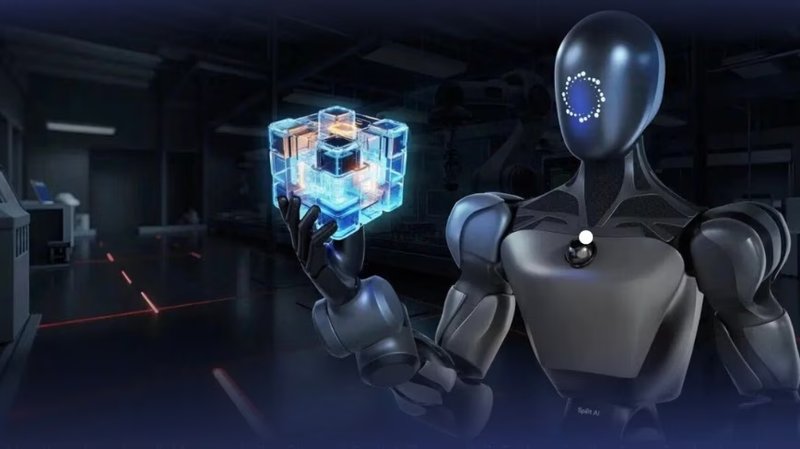
Cosmos is presented as a set of open “world models”: tools to train and simulate robotic behaviors in virtual environments ahead of real-world deployment. Behind the “open” label hides a deep technical dependency. The models are heavy, run on GPUs, and require inference pipelines that Nvidia controls from the accelerator to the middleware. For a robot manufacturer, it means integrating not just a framework but an entire ecosystem: from chips to data handling. And that is where the marriage with industrial Japan acquires systemic value.
Japanese manufacturing is notoriously cautious about adopting external platforms, especially when production data is involved. Yet the simultaneous entry of giants like Kubota, Hitachi, and Mitsui signals urgency: global competition in AI-driven automation is accelerating, and for Japanese firms to stay out of the physical model game would mean losing irrecoverable ground. Accepting Nvidia’s rules is a calculated compromise: they gain state-of-the-art simulation tools and a faster path to adaptive robotics, but they cede part of their technological sovereignty.
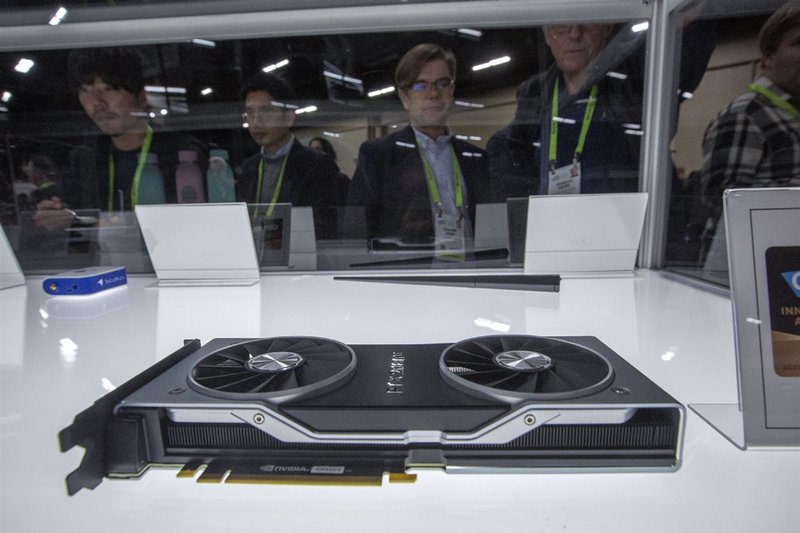
For Nvidia, the move means more than capturing the Japanese market. Industrial robotics operates almost exclusively on-premise or at the edge: factories demand ultra-low latency and cannot depend on the cloud. Tying robot manufacturers to an ecosystem that presupposes local GPU usage means extending hardware sales from data centers to the shop floor. It is a structural shift: the company that thrived on cloud AI is now laying track for distributed physical inference, where the compute unit is no longer a remote rack but a metal cabinet on the production line.
The risk for the whole industry is a new lock-in. If FANUC, Honda, and the others embed Cosmos into their development pipelines, the cost of migrating to alternative solutions — perhaps based on different chips or truly open frameworks — will become prohibitive. Meanwhile, the crowd of companies that today rely on ROS or open-source simulators could find themselves progressively marginalized as Nvidia turns its proprietary ecosystem into the reference standard for embodied AI.
The Japanese companies’ choice also highlights an unresolved tension between openness and control. The program is called “open,” but the models run effectively only on Nvidia hardware. For anyone evaluating on-premise deployment — and here deployment is by definition local — the trade-off is between speed of adoption and genuine technological independence. It is no accident that Japan, with its hyper-automated factories, is the first proving ground: if the model holds here, it can be exported to every industrial district on the planet. The Tokyo announcement, in essence, sends a clear signal that the battle for control of physical AI will increasingly be fought far from cloud servers and increasingly inside factory gates.







💬 Comments (0)
🔒 Log in or register to comment on articles.
No comments yet. Be the first to comment!