
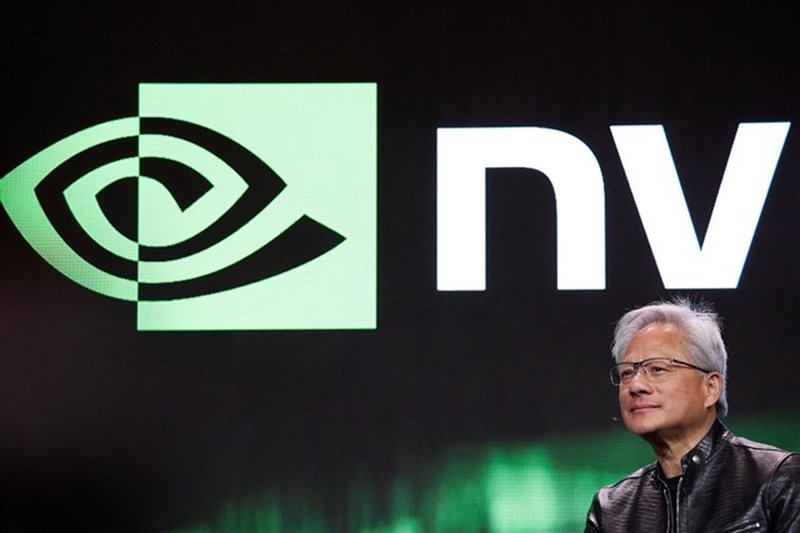
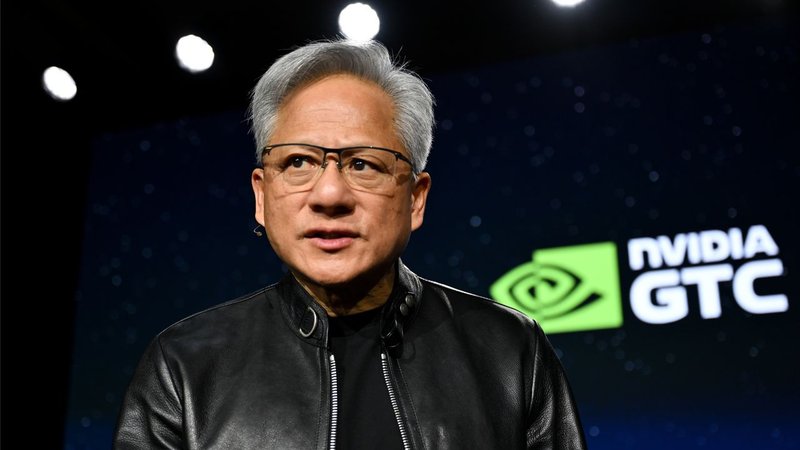
Nvidia is knocking on the doors of Chinese telcos to anchor its GPUs into tomorrow’s infrastructure. The company is actively seeking local partners specialized in AI-RAN, the technology that merges artificial intelligence with radio access networks, with a clear goal: to bring computing power directly into 6G networks. Industry sources confirm that the Santa Clara giant does not want to remain confined to data centers, but aims to become a structural component even at the extreme edge of connectivity.
AI-RAN represents a paradigm shift. Instead of the traditional separation between centralized processing units and dumb base stations, the new approach envisions network functions, radio scheduling, and even LLM inference workloads running on accelerated hardware distributed across the territory. Less latency, greater spectral efficiency, and, crucially, the ability to process data on-site without letting it leave the jurisdiction.
For the Chinese market, this second aspect is not an option but a mandate. Data localization regulations require sensitive information to stay within national borders. That is why Nvidia’s effort is not a simple commercial play, but a necessary adaptation to Beijing’s rules: without a solid ecosystem of local partners, US-made GPUs would be shut out of a colossal slice of next-generation infrastructure. The decision to seek alliances in China, specifically, says a lot about how data sovereignty is steering deployment architectures.
This move signals something structural for anyone evaluating on-premise or edge deployment. 6G networks, with native AI integration, will turn antennas into compute nodes. No longer simple repeaters, but true distributed inference points. Nvidia’s hardware—presumably Jetson-family solutions or future telco-optimized variants—would become the shared substrate on which to run language models, predictive analytics, and cognitive radio automation, all in a self-hosted fashion without touching the cloud. For Chinese operators, embracing this architecture would allow them to offer ultra-low-latency AI services to enterprises and public administrations while respecting data residency.
Who wins and who loses? Nvidia, obviously, if it manages to place its silicon in thousands of edge sites, embedding itself in a sector historically governed by different logics. Chinese telcos, which can differentiate themselves with advanced AI services without depending on external hyperscalers. Enterprise customers, who will see more options for running inference on sensitive data without sacrificing speed. On the losing side, major cloud providers risk being leapfrogged at a critical junction: if AI already runs on the antenna, value shifts from the remote data center to the network periphery. Local GPU makers, such as those based on the Huawei Ascend architecture, could also face pressure if Nvidia succeeds in imposing its software ecosystem—CUDA remains a tough barrier to dismantle—in a new space.
Nvidia’s initiative reaffirms that the on-premise game is not played solely in data center racks, but along the entire distributed computing chain. While other markets still debate hybrid cloud, China is already imposing a model where technological sovereignty and physical collocation of processing become prerequisites for existence. Anyone designing on-premise AI solutions would do well to watch this trajectory: the future of inference is not a monolith somewhere in the cloud, but a network of dispersed silicon, ever closer to those who produce the data.








💬 Comments (0)
🔒 Log in or register to comment on articles.
No comments yet. Be the first to comment!