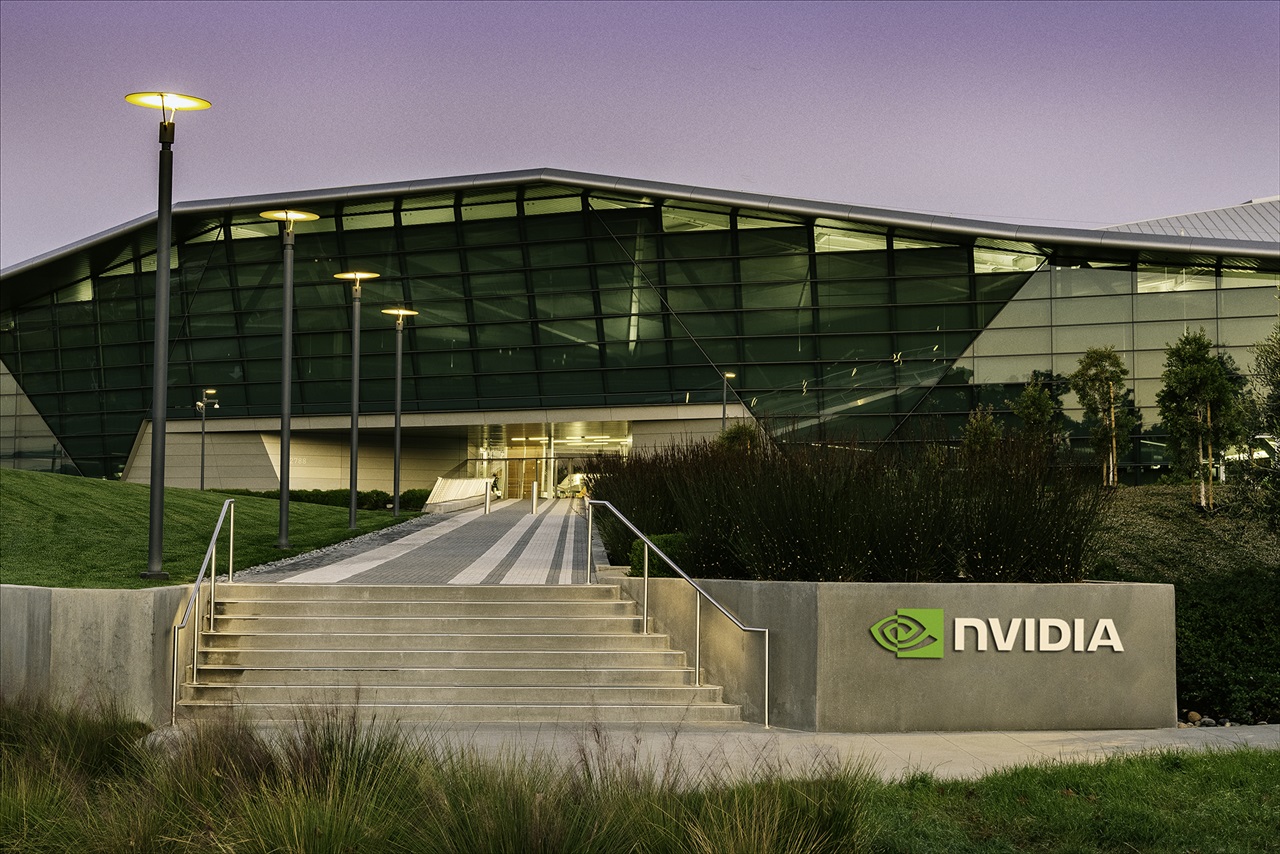
A Strategic Alliance for AI Infrastructure
Nvidia and Corning, two giants in their respective fields, have announced a strategic collaboration aimed at significantly boosting optical component manufacturing capacity in the United States. The stated goal is a tenfold increase over current levels, a step that underscores the growing importance of optical technologies for the evolution of digital infrastructure.
This partnership is set against a global backdrop of strong demand for high-speed connectivity solutions, driven particularly by the explosion of artificial intelligence and Large Language Models. The ability to locally produce critical components is becoming a key factor for supply chain resilience and technological sovereignty, aspects that are increasingly central to enterprise deployment strategies.
The Crucial Role of Optics in AI Workloads
The infrastructure required to train and perform inference for complex LLMs demands extremely high bandwidth and low latency. Modern data centers, and particularly GPU clusters dedicated to AI, increasingly rely on optical interconnects to ensure high-speed communication between processors. Technologies like NVLink and InfiniBand, which often utilize optical fiber for long-distance or inter-rack connections, are fundamental for scaling computational performance.
An increase in the manufacturing capacity of optical components in the United States can therefore have a direct impact on the availability and cost of these vital interconnects. This translates into benefits for companies designing and building AI data centers, influencing the speed of deployment and the scalability of their systems, from bare metal servers to more complex architectures.
Implications for On-Premise Deployments and Data Sovereignty
For organizations evaluating on-premise deployments of AI workloads, the availability of a robust and localized supply chain is a decisive factor. The partnership between Nvidia and Corning addresses this need, offering greater predictability and reducing risks associated with reliance on foreign suppliers or global disruptions. This is particularly relevant for sectors with stringent data sovereignty, compliance, and security requirements, which often opt for self-hosted or air-gapped solutions.
A stronger optical manufacturing infrastructure in the US can help optimize the Total Cost of Ownership (TCO) for long-term AI deployments, stabilizing component costs and ensuring faster access to innovations. For those evaluating on-premise deployments, complex trade-offs exist between initial CapEx, OpEx, performance, and control. While AI-RADAR offers analytical frameworks on /llm-onpremise to evaluate these aspects, it is clear that a more resilient supply chain is a tangible advantage.
Future Prospects for the AI Ecosystem
Nvidia and Corning's initiative not only strengthens the production of essential components but also signals a broader trend towards the regionalization of supply chains for strategic technologies. This approach can foster innovation and competitiveness, providing a more solid foundation for the development of future generations of AI hardware and software.
The continuous evolution of Large Language Models and the increasing complexity of AI workloads will demand ever faster and more efficient interconnects. The ability to produce these components at scale and in proximity to consumer markets is a fundamental step to support the exponential growth of the sector. The partnership is thus positioned as a key element for the evolution of AI infrastructure, both for large hyperscalers and for companies choosing private, controlled solutions.




💬 Comments (0)
🔒 Log in or register to comment on articles.
No comments yet. Be the first to comment!