
Nvidia and Infineon: The Alliance for AI Energy Efficiency
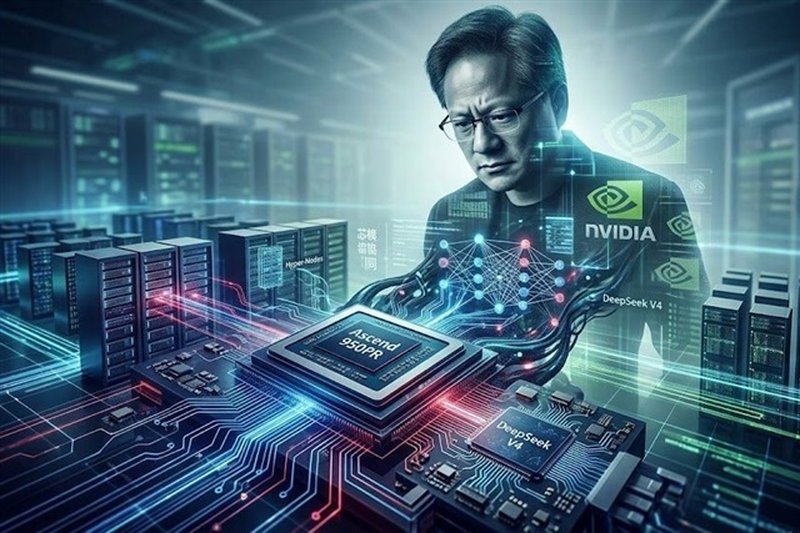
The artificial intelligence industry faces a growing challenge: managing energy consumption. With the escalation of computational demands for training and inference of Large Language Models (LLMs) and other AI workloads, power limits are becoming a critical factor. In this context, key players like Nvidia and Infineon are intensifying collaboration, focusing on supply chain co-design to address these issues.
This strategic partnership aims to optimize every aspect of the supply chain, from chip design to their integration into final systems. The objective is to ensure that AI hardware not only delivers high performance but does so with superior energy efficiency, a fundamental requirement for the sustainability and scalability of modern AI infrastructures.
The Challenge of AI Power Limits
The exponential advancement in the capabilities of LLMs and other artificial intelligence models has led to a parallel increase in computing requirements. Each new generation of GPUs, while offering a significant performance leap, often also entails an increase in power requirements. This places considerable pressure on data centers, particularly those adopting a self-hosted or on-premise approach.
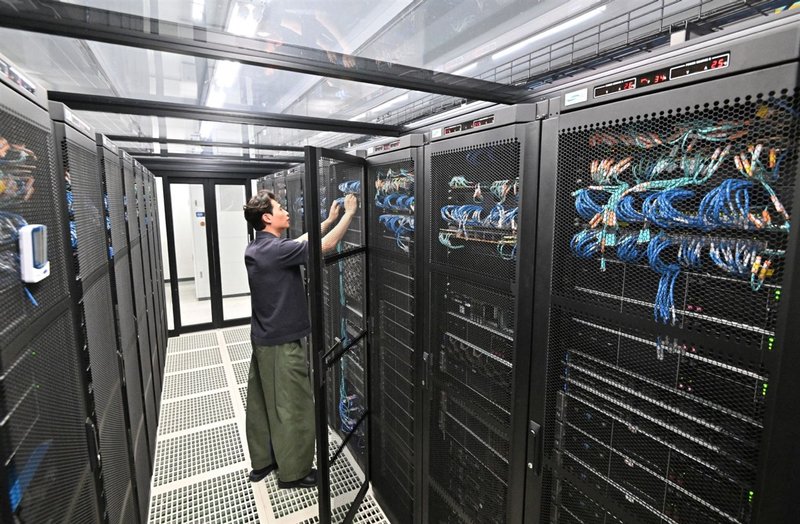
Heat management and power availability become primary constraints. For CTOs and infrastructure architects, this translates into the need to invest not only in powerful computing hardware but also in advanced cooling systems and robust power infrastructures. Ignoring these aspects can lead to high operational costs (OpEx) and limitations in the density of GPU deployments.
The Role of Co-design in the Supply Chain
The concept of supply chain co-design, promoted by companies like Nvidia and Infineon, is a direct response to these challenges. Instead of optimizing components in isolation, co-design involves deep collaboration between chip suppliers (like Infineon, specializing in power management semiconductors) and AI accelerator manufacturers (like Nvidia). This approach allows for the design of integrated solutions that maximize energy efficiency at the system level.
For example, voltage regulator modules (VRMs) and power management circuits can be optimized to work in perfect synergy with GPUs, reducing energy losses and improving thermal stability. This not only extends the lifespan of the hardware but also allows for achieving higher computing densities within the same power and cooling constraints, a competitive advantage for those managing complex AI infrastructures.
Implications for On-Premise Deployments and TCO
For organizations evaluating or managing on-premise AI deployments, the emphasis on energy efficiency and supply chain co-design has direct implications for the Total Cost of Ownership (TCO). More efficient hardware means lower operational energy costs and reduced investments in cooling and power infrastructure. This is particularly relevant for air-gapped environments or those with stringent data sovereignty requirements, where reliance on external cloud services is not an option.
The choice of energy-efficient components thus becomes a strategic decision that balances performance, costs, and sustainability. While high-end GPUs like the Nvidia H100 or A100 series offer exceptional performance, their integration into an on-premise infrastructure requires careful evaluation of power consumption and cooling capacity. Co-design among key supply chain players promises to deliver more balanced solutions, enabling companies to scale their AI capabilities while keeping operational costs and energy footprint under control. For those evaluating on-premise deployments, AI-RADAR offers analytical frameworks on /llm-onpremise to assess the trade-offs between performance, efficiency, and TCO.






💬 Comments (0)
🔒 Log in or register to comment on articles.
No comments yet. Be the first to comment!