Nvidia and LG Group: A Strategic AI Partnership in Korea
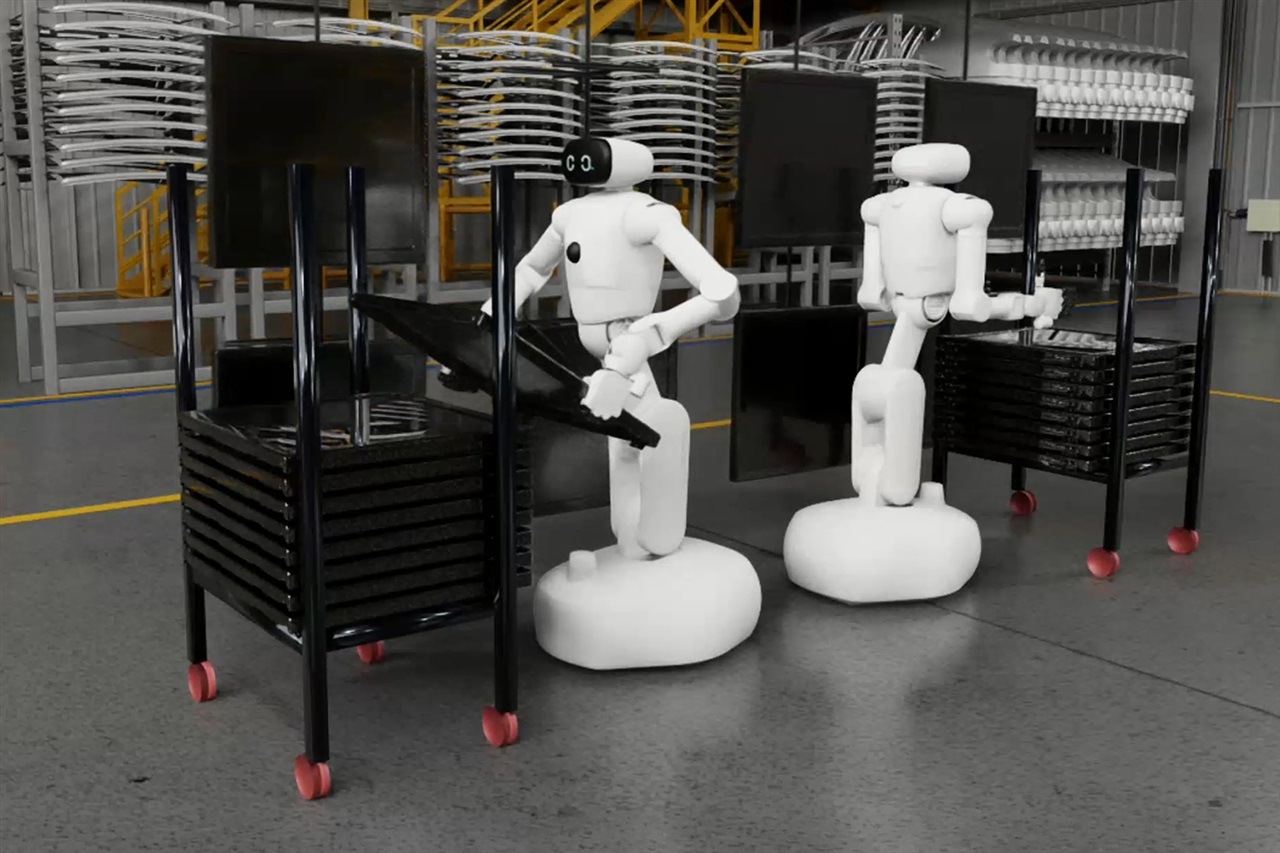
Nvidia and LG Group have announced an expansive collaboration focused on the development and implementation of advanced artificial intelligence solutions. This partnership, taking shape in Korea, spans key sectors such as "AI factories," robotics, and autonomous driving, signaling a joint commitment to large-scale technological innovation.
The agreement between two industry giants—one a leader in accelerated computing technologies and the other a diversified conglomerate with a strong presence in electronics and automotive—promises to accelerate the adoption of AI solutions that require robust and specialized computational infrastructures.
Collaboration Areas and Technical Implications
The concept of an "AI factory" implies the creation of large-scale computational environments designed for intensive training of Large Language Models (LLMs) and other AI models, as well as for high-throughput Inference. These environments demand significant hardware infrastructure, typically based on high-performance GPUs capable of handling enormous data volumes and complex workloads. The collaboration between Nvidia and LG in this area suggests the development of internal capabilities for managing the entire AI lifecycle, from data collection to model Deployment.
Concurrently, the robotics and autonomous driving sectors present unique computational challenges. Robotic systems and autonomous vehicles require real-time processing capabilities to perceive their environment, make decisions, and act with precision. This often necessitates Inference directly at the edge or in self-hosted environments, where latency is critical, and cloud connectivity may not always be guaranteed or sufficiently fast. The partnership aims to integrate Nvidia's expertise in silicon and AI Frameworks with LG's experience in hardware and system engineering to develop cutting-edge solutions in these fields.
The Context of On-Premise Deployment and Data Sovereignty
For companies like LG, operating in sensitive sectors such as automotive and industrial robotics, the choice of infrastructure Deployment is strategically important. Building "AI factories" and developing autonomous driving or robotic systems often benefits from an on-premise or hybrid approach. This allows for granular control over hardware, data security, and regulatory compliance—crucial aspects for data sovereignty and for air-gapped environments.
A self-hosted Deployment can offer significant advantages in terms of Total Cost of Ownership (TCO) in the long term for intensive and predictable AI workloads, despite a higher initial CapEx investment. Furthermore, it ensures that sensitive data remains within corporate or national borders, addressing increasingly stringent compliance requirements. For those evaluating on-premise Deployment, AI-RADAR offers analytical frameworks on /llm-onpremise to assess the trade-offs between control, performance, and operational costs.
Future Prospects and Trade-offs
This partnership between Nvidia and LG Group underscores a growing trend in the technological landscape: the need for large enterprises to internalize and control their AI capabilities. The investment in dedicated infrastructure for AI factories, robotics, and autonomous driving reflects the understanding that these technologies are central to future competitiveness.
However, managing such infrastructures involves significant trade-offs. While gaining greater control, security, and potentially lower TCO at scale, companies also face operational complexities, the need for specialized skills, and an initial capital commitment. The collaboration between Nvidia and LG Group represents an example of how companies are addressing these challenges, joining forces to build the foundations of future artificial intelligence.








💬 Comments (0)
🔒 Log in or register to comment on articles.
No comments yet. Be the first to comment!