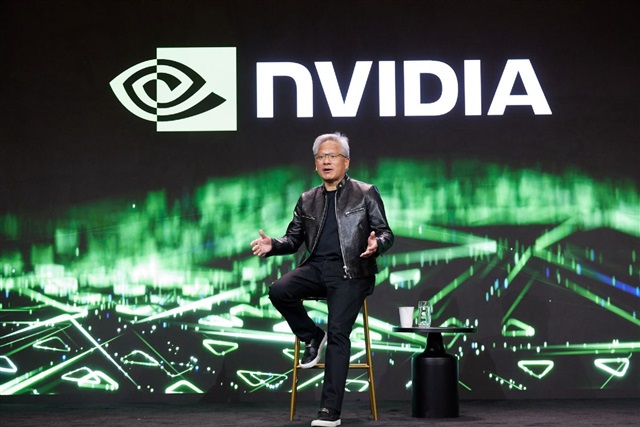
Nvidia's AI GPU Allocation Policy
Nvidia, a dominant player in the artificial intelligence hardware market, recently provided a significant clarification regarding its GPU allocation policy. As reported by DIGITIMES, the company stated that the distribution of its graphics processing units, essential for training and Inference of Large Language Models (LLM), follows a "first-come, first-served" principle. This assertion aims to dispel speculations that hardware is assigned to the highest bidder, a point of particular interest in a market characterized by extremely high demand and limited availability.
Transparency on these allocation dynamics is crucial for companies facing substantial infrastructure investment planning. The scarcity of high-performance GPUs, such as the A100 and H100 series, has generated uncertainty and prompted many organizations to revise their procurement strategies. Understanding distribution mechanisms is vital for estimating delivery times and structuring effective development and deployment pipelines.
Implications for On-Premise Deployments and TCO
The "first-come, first-served" principle has direct implications for companies evaluating on-premise AI solutions. In a context where data sovereignty and infrastructure control are priorities, timely access to hardware becomes a critical factor. Unable to rely on a bidding war to secure resources, organizations must adopt long-term planning and proactive procurement strategies. This means anticipating needs, placing orders well in advance, and managing expectations regarding delivery times.
Choosing a self-hosted deployment for LLMs already involves a complex Total Cost of Ownership (TCO) analysis, which includes not only the initial hardware cost (CapEx) but also operational expenses (OpEx) related to power, cooling, and maintenance. Difficulty in obtaining desired GPUs can delay project initiation, extending the amortization period and potentially increasing overall TCO. VRAM availability, for example, is a non-negotiable technical constraint for many LLMs, making access to cards with high memory an essential requirement.
Procurement Strategies and the AI Hardware Market
Nvidia's statement underscores a market reality where demand significantly outstrips supply, regardless of the price a buyer is willing to pay. This scenario prompts companies to consider alternatives or optimize the use of existing resources. Some might explore solutions based on older hardware or different architectures, while others might focus on model Quantization or optimizing Inference Frameworks to reduce VRAM and Throughput requirements.
For enterprises, the ability to navigate this complex market has become a strategic competency. It's not just about choosing the "best" hardware, but about securing available hardware that meets technical and budget constraints. This includes evaluating options like bare metal or hybrid infrastructure, where part of the workload can be managed on-premise and another part in the cloud, depending on resource availability and scalability needs.
Future Outlook for AI Infrastructure
Nvidia's allocation policy, while aiming for a degree of fairness, does not resolve the inherent scarcity of advanced silicio. Companies wishing to implement LLMs in controlled and secure environments, such as air-gapped setups or those with stringent compliance requirements, will continue to face the need for careful infrastructure planning. An organization's ability to obtain the necessary GPUs will directly influence its AI innovation roadmap.
For those evaluating on-premise deployments, analytical frameworks are available on AI-RADAR, particularly in the /llm-onpremise section, which can help assess the trade-offs between costs, performance, and control. Understanding market dynamics and vendor policies is a key element for making informed and strategic decisions in the rapidly evolving artificial intelligence landscape.









💬 Comments (0)
🔒 Log in or register to comment on articles.
No comments yet. Be the first to comment!