NVIDIA Introduces RTX Spark for Local Computing
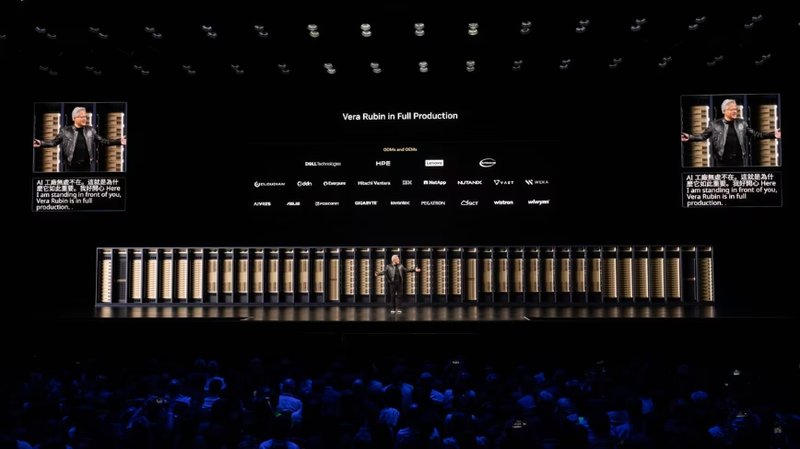
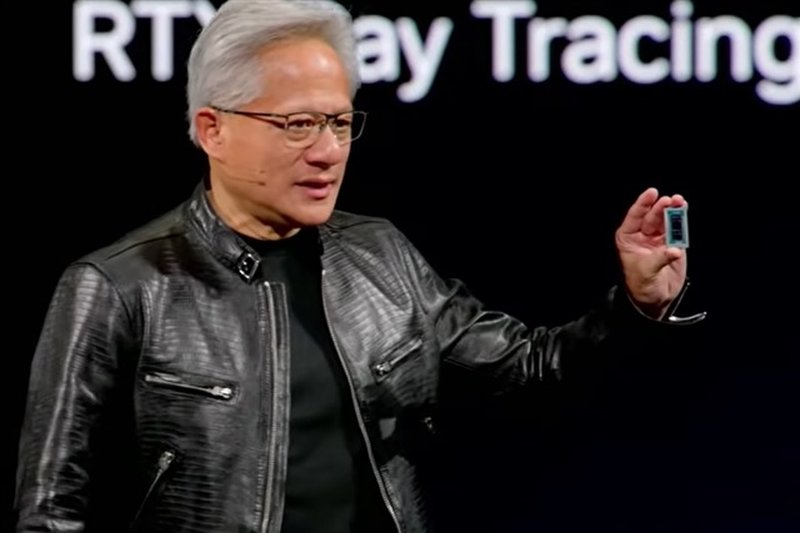
During his Computex keynote, Jensen Huang, CEO of NVIDIA, formally announced RTX Spark, a new "superchip" set to revolutionize computing capabilities within compact desktop PCs and laptops. This presentation underscores NVIDIA's commitment to bringing advanced processing power directly to user devices, a trend with significant implications for the landscape of Large Language Models (LLM) and artificial intelligence in general.
The introduction of a superchip for client devices marks an important step towards the democratization of AI. Traditionally, running complex models required cloud infrastructure or dedicated servers. With solutions like RTX Spark, the ability to execute intensive AI workloads, including LLM inference, extends to more accessible and smaller-footprint platforms, favoring on-premise and edge deployment scenarios.
Implications for On-Premise and Edge AI
The availability of a "superchip" in formats such as compact desktops and laptops opens new frontiers for organizations prioritizing data sovereignty and control over their AI workloads. Running LLMs and other AI applications locally, rather than relying solely on cloud services, offers advantages in terms of reduced latency, enhanced security, and regulatory compliance, especially for sectors with stringent requirements like finance, healthcare, or public administration.
For CTOs and infrastructure architects, the emergence of powerful edge hardware means they can evaluate cloud alternatives that may influence the Total Cost of Ownership (TCO). While the initial investment (CapEx) for on-premise hardware might be higher, long-term operational costs (OpEx), including data transfer and compute resource usage, can be lower. This approach also allows sensitive data to remain within the corporate perimeter, a crucial aspect for air-gapped environments or those with strict privacy policies.
Deployment Scenarios and Trade-offs
The integration of a superchip like RTX Spark into client devices enables innovative deployment scenarios. Consider local AI assistants that do not require a constant cloud connection, or data analysis systems that process sensitive information directly on the device, without ever exposing it to external networks. This is particularly relevant for applications requiring low latency, such as robotics or real-time computer vision systems.
However, the choice between on-premise and cloud deployment always involves trade-offs. Local solutions demand more in-depth management of hardware, maintenance, and updates. Scalability can be more complex compared to the cloud, which offers on-demand resources. It is essential for companies to carefully evaluate these aspects, considering the specific needs of their workload, budget constraints, and priorities regarding security and data sovereignty. AI-RADAR offers analytical frameworks on /llm-onpremise to support these evaluations.
The Future of Distributed AI Computing
NVIDIA's announcement of RTX Spark is part of a broader trend seeing AI increasingly distributed from the centralized datacenter towards the edge and end devices. This evolution not only makes artificial intelligence more accessible but also enables the development of more resilient, private, and responsive applications. The ability to run complex models locally reduces dependence on network connectivity and third-party services, offering companies greater control over their technology stack.
For enterprises seeking to optimize costs, ensure compliance, and maintain full ownership of their data, hardware like RTX Spark represents a key component in their AI adoption strategy. The challenge will be to effectively integrate these new capabilities into existing architectures, balancing performance, costs, and operational requirements to maximize the value of artificial intelligence.






💬 Comments (0)
🔒 Log in or register to comment on articles.
No comments yet. Be the first to comment!