Key takeaway: A performance comparison between the NVIDIA Vera CPU and the Ampere Altra Max, the most common ARM option for DIY server builds, reveals how ARM Linux server performance has evolved and highlights the enduring importance of readily available socketed CPUs for on-prem deployments.
Introduction: Vera meets ARM’s DIY past
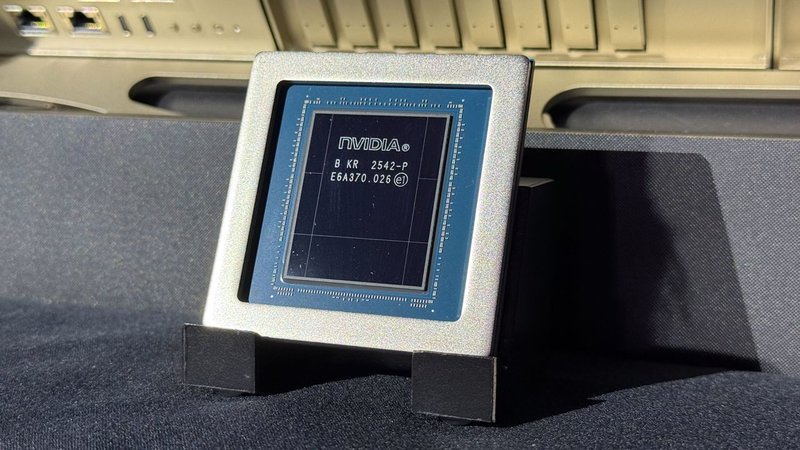
NVIDIA entered the server CPU space with the Grace project, and the Vera family now stands as a standalone offering designed to compete without requiring Superchip modules. Following earlier exclusive benchmarks on Phoronix — comparing Vera against Grace, AMD EPYC, and Intel Xeon — a premium supporter requested a closer look at how Vera stacks up against the Ampere Altra Max. The question is far from trivial. The Ampere Altra Max, with its 80/128 ARM Neoverse N1 cores, has been on the market for more than five years and remains the most accessible ARM solution for those building their own Linux servers. The scarcity of AmpereOne and the lack of other socketed ARM alternatives mean many enthusiasts still rely on this aging but proven hardware.
Thus, the comparison carries a double significance: it measures the technological gap between two generations of ARM server CPUs while also exposing the reality that supply for the DIY channel has remained limited. For anyone tracking ARM’s evolution in the data center, each benchmark helps paint a clearer picture of when (and if) it makes sense to migrate to newer platforms.
Test setup and hardware context
Phoronix’s lab employs AArch64-optimized Linux distributions and a suite of synthetic and application-level benchmarks that simulate real-world workloads: compiling, compression, scientific computing, and server services. The Ampere Altra Max was tested on commercially available Supermicro motherboards, a typical configuration for advanced hobbyists. Vera, in contrast, arrives with cores based on ARM Neoverse V2 (or derivatives), designed to deliver higher single-thread performance and even greater energy efficiency.
However, the Vera platform is not sold at retail as a separate component; it comes integrated in OEM systems or pre-assembled modules. This introduces a practical difference: while you can buy an Altra Max and install it in a standard chassis, Vera currently requires turnkey systems. For the maker aiming to build an ARM node from scratch, the immediate availability of Altra Max remains a decisive factor. Phoronix’s test thus cannot assess absolute parity of conditions, but it still offers a valuable indicator of potential price/performance, should Vera become more broadly accessible for the DIY channel.
Why it matters
For AI-RADAR, a test like this carries implications beyond technical curiosity. ARM architecture is gaining ground in infrastructure for Large Language Model inference, especially in on-premise settings where total cost of ownership (TCO) includes elements such as energy consumption and heat dissipation. High-efficiency ARM CPUs can handle lightweight inference tasks — token generation, orchestrators, quantized models — reducing electricity bills compared to equivalent x86 solutions.
The Vera vs. Altra Max comparison highlights two critical aspects for anyone designing an on-prem cluster. First, the performance leap between ARM generations is palpable, but the actual availability of updated hardware for self-hosted configurations hinders adoption. Second, building an inference environment without cloud dependency demands careful evaluation of the CPU/GPU mix; CPUs alone, however performant, are insufficient for large models. AI-RADAR provides analytical frameworks to weigh these trade-offs in its dedicated on-prem deployment section.
Moreover, the fact that a five-year-old chip still serves as the enthusiast reference points to a market opportunity: there is genuine demand for socketed ARM CPUs that are flexible and can be integrated into custom racks. If NVIDIA or other vendors invested in this direction, the on-prem AI ecosystem could benefit from more diverse hardware suited to every scale.
Final outlook
The NVIDIA Vera versus Ampere Altra Max comparison offers more than numbers: it reflects the state of an entire category of processors that interests hobbyists, small businesses, and research labs alike. The benchmark results — though this article does not include exclusive figures (we refer readers to the original Phoronix source for precise charts) — reinforce the view that ARM servers are on a solid trajectory, but the market must still mature to provide genuinely up-to-date plug-and-play options.
For those now deciding whether to assemble an ARM server for AI or service workloads, the data from this test help gauge what they stand to gain by waiting for newer hardware versus what they can accomplish right away with existing equipment. AI-RADAR will continue to monitor these developments, convinced that benchmark transparency, combined with independent analysis, remains the best compass for navigating tomorrow’s infrastructure choices.







💬 Comments (0)
🔒 Log in or register to comment on articles.
No comments yet. Be the first to comment!