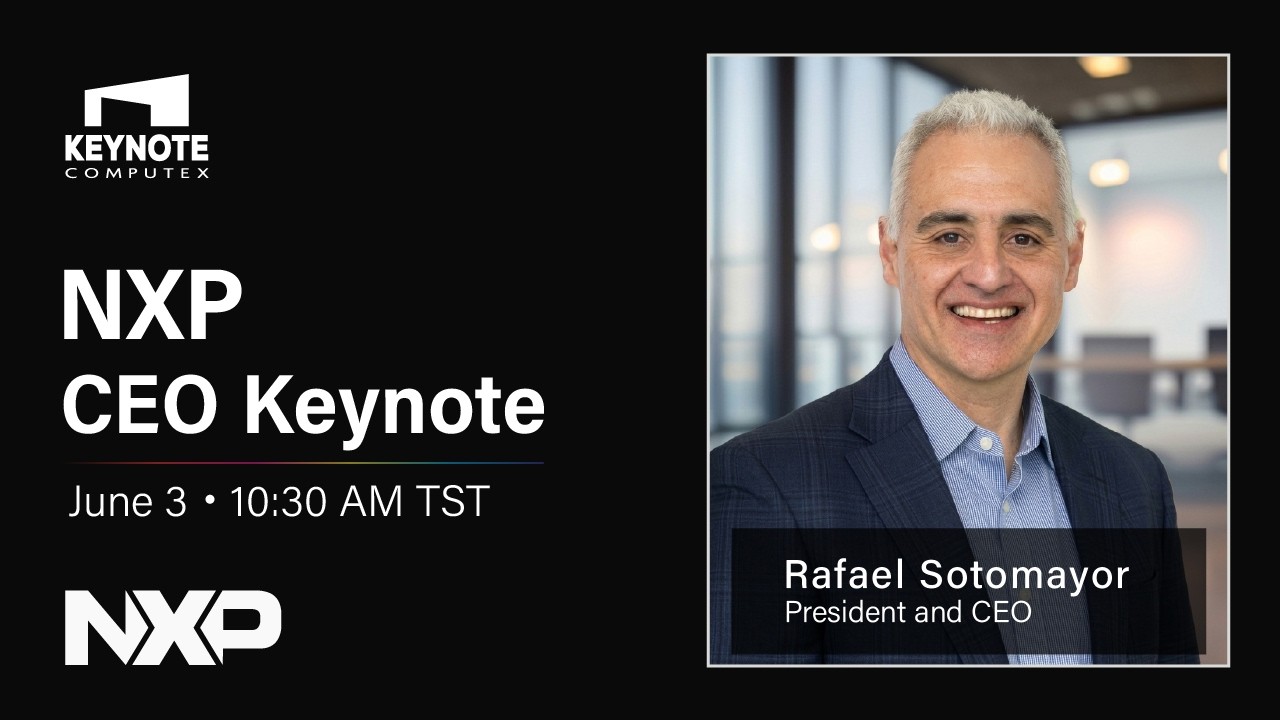
NXP and the Vision for Edge AI at Computex 2026
During the final keynote at Computex 2026, NXP focused on the future of artificial intelligence, with CEO Rafael Sotomayor outlining the company's strategy. The primary focus was on the ability to bring AI to edge devices and into the robotics sector, with a clear emphasis on “real-world” applications. This perspective underscores the importance of robust and reliable AI solutions that can operate in concrete operational contexts, outside traditional data centers or cloud environments.
NXP presented itself as a well-positioned player to address the complexities associated with implementing AI in these areas. The discussion highlighted how integrating artificial intelligence into embedded and robotic systems requires a holistic approach, considering not only computational capabilities but also energy efficiency, security, and the ability to operate autonomously in often unpredictable environments. NXP's vision aligns with the growing demand for decentralized AI processing, which is crucial for multiple industrial sectors.
The Implications of AI for Edge and Robotics
Adopting AI on edge devices and in robotics carries significant implications for companies seeking to optimize their operations. The ability to perform AI inference directly on the device, rather than constantly relying on the cloud, offers crucial advantages in terms of latency, privacy, and data sovereignty. In sectors such as manufacturing, logistics, or healthcare, where response times are critical and data is sensitive, a local or air-gapped AI deployment becomes not just an option, but a strategic necessity.
For CTOs and infrastructure architects, this scenario necessitates the evaluation of self-hosted solutions that can handle AI workloads with limited resources. Robotics, in particular, greatly benefits from edge AI, allowing robots to make real-time decisions, navigate complex environments, and interact with the physical world without depending on constant network connections or remote computing power. This approach reduces reliance on connectivity and improves operational resilience, which are fundamental aspects for critical applications.
Challenges and Opportunities in On-Premise Deployment for the Edge
Deploying AI solutions at the edge and for robotics presents unique challenges that decision-makers must address. Managing a distributed infrastructure, comprising hundreds or thousands of devices, requires robust orchestration and monitoring tools. Furthermore, optimizing LLM or other AI models to operate on hardware with limited VRAM and computing power is essential. This often involves techniques such as quantization or the adoption of specialized silicon architectures, designed for energy efficiency and performance in embedded contexts.
Total Cost of Ownership (TCO) for a large fleet of edge devices is another critical factor. While the initial hardware investment can be significant, long-term operational costs, including energy consumption, maintenance, and managing the model update pipeline, must be carefully evaluated. On-premise or self-hosted solutions offer greater control over these aspects, allowing companies to customize the infrastructure to meet specific security, compliance, and performance needs, while ensuring data sovereignty.
Future Prospects and the Strategic Role of Control
NXP's vision, presented at Computex 2026, reflects a broader trend in the technology sector: the increasing importance of distributed AI processing. As artificial intelligence becomes more pervasive, the ability to deploy it efficiently and securely directly where data is generated and actions need to be taken becomes a competitive differentiator. This is particularly true for companies operating in regulated industries or handling sensitive data, where control over the entire technology stack is non-negotiable.
For organizations evaluating their AI deployment strategies, NXP's approach highlights the need to carefully consider the trade-offs between cloud and on-premise solutions. Choosing an infrastructure that ensures data sovereignty, low latency, and optimized TCO for edge and robotic workloads is crucial for long-term success. AI-RADAR offers analytical frameworks on /llm-onpremise to support these decisions, providing tools to evaluate the constraints and opportunities of each approach.







💬 Comments (0)
🔒 Log in or register to comment on articles.
No comments yet. Be the first to comment!