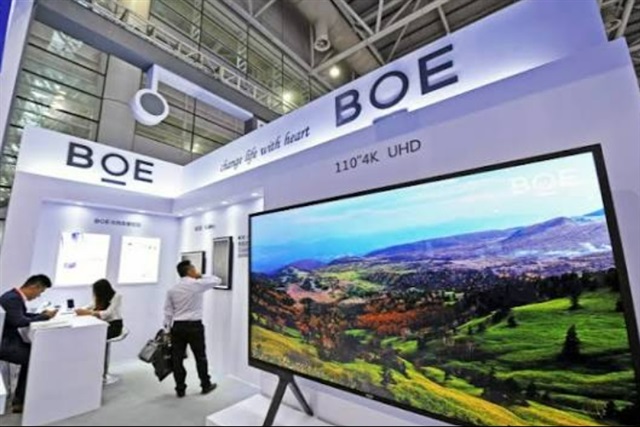
BOE's profit jump is not just a cyclical LCD rebound. The real signal for industry insiders is the acceleration of its eighth-generation OLED line, designed to feed the coming wave of PCs with integrated AI acceleration. The Chinese company is placing a specific bet: that inference for language models and other generative workloads will shift en masse to client devices, and that those devices need displays that match the promise — brighter, more efficient, produced on larger glass substrates to drive down unit costs.
The link to the LLM world is less indirect than it appears. An AI PC is not a notebook with a different sticker: it carries NPUs capable of local inference for models with billions of parameters, quantized and optimized to run without the cloud. The availability of 8.6G OLED panels at declining cost makes it economically viable to build machines that combine visual quality, battery life, and dedicated compute. For organizations managing sensitive workloads — law firms, healthcare facilities, manufacturing sites with proprietary data — this is not an aesthetic detail but the foundational hardware layer for serious on-premise deployment.
The structural stakes are clear. For years, the enterprise laptop market was split between thin machines tethered to the cloud and powerful but bulky workstations. Now, next-generation display technology attacks both fronts: low-power screens that do not cannibalize battery life, bright enough to enhance conversational interfaces and model-monitoring dashboards, and manufacturable at volumes that push large OEMs to commit to dedicated chassis. It is no coincidence that leading silicon vendors are hardening NPU roadmaps just as display makers like BOE bring 8.6G to maturity.
There is a second-order analysis that eludes those who focus solely on quarterly results. The 8.6G OLED ramp gradually narrows the cost gap between standard and premium panels. This allows system integrators to price AI PCs in tiers previously reserved for devices with no local inference capabilities. In other words, the entry barrier for fully on-device LLM processing drops. And as the marginal cost of the display falls, the overall TCO of an enterprise fleet shifts from a cloud subscription model to a one-off hardware expense, with all the consequences for budget predictability and GDPR compliance.
The intersection with data sovereignty is equally sharp. An organization that processes sensitive documents with a local model on an AI PC equipped with an NPU and an 8.6G OLED screen is not merely making a technical choice; it is decoupling artificial intelligence from reliance on third-party data centers. The proliferation of such devices creates a distributed processing ecosystem that echoes the promise of fog computing, but with the concreteness of dedicated silicon and displays built for everyday use.
Of course, known bottlenecks remain. Memory bandwidth on AI PCs, shared VRAM capacity, and current quantization ceilings constrain the range of locally executable models. But the direction is set, and the fact that a giant like BOE is betting heavily on this segment signals that the industry regards on-device AI not as a niche, but as the volume market of the coming years. For IT decision makers, the question is no longer whether local inference will arrive, but which model portfolio and orchestration architecture to prepare in order to manage it.







💬 Comments (0)
🔒 Log in or register to comment on articles.
No comments yet. Be the first to comment!