
Greg Brockman's Revelations and OpenAI's Internal Dynamics
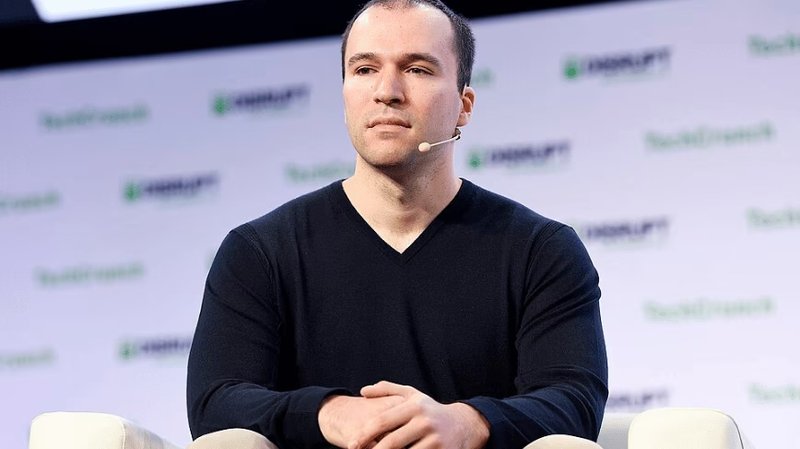
Greg Brockman, President of OpenAI, recently provided testimony that unveiled significant behind-the-scenes details about the organization's internal dynamics and its relationships with key industry figures. During his deposition on Tuesday, Brockman described a particularly tense meeting with Elon Musk, founder of Tesla and SpaceX, revealing a climate of strong friction.
His statements painted a picture of high tensions, culminating in a moment where Brockman admitted he feared a physical reaction from Musk. This episode, along with subsequent attempts to remove certain board members, highlights the complex relationships and governance challenges that can arise even in companies at the forefront of Large Language Models (LLM) development.
Implications for LLM Stability and Deployment
While Brockman's revelations primarily concern OpenAI's internal dynamics, they raise broader questions about the stability and governance of LLM providers, a crucial aspect for companies evaluating deployment strategies. Reliance on a single vendor, especially one subject to internal turmoil, can pose a significant risk to operational continuity and data sovereignty.
For organizations seeking greater control and resilience, the option of self-hosted or on-premise LLM deployments is gaining traction. This approach, while requiring an initial investment in specific hardware—such as GPUs with high VRAM and computing power—offers the ability to keep data within one's own perimeter, ensuring compliance and security. Evaluating the Total Cost of Ownership (TCO) becomes fundamental in these scenarios, balancing initial CapEx with long-term operational costs and the benefits in terms of control and customization.
The Context of Tensions and Board Moves
The "fiery" meeting with Elon Musk, as described by Brockman, is part of a broader context of evolution and competition in the artificial intelligence sector. Musk, a co-founder of OpenAI, has had a complex relationship with the organization, culminating in his departure from the board and the subsequent founding of xAI. Brockman's revelations suggest that the disagreements were not limited to strategic visions but also touched upon personal and leadership aspects.
In parallel, efforts to remove certain board members indicate a phase of internal reorganization or power consolidation. Such maneuvers can directly impact OpenAI's future direction, influencing its development policies, monetization strategy, and approach to Open Source. For enterprise users, the transparency and stability of an LLM provider's leadership are decisive factors in choosing a technology partner.
Future Prospects and Deployment Choices
The internal affairs of OpenAI, as well as those of other key players in the LLM landscape, underscore the importance of robust governance and a clear strategic vision in a rapidly evolving sector. Trust in the provider is a significant factor for companies integrating these technologies into their critical processes.
For those evaluating LLM deployment, these episodes reinforce the argument for a careful analysis of the trade-offs between cloud-based solutions and on-premise architectures. AI-RADAR offers analytical frameworks on /llm-onpremise to support strategic decisions, providing tools to evaluate hardware requirements, costs, and data sovereignty implications. The choice of the most suitable deployment model will always depend on each organization's specific needs for control, security, and TCO.






💬 Comments (0)
🔒 Log in or register to comment on articles.
No comments yet. Be the first to comment!