
Orbital: $5 Million for 10,000 Space Data Centers, from Spin's Founder
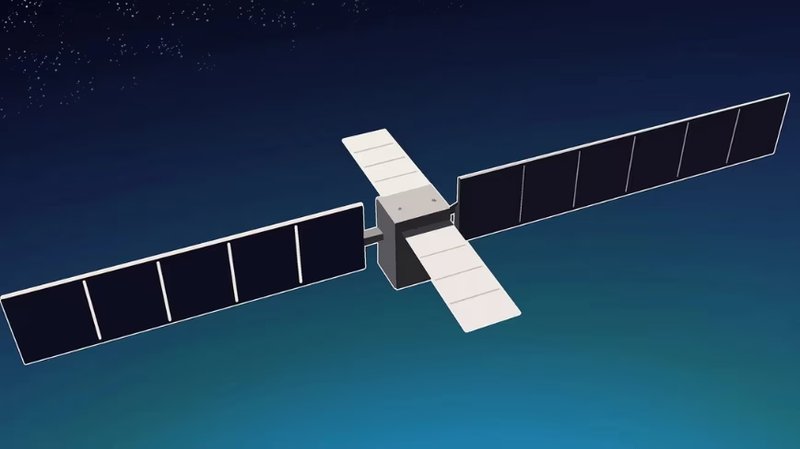
Euwyn Poon, a figure already known in the tech startup landscape for co-founding Spin and overseeing the production of 250,000 e-scooters, is now embarking on an endeavor that redefines the boundaries of IT infrastructure. With his new company, Orbital, Poon has raised $5 million to pursue an ambitious goal: the launch of 10,000 data centers into space.
This futuristic vision raises fundamental questions for technology decision-makers, particularly for those evaluating deployment strategies for intensive workloads such as those related to Large Language Models (LLMs). The Orbital project introduces a radically new paradigm compared to traditional on-premise or cloud architectures, posing unique challenges and opportunities in terms of data sovereignty, control, and Total Cost of Ownership (TCO).
Orbital's Vision and Technological Challenges
The idea of "space data centers" evokes scenarios of ultra-distributed data processing and potentially low-latency for specific applications. Although the specific technical details of these 10,000 data centers have not been disclosed, the initiative suggests an approach that could aim to overcome the limitations of terrestrial infrastructures. The engineering challenges are immense: from protection against radiation and extreme temperatures, to power and cooling management in the absence of an atmosphere, and finally to hardware maintenance and upgrades.
Such a large-scale deployment in space would require innovative solutions for connectivity, resilience, and security. For AI workloads, such as LLM inference, latency and throughput are critical parameters. Operating in orbit could offer advantages for specific scenarios, such as processing satellite data or providing services to remote regions, but it would also present unprecedented complexities compared to managing bare metal infrastructure in a traditional data center.
Implications for Sovereignty and AI Infrastructure
The placement of data centers in space introduces an entirely new dimension to the debate on data sovereignty. The laws and regulations governing space are complex and evolving, and jurisdiction over data processed and stored in orbit could become a legal minefield. For companies operating in regulated sectors or handling sensitive data, the ability to maintain control and ensure compliance is a non-negotiable requirement.
In this context, on-premise solutions continue to offer the highest level of physical and logical control over data and hardware, allowing for air-gapped environments and a clear definition of sovereignty. The TCO of space infrastructure, which includes launch costs, maintenance, risk management, and obsolescence, would be drastically different from that of a terrestrial deployment, requiring an in-depth analysis of trade-offs against expected benefits. AI-RADAR, for example, offers analytical frameworks on /llm-onpremise to evaluate these trade-offs in more conventional scenarios, but the basic principles remain valid even for such bold visions.
Future Prospects and Considerations
Euwyn Poon's ambition with Orbital, aiming to deploy 10,000 data centers in space, represents a significant conceptual leap for the technology industry. Although the path is fraught with technical, regulatory, and economic obstacles, the initial $5 million investment demonstrates confidence in the potential of this frontier.
This initiative prompts us to reflect on how future computing architectures, including systems for LLM training and inference, might evolve beyond current paradigms. It remains to be seen how Orbital will address the practical challenges and whether "space data centers" will become a realistic component of the global AI infrastructure, or if they will remain a bold vision pushing the limits of innovation.








💬 Comments (0)
🔒 Log in or register to comment on articles.
No comments yet. Be the first to comment!