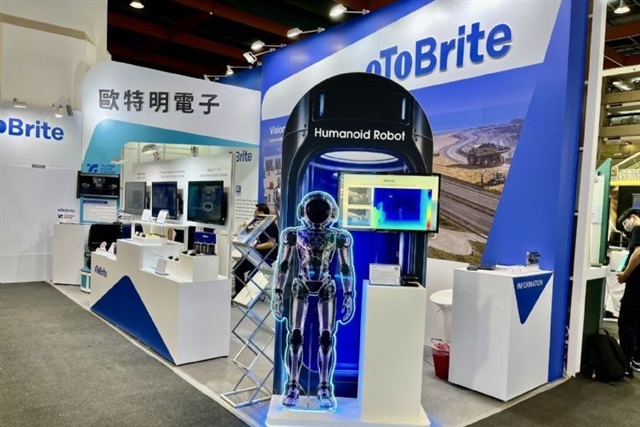
A New Alliance for Automotive Visual AI
The autonomous vehicle sector continues to represent one of the most dynamic and technologically demanding fields for artificial intelligence applications. In this context, oToBrite and Turing Drive have forged a strategic partnership, aiming to combine their respective expertise in developing visual AI solutions. This collaboration is set to strengthen the technological foundations required for the next generation of autonomous driving systems.
Visual AI is the beating heart of environmental perception for self-driving vehicles. It enables systems to interpret the surrounding world through cameras and other optical sensors, identifying objects, pedestrians, road signs, and weather conditions. The ability to process this information rapidly and reliably is crucial for ensuring the safety and efficiency of autonomous vehicles on the road.
The Importance of Edge Processing for Autonomous Driving
The application of visual AI in autonomous vehicles imposes stringent requirements in terms of performance and latency. Large Language Models (LLM) and computer vision models must operate in real-time, often directly on board the vehicle, in an "edge computing" context. This means that inference must occur locally, minimizing reliance on cloud connections and ensuring immediate responses to critical situations.
To support such intensive workloads, the hardware infrastructure on board the vehicle must be extremely powerful. This involves Graphics Processing Units (GPUs) with high amounts of VRAM and dedicated computing capabilities, optimized for executing complex vision algorithms. The choice of an on-premise or edge deployment is not just a matter of speed, but also of data sovereignty and compliance, crucial aspects for the automotive industry which handles sensitive and safety-critical information.
Challenges and Opportunities in On-Premise Deployment
Deploying visual AI solutions for autonomous vehicles presents unique challenges. The need to operate in air-gapped environments or with limited connectivity requires careful planning of hardware and software architecture. Companies must consider the Total Cost of Ownership (TCO) of self-hosted solutions, which includes not only the initial hardware cost but also the management, maintenance, and upgrading of on-board systems.
Model quantization and optimization of inference frameworks become essential to maximize the efficiency of available hardware resources. For those evaluating on-premise deployment for AI/LLM workloads, analytical frameworks can help assess the trade-offs between performance, cost, and data sovereignty requirements. The collaboration between oToBrite and Turing Drive could lead to solutions that address these complexities, offering a balance between computing power and operational requirements.
Future Prospects for AI in Transportation
The partnership between oToBrite and Turing Drive underscores the increasing maturity and complexity of AI technologies applied to transportation. As autonomous vehicles become more sophisticated, the demand for advanced visual AI, capable of handling increasingly complex and unpredictable scenarios, will only grow. This evolution will require not only smarter algorithms but also more robust, efficient, and secure computing infrastructures, capable of operating autonomously and reliably.
The joint commitment of these two companies in the field of visual AI for autonomous driving represents a significant step towards realizing a future where vehicles will be not only smarter but also inherently safer and more reliable. The ability to innovate in this space, balancing performance needs with cost and control requirements, will be crucial for long-term success.





💬 Comments (0)
🔒 Log in or register to comment on articles.
No comments yet. Be the first to comment!