The Critical Balance Between CPU and GPU in AI Workloads
In the landscape of artificial intelligence, particularly for Large Language Model (LLM) inference, hardware efficiency is a decisive factor. Often, attention focuses on GPUs, given their parallel processing capabilities, but an equally crucial component is the CPU. An undersized processor can drastically limit the overall system performance, creating a so-called “bottleneck” that prevents the GPU from operating at its full capacity.
This scenario is not uncommon, especially in configurations where attempts are made to maximize the use of existing or older hardware. The CPU is responsible for a series of operations before and after GPU processing, such as data management, pre-processing, post-processing, and overall system coordination. If the CPU cannot feed data to the GPU quickly enough, the latter remains idle for periods, reducing overall efficiency and throughput.
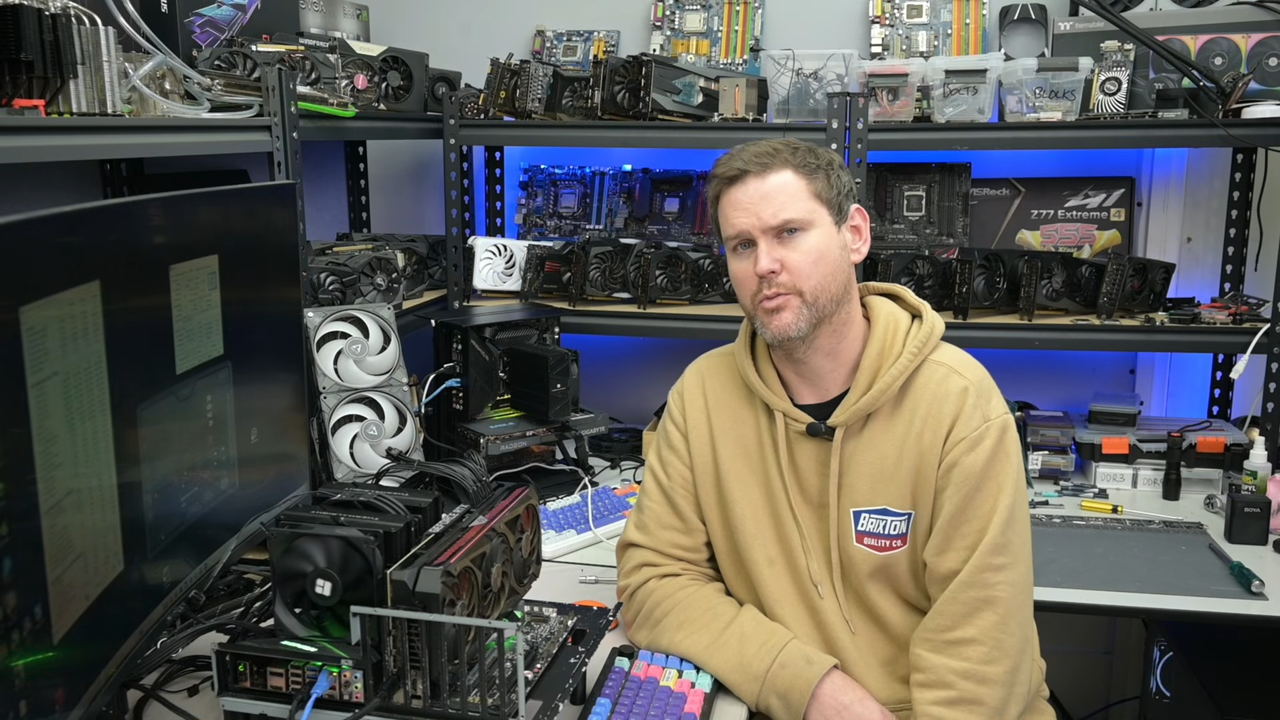
A recent experiment highlighted precisely this dynamic, pushing an aging processor to its limits to unlock the potential of a modern GPU. This case study offers valuable insights for those designing or managing AI infrastructures, particularly in on-premise contexts where every component must be optimized for Total Cost of Ownership (TCO) and data sovereignty.
Experiment Details: A Core i7-6700K Pushed to the Limit
The experiment involved an Intel Core i7-6700K, a previous-generation quad-core processor, paired with a powerful NVIDIA RTX 3080 graphics card. The objective was clear: overcome the bottleneck imposed by the CPU on the GPU. To achieve this, the Core i7-6700K was subjected to extreme overclocking, reaching a frequency of 5.2 GHz with 1.7 volts of power, well beyond factory specifications.
Before the overclock, the RTX 3080 GPU utilization hovered around 60%, indicating that the processor was unable to supply data fast enough to saturate the graphics card's computing capacity. After the overclocking intervention, the situation significantly improved. The increased operating frequency of the CPU helped reduce waiting times for the GPU, boosting its utilization to a more efficient 74%.
This 14% increase in GPU utilization tangibly demonstrates how a more performant processor, even if pushed to its limits, can directly impact the efficiency of GPU-dependent operations. While extreme overclocking is not a practical solution for long-term deployment in enterprise environments due to stability risks and power consumption, the experiment underscores the importance of adequate balancing between computing resources.
Implications for On-Premise LLM Deployments
The lessons learned from this experiment are particularly relevant for organizations opting for on-premise or self-hosted LLM deployments. In these contexts, hardware selection and optimization are crucial for ensuring high performance, data control, and a sustainable TCO. A CPU-level bottleneck can negate investments in high-end GPUs, reducing overall throughput and increasing latency for inference.
For LLM workloads, the CPU plays a fundamental role not only in general coordination but also in specific phases such as loading the model into VRAM, managing input/output data, and sometimes even in token pre-processing or output post-processing operations. A slow processor in these phases can create interruptions in the inference pipeline, leaving GPUs idle and wasting valuable resources.
Carefully evaluating the relationship between CPU and GPU power is therefore essential. It's not just about acquiring the most powerful GPUs, but about building a balanced architecture that allows each component to express its full potential. This approach is fundamental for those seeking to optimize existing infrastructure or design new solutions that meet specific data sovereignty and performance requirements.
Optimization and Strategies for AI Infrastructure
To mitigate CPU bottlenecks in LLM inference environments, several strategies exist. Beyond the obvious hardware upgrade, which can entail significant costs, software optimizations can be explored. These include using optimized inference frameworks, quantization techniques to reduce computational load and VRAM requirements, and implementing efficient batching to maximize GPU utilization.
Holistic infrastructure analysis is indispensable for identifying true bottlenecks and implementing the most effective solutions. For those evaluating on-premise deployments, AI-RADAR offers analytical frameworks on /llm-onpremise to assess the trade-offs between different hardware configurations and optimization strategies. Understanding how each component influences the other is key to building robust and efficient AI systems.
In conclusion, the experiment with the Core i7-6700K and RTX 3080, though extreme, serves as a reminder: GPU power alone is not enough. A high-performing AI infrastructure requires careful planning and a harmonious balance among all its components, from the CPU to VRAM, to ensure that LLM workloads are executed with maximum efficiency and throughput.







💬 Comments (0)
🔒 Log in or register to comment on articles.
No comments yet. Be the first to comment!