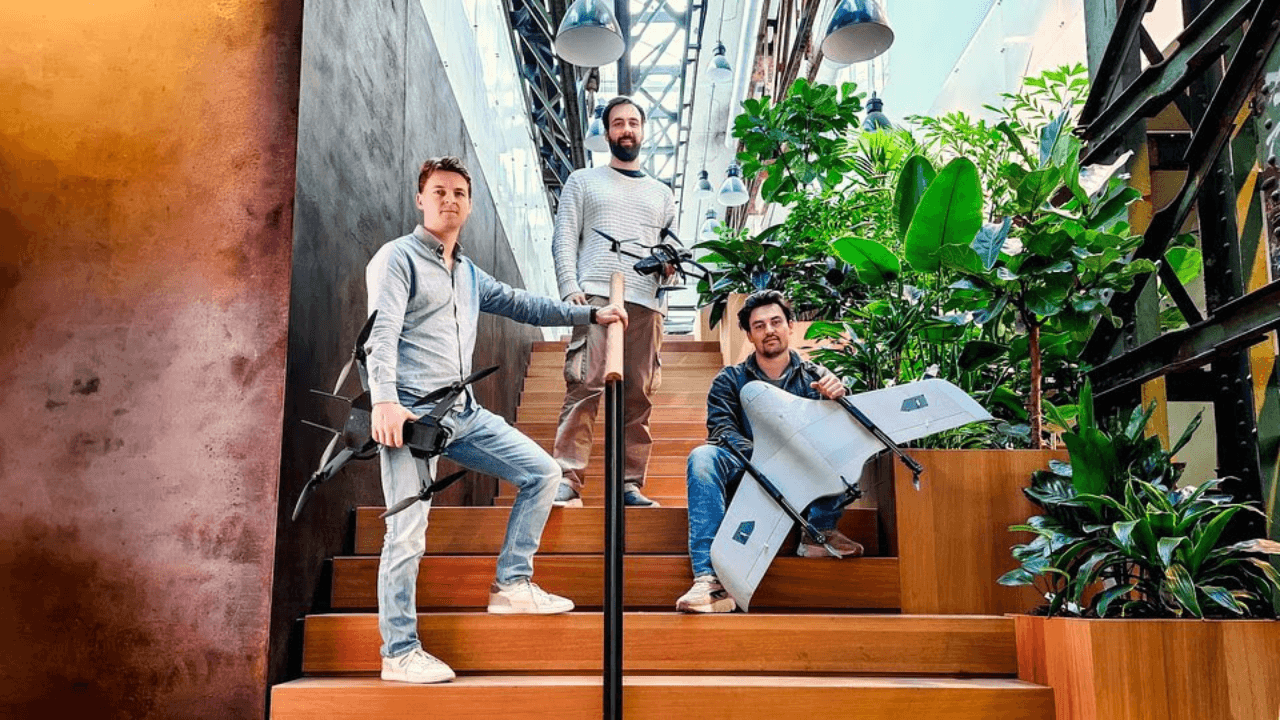
The news is not the size of the investment – tens of millions of euros spread over three years – but the way the Netherlands has decided to shape its unmanned future. For the first time, a government is formally adopting a software-first strategy, upending the logic that has dominated military procurement for decades: buy the platform (drone, vehicle) first, then worry about making it talk to the rest of the fleet, often with expensive and fragile afterthoughts.
The agreement with Dutch company Intelic, formalised by the Ministry of Defence, starts instead with the NEXUS command-and-control software, already battle-tested in Ukraine since 2025. The goal is to build an ecosystem where aerial and ground drones from different manufacturers operate in a single mission environment, free of the proprietary barriers that currently fragment operational theatres. “Ukraine teaches us that not only hardware, but also software is of great importance,” said Derk Boswijk, State Secretary for Defence Procurement and Personnel. “Integrating different drone systems makes the fight easier.”
The Dutch choice has a very concrete background. The Ukrainian frontline has shown the impossibility of managing supply chains, surveillance and defence with tools that cannot talk to each other. NEXUS, already in use by operators in the field, enables rapid response to changing conditions precisely because it abstracts the specifics of each aircraft and provides a unified control layer. The advantage is not only tactical: it cuts training times, reduces coordination errors and makes the whole system more resilient.
There is also an industrial-economy calculation behind the move. With more than seven hundred drone manufacturers in Europe, the problem for armed forces is no longer access to technology, but the ability to make devices conceived in isolation work together. Intelic has already launched BASE, a procurement platform that connects ministries of defence with European companies whose systems are already integrated with NEXUS. The idea is to reduce integration risk even before signing a purchase order, while retaining the flexibility to adopt new technologies as they emerge.
For anyone assessing such architectures outside the military sphere – for instance in industry or autonomous fleet management – the signal is clear: software maturity is becoming the prerequisite for any hardware investment. It makes no sense to buy a robot or a drone if it cannot be inserted into a standardised operational pipeline, with continuous updates and centralised control. The software-defined model, applied here to defence, is the same one that has transformed data centres and networks: what matters is not the individual device, but the intelligence orchestrating it. The Netherlands is taking this to its logical conclusion, abandoning the classic customer-supplier relationship for a long-term commitment where interoperability is not an accessory but the product itself.








💬 Comments (0)
🔒 Log in or register to comment on articles.
No comments yet. Be the first to comment!