
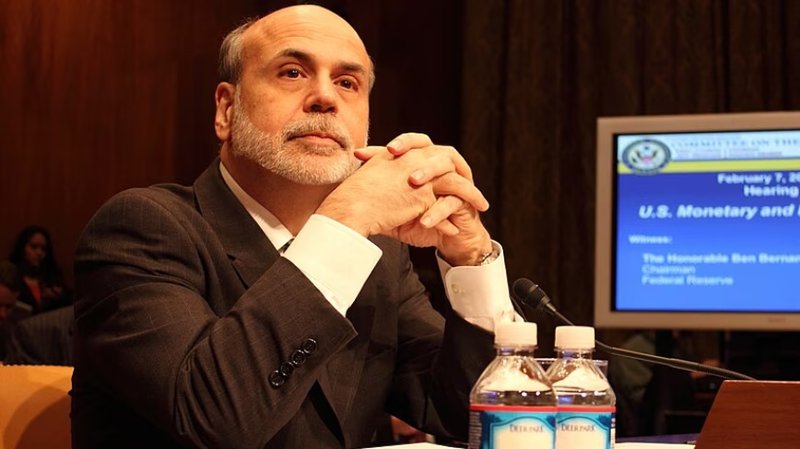
The appointment of Ben Bernanke to Anthropic’s Long-Term Benefit Trust might seem like a high-profile PR move. A former Federal Reserve chair on the board of a startup building Large Language Models is easy to dismiss as window dressing. But reading it that way ignores a deeper structural shift in AI governance.
Long-term trusts have existed for decades in companies that need to balance profit and mission, from philanthropic foundations to public benefit corporations. Anthropic, structured as a Public Benefit Corporation, designed its trust to anchor strategic decisions within a safety and responsibility framework that extends beyond short-term shareholder interests. Giving a seat to someone who led the world’s most influential central bank is not a vanity play: it signals that AI decisions now involve systemic risk on the scale of monetary policy. Bernanke brings institutional DNA built on independence, cascading failure analysis, and management of perverse incentives — all of which become strikingly concrete when training and deploying increasingly capable models.
For those tracking AI deployment patterns, this appointment has less visible but meaningful consequences. Anthropic doesn’t sell hardware, but its governance choices shape how enterprises think about adoption. If an LLM provider installs a trust with a member of Bernanke’s stature, it’s telling the market that it intends to submit to non-negotiable external oversight. This reassures regulators, but also the CISOs who must answer to boards about GDPR compliance and data sovereignty. For on-premise scenarios, the bar rises: it’s no longer enough to prove that data stays in one’s own datacenter. You need a governance structure that mirrors, or at least aligns with, the provider’s. A company opting for self-hosted deployment of Anthropic models (once available) might face a more complex relationship, where trust is delegated not only to encryption but to a convergence of operational principles.
A subtler second-order effect: Bernanke’s presence normalizes the idea that AI is not just another technology, but an infrastructural asset to be governed with tools akin to public utilities or central banks. If this paradigm takes hold, it would accelerate demand for verifiable execution environments, complete audit trails, and air-gapped infrastructures — all elements that historically favor on-premise or hybrid deployments, where granular control is easier to enforce. It’s no coincidence that discussions about model quantization or serving frameworks increasingly intertwine with auditability requirements. Anthropic’s trust adds a political piece to a technical transformation already in motion.
The move can also be read as a preemptive shield against overly rigid regulation, demonstrating self-policing capacity. For competitors lacking similar structures, this could become a competitive downside: it’s harder to convince large banks or public administrations to use their models without independent oversight at that level. Meanwhile, enterprises pushing self-hosting will need to match technical autonomy with credible internal governance counterparts, not just with GPU compute power.
Ultimately, the real news isn’t who holds the seat, but that the trust exists and carries contractual weight. It signals that AI maturation is following a trajectory similar to financial markets after systemic crises: layered controls, independent oversight, and dispersed accountability. For those evaluating on-premise architectures, the message is that data sovereignty will increasingly be less about racks and more about institutions — even inside companies.








💬 Comments (0)
🔒 Log in or register to comment on articles.
No comments yet. Be the first to comment!