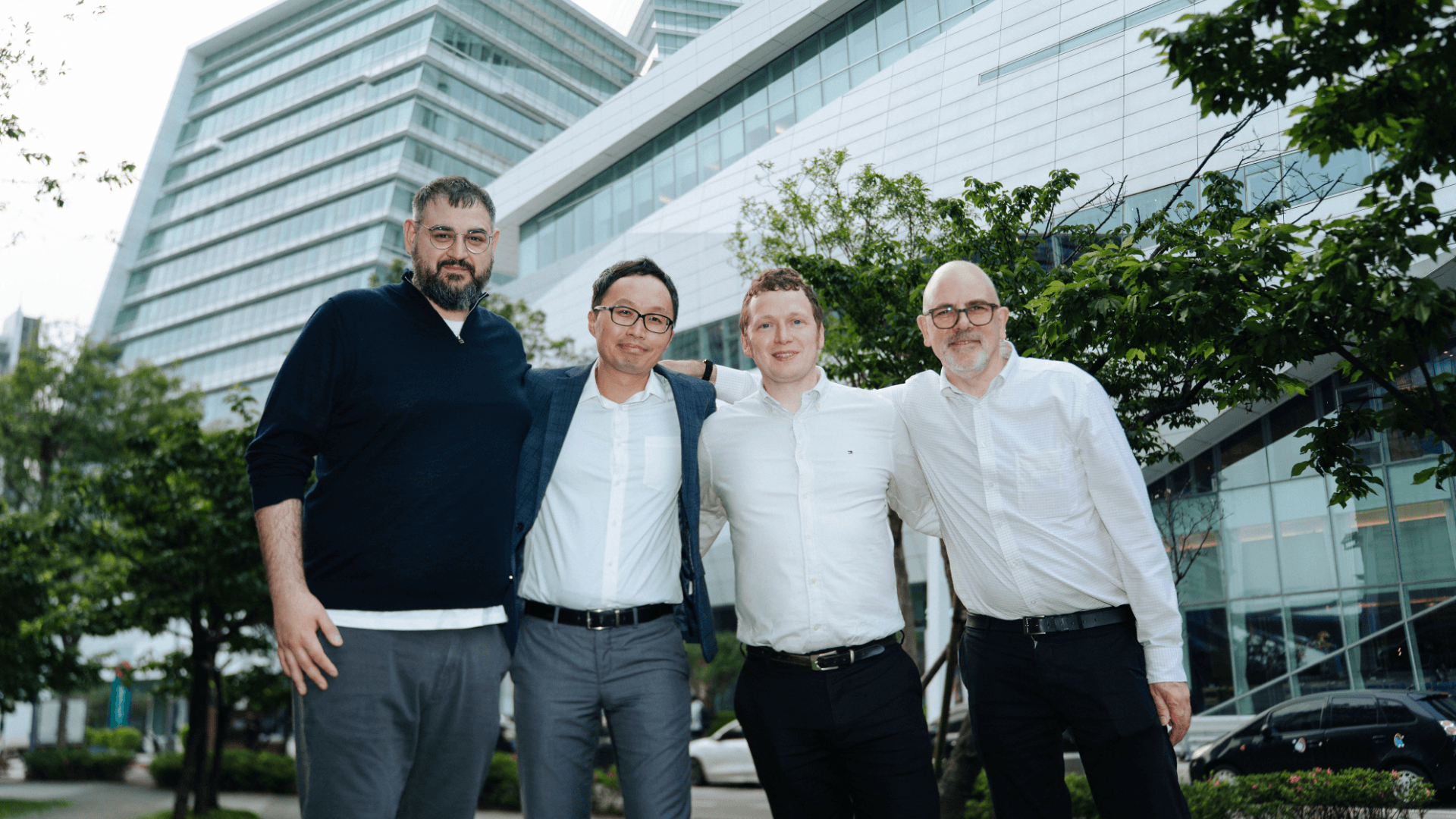
The battle for on-device artificial intelligence is often fought over chips, but the display is the endpoint that completes the experience. Pixel-Flo, born in the electrical engineering labs of the University of Sheffield, has put £5.25 million on the table in a seed round led by Northern Gritstone, with participation from SCVC, Parkwalk Northern Universities Venture Fund and German investor HTGF. The capital is meant to take out of the academic context a process called Continuous-Flow Mass Transfer, based on fluidic self-assembly, designed to lower costs and scale the production of MicroLED displays.
MicroLEDs are not an absolute novelty: they shine brighter than OLEDs and consume much less power, two qualities that make them natural candidates for AR headsets, smartwatches and any battery-powered device where every watt counts. The problem has always been transferring millions of microscopic LEDs onto a substrate, a slow and expensive operation that has held back mainstream adoption. Pixel-Flo’s proposal flips the perspective: instead of placing LEDs one by one with precision mechanical systems, it flows them in a fluid and lets them self-assemble into the correct positions – a kind of hydrodynamic printing that promises far higher throughput and less material waste.
For those tracking the trajectory of local AI, this carries relevance beyond panel technology. Compact language models, obtained via aggressive quantization and optimizations like self-hosted frameworks, are already capable of running on smartphones and wearables. But sustained on-device inference depends on the system’s overall energy budget: if the display is the top consumer, having a MicroLED that cuts absorption by a good 30-50% compared to an equivalent OLED – a figure verifiable in industry literature, though not specified for Pixel-Flo’s process – means being able to execute more tokens per second without killing the battery. Consequently, experiences such as natural language processing, real-time translation or voice assistants that never transit through the cloud become more practical.
The argument extends to data sovereignty. Less cloud means less exposure to third-party jurisdictions, and the ability to keep sensitive data – medical, legal, corporate – entirely on-device is an increasingly stringent requirement for organizations operating under GDPR. If display hardware becomes efficient enough to allow prolonged local inference sessions without compromise, the constraint shifts from connectivity to onboard compute capacity. And embedded AI chip makers, from Qualcomm to NVIDIA with its Jetson line, find in the display a silent but decisive ally.
There is also a structural signal coming from the European deep tech ecosystem. The investment in Pixel-Flo comes from funds betting on frontier hardware technologies made in Europe, at a time when dependence on Asian panel suppliers is a delicate industrial issue. If the continuous-flow process proves itself at industrial scale, it won’t just be a display story: it will be proof that alternative manufacturing methods based on fluid physics and photonics can compete with the economies of scale of traditional fabs. A principle that, mutatis mutandis, also applies to AI compute chip production, where lithography remains a bottleneck.
Who wins? Wearable device manufacturers and mixed-reality headset makers, which will be able to integrate high-brightness screens without sacrificing battery life. Who is at risk? Cloud services that monetize remote inference: the more capacity stays on-device, the fewer data get sent elsewhere. It’s not a closed game, but Pixel-Flo’s funding round signals that the AI value chain also runs through a Sheffield lab where LEDs align themselves in a liquid.






💬 Comments (0)
🔒 Log in or register to comment on articles.
No comments yet. Be the first to comment!