
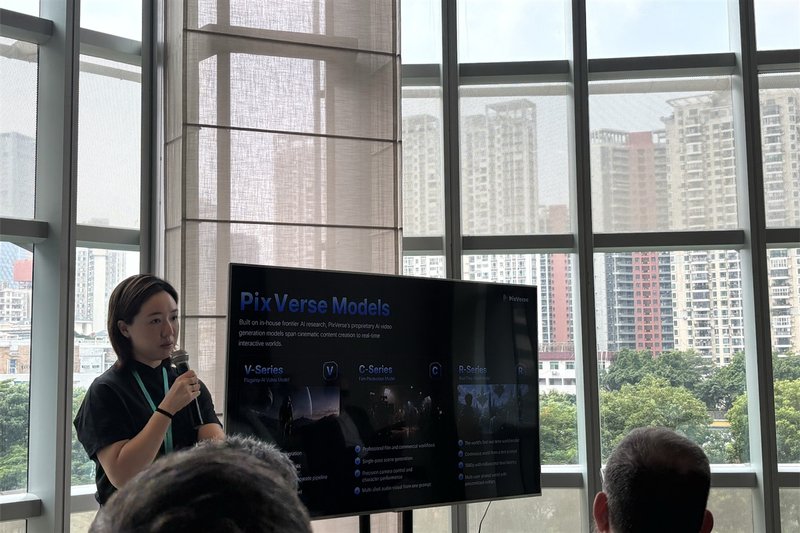
The news is loud: Singapore-based startup PixVerse closed an extended Series C round, raising $439 million and soaring to a valuation above two billion. Behind that round number are 15 million monthly active users using the platform to generate videos with AI models.
These figures confirm the market’s appetite for generative video, but they also open a window on an issue AI-RADAR tracks closely: the unresolved balance between compute power and data sovereignty. Today training and running professional-grade video models requires hundreds of gigabytes of VRAM across latest-generation GPU clusters, an infrastructure cost that pushes almost every provider — PixVerse included — to stay anchored to the public cloud.
This means that companies generating sensitive content, or operating in regulated sectors, must choose between sending their assets to servers outside their perimeter or forgoing the potential of synthetic video altogether. A trade-off that, in Europe, skirts GDPR compliance and that several data protection officers have already flagged as critical.
PixVerse’s record round, therefore, is not just a sign of investor confidence. It is also a snapshot of a widening gap: on one side, a handful of startups and big tech accumulating billions to build ever more powerful services, but inaccessible to those requiring on-premise or air-gapped deployment; on the other, a growing pool of potential enterprise customers left out of the first AI video wave because their security or data residency constraints rule out cloud-native solutions.
The second-order implications concern technological innovation. As long as economic incentives reward the centralized SaaS model, investment in compression techniques, aggressive quantization, or architectures optimized for more accessible hardware will remain marginal. Yet without these developments, AI video risks becoming a luxury for a few, just as manufacturing, healthcare, and defense enterprises could start reaping concrete benefits.
That does not mean the landscape must remain static. The sum raised by PixVerse could also fuel research into more efficient inference, perhaps laying the groundwork for slim model versions. If that happens, the boundary between cloud and on-premise would start to blur. Today, however, anyone watching from an isolated data center or an air-gapped environment can only take note: the generative video train runs on cloud rails, and for now the on-premise station hasn’t been built yet.






💬 Comments (0)
🔒 Log in or register to comment on articles.
No comments yet. Be the first to comment!