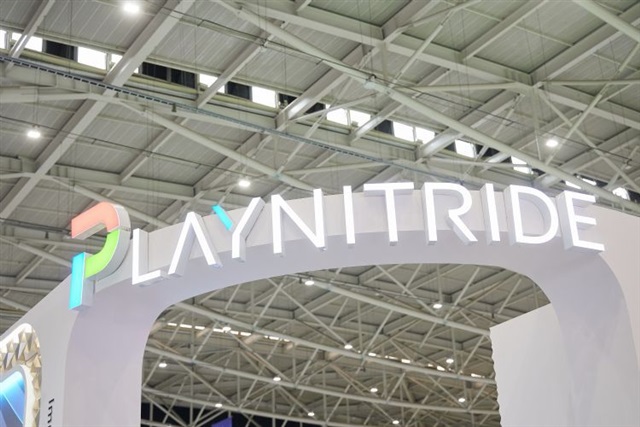
PlayNitride: AI Glasses and Displays Drive Growth in 2026
PlayNitride, a prominent player in the display industry, recently shared optimistic forecasts for the second half of 2026, anticipating a stronger economic performance compared to the first six months of the same year. This projection is driven by two main factors: the continuous evolution and demand for advanced displays and, increasingly significantly, the emerging market for artificial intelligence-powered glasses. The announcement underscores a broader trend in the technological landscape, where the integration of AI into new form factors is redefining infrastructural needs and deployment strategies.
The Rise of AI Glasses and Edge AI
"AI glasses" represent a category of wearable devices that integrate artificial intelligence capabilities directly into the user's field of vision, offering functionalities ranging from augmented reality to real-time translation and contextual assistance. These devices, by their nature, operate at the edge of the network. This implies that data processing and AI model execution must occur with minimal latency and maximum energy efficiency.
For companies developing or implementing solutions based on these devices, two main scenarios for Inference emerge: on-device processing or cloud-based Inference. On-device processing requires highly optimized silicon and Large Language Models (LLM) or other AI models that have undergone quantization to operate with limited VRAM and computing power. This approach offers advantages in terms of data sovereignty, reducing reliance on network connectivity and improving privacy, but imposes constraints on the complexity of the models that can be used.
Implications for On-Premise Deployment and Data Sovereignty
The push towards edge AI devices, such as smart glasses, has direct repercussions on deployment strategies for organizations. While Inference can partially occur on the device, a more powerful processing component is often required, which can reside in on-premise data centers or cloud environments. For sectors with stringent compliance requirements or data sensitivity, such as healthcare or finance, choosing a self-hosted or air-gapped deployment becomes crucial.
Managing the data generated by these edge devices, and their subsequent processing, requires careful evaluation of the Total Cost of Ownership (TCO). This includes not only the initial CapEx for hardware (GPUs, bare metal servers) but also the OpEx related to energy, cooling, and maintenance. Hybrid architectures, balancing local and centralized processing, emerge as a pragmatic solution to optimize performance, security, and costs. AI-RADAR provides analytical frameworks on /llm-onpremise to help companies evaluate these complex trade-offs.
Technological Convergence and Future Outlook
PlayNitride's forecast highlights an increasingly close convergence between innovation in display technology and the advancement of artificial intelligence. Next-generation displays, with higher resolutions, greater energy efficiency, and flexible form factors, are essential components for the user experience in AI glasses. This synergy stimulates innovation across the entire hardware and software development pipeline, from specialized chips for edge Inference to Frameworks for model optimization. For CTOs and infrastructure architects, understanding these dynamics is fundamental for planning future investments and building resilient and scalable AI architectures capable of supporting both centralized and distributed workloads.










💬 Comments (0)
🔒 Log in or register to comment on articles.
No comments yet. Be the first to comment!