
Geopolitics and the Energy Market: An Immediate Impact in Europe
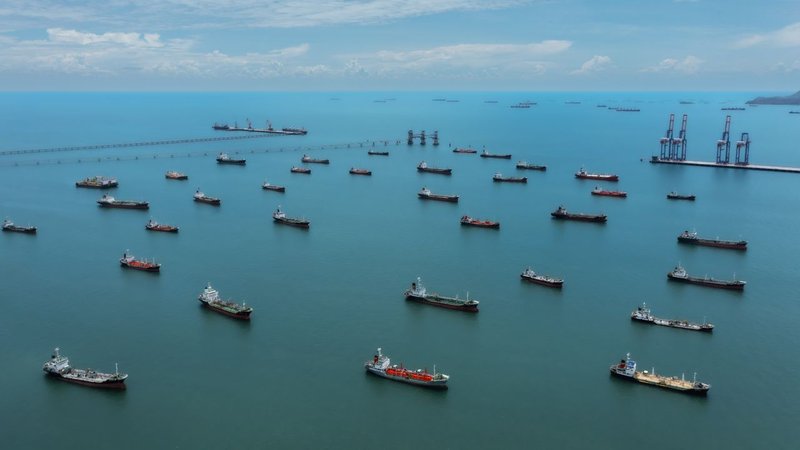
Geopolitical dynamics have the power to rapidly rewrite consumer habits and business strategies. A striking example emerges from the European energy market, where the recent conflict in Iran has triggered a significant surge in oil prices. Following US and Israeli airstrikes against Iran at the end of February, crude oil prices surpassed the $100 per barrel mark. This level had not been seen since Russia's 2022 invasion of Ukraine, highlighting the inherent volatility of this sector.
This escalation has had immediate and tangible repercussions for European consumers. Fuel pump prices have risen sharply, directly impacting the cost of mobility and, more broadly, household and business economies. In this scenario, a clear acceleration in the transition towards electric vehicles (EVs) is observed, with sales experiencing a surge across the continent.
The Geopolitical Context and Its Repercussions
Instability in the Middle East, with airstrikes hitting Iran, has acted as a catalyst for rising oil costs. Events of this nature demonstrate how susceptible the global energy supply chain is to external shocks, with cascading effects that rapidly propagate through markets. For companies and technology decision-makers, understanding these dynamics is crucial, as energy costs represent a significant component of the Total Cost of Ownership (TCO) for IT infrastructures.
The increase in fuel prices is not just an inconvenience for motorists; it is an indicator of a broader risk related to dependence on volatile energy sources. This not only prompts consumers to seek more sustainable and economical alternatives, such as electric vehicles, but should also lead companies to reconsider the energy efficiency and resilience of their technological infrastructures, particularly those dedicated to intensive workloads like artificial intelligence.
Lessons for AI Infrastructure: TCO and Energy Sovereignty
Fluctuations in the energy market offer crucial insights for those designing and managing AI infrastructures. The TCO of a Large Language Models (LLM) deployment or other artificial intelligence applications is not limited to the initial costs of hardware and software licenses. Operational costs, prominently including energy, can have a significant impact on the long-term budget. For organizations evaluating an on-premise deployment, the ability to control and optimize energy consumption becomes a strategic factor.
A self-hosted infrastructure, while requiring a larger initial investment, can offer advantages in terms of data sovereignty and, potentially, control over energy costs. Choosing data centers with access to renewable energy sources or designing highly energy-efficient systems, such as adopting hardware optimized for inference and quantization, can mitigate risks associated with price volatility. AI-RADAR provides analytical frameworks on /llm-onpremise to evaluate these trade-offs, supporting CTOs and infrastructure architects in their strategic decisions.
Future Prospects and Strategic Decisions
The current energy scenario underscores the importance of forward-thinking strategic planning for AI infrastructures. Companies must consider not only performance and scalability but also the economic resilience and environmental sustainability of their deployments. Whether choosing between cloud and self-hosted solutions, or optimizing hardware for specific LLM workloads, the energy variable can no longer be underestimated.
Investing in solutions that reduce energy consumption, such as using GPUs with high efficiency per watt or implementing advanced model optimization techniques, is not just an ecological choice but an economic necessity. The ability to maintain control over operational costs, including energy, is a fundamental pillar for ensuring the competitiveness and long-term sustainability of artificial intelligence initiatives in an increasingly uncertain global landscape.







💬 Comments (0)
🔒 Log in or register to comment on articles.
No comments yet. Be the first to comment!