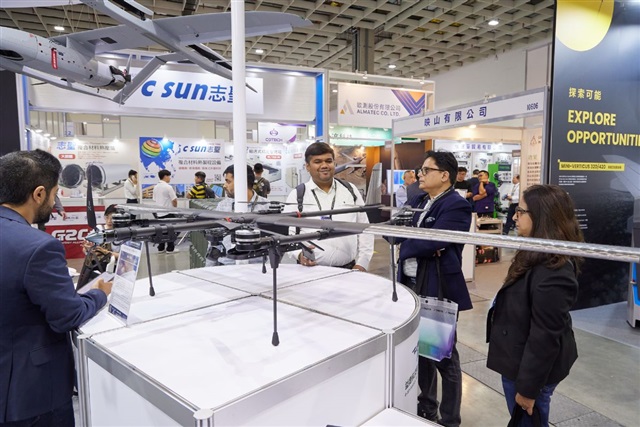
A New Horizon for Taiwanese Drones in Eastern Europe
The landscape of global technology supply chains is constantly evolving, influenced by geopolitical dynamics and the pursuit of greater resilience. In this context, Taiwanese drone manufacturers are intensifying their expansion into Eastern Europe. This strategy emerges as a direct response to Ukraine's decision to reduce its dependence on Chinese suppliers for sensitive technologies.
The move underscores a broader trend where nations prioritize the diversification and security of their supply chains, especially for tools and systems of strategic importance. For technology decision-makers, this scenario highlights the need to evaluate not only technical capabilities and TCO, but also the geopolitical risks associated with component origins.
The Geopolitical Context and Supply Chain Resilience
Ukraine's decision to seek alternatives to Chinese suppliers reflects a growing awareness of the risks associated with reliance on single sources or regions with geopolitical instability. This approach is not isolated but is part of a global debate on the need to build more robust supply chains that are less vulnerable to disruptions or external pressures.
For companies and institutions operating in critical sectors, the origin of hardware and software has become a decisive factor. The ability to ensure operational continuity and system security increasingly depends on the transparency and diversification of suppliers. This principle applies to a wide range of technologies, from semiconductors to complex systems like drones, which often integrate AI components and require rigorous control over their origin and integrity.
Implications for Technological Sovereignty and On-Premise Deployment
The search for alternative drone suppliers is a clear example of the importance of technological sovereignty. Having control over the origin and management of critical technologies is fundamental for national security and economic competitiveness. This concept also extends to the world of AI solution deployment, particularly for Large Language Models (LLMs).
Analogous to diversifying drone suppliers, the choice to deploy LLMs on-premise or in air-gapped environments addresses similar needs for control, data security, and regulatory compliance. For those evaluating on-premise deployment, there are significant trade-offs related to TCO, infrastructure management, and the need for specific hardware (such as VRAM for inference). AI-RADAR offers analytical frameworks on /llm-onpremise to evaluate these aspects, providing tools for informed decisions that balance performance, costs, and strategic autonomy.
Future Prospects: Towards Regional and Trusted Supply Chains
The expansion of Taiwanese drone manufacturers into Eastern Europe can be interpreted as a signal of a broader trend towards the regionalization of supply chains. Instead of relying on a globalized and potentially vulnerable model, nations and companies are seeking partners that are geographically closer and strategically aligned.
This evolution implies greater attention to building local or regional technological ecosystems, capable of ensuring not only procurement but also innovation and maintenance. The future resilience of critical infrastructures will increasingly depend on the ability to establish trusted and diversified supply relationships, reducing the risks associated with excessive dependencies and strengthening technological autonomy.







💬 Comments (0)
🔒 Log in or register to comment on articles.
No comments yet. Be the first to comment!