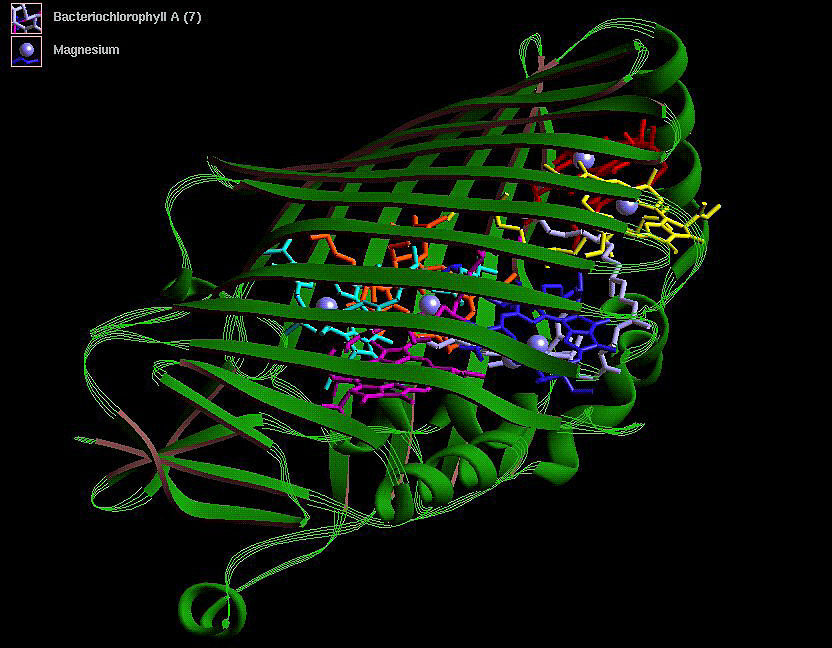
For years, designing a protein meant knowing not only the amino acid sequence but also enzyme mechanisms, the positions of specific amino acids, and even the role of water molecules in the catalytic site. Two parallel announcements now try to move that entry point: a large research collaboration based in China has presented a tool that accepts natural language prompts and generates proteins with the requested function; Hugging Face, for its part, now hosts a tool that does something similar at the DNA level. In both cases, the success rate is not necessarily high: the source explicitly mentions the need for a lab to separate viable designs from dozens of failed attempts.
The 'almost' in natural language is not a detail: these systems do not replace biological understanding, they compress it into an interface. The user expresses a function, not the structural constraints that traditionally served to define it. The analogy with vibe coding is immediate and, in many ways, apt. In software vibe coding, the programmer describes the goal in natural language, generates code, and iterates by observing runtime behavior. In protein design, the 'runtime' is a wet-lab experiment: expensive, slow, and not always deterministic. This radically changes the economics of the process. Previously the bottleneck was the structural knowledge needed to set up the problem; now it shifts downstream, to the ability to rapidly test many variants and discard those that do not work. Those with lab automation, high-throughput sequencing, or phenotypic screening pipelines gain an enormous competitive advantage. Those who relied mainly on manual structural modeling expertise see the value of theoretical competence alone diminish, in favor of the ability to design experiments and interpret results.
A second, less visible but structural effect concerns the nature of the data. The protein and DNA sequences generated by these tools can be considered sensitive intellectual property: a therapeutic candidate, an enzyme for industrial processes, a construct for synthetic biology. Using a public cloud service to generate them means sending prompts and outputs through third-party infrastructure. This is not a new problem, but it becomes more acute when the natural language interface lowers the barrier and broadens the user base to people less aware of exposure risks. For those evaluating on-premise deployment, there are trade-offs between data control, infrastructure cost, and iteration speed: generation can be lightweight, but experimental validation remains outside the digital perimeter. AI-RADAR offers analytical frameworks at /llm-onpremise to reason about these balances, without ready-made solutions.
The most interesting signal is that these tools do not eliminate the lab; they make it the real differentiator. If candidate generation becomes abundant and low-cost, value concentrates on the ability to filter. It is the same pattern seen with generalist large language models: producing text is now a commodity, what matters is the verification pipeline, the operational context, and the quality of feedback data. In biology, this could accelerate the shift from design tooling to closed-loop platforms where model, automation, and analysis coexist in the same stack. And, in turn, it pushes research and development teams to ask where that loop should reside: in the cloud for elasticity or on-premise for control and sovereignty.








💬 Comments (0)
🔒 Log in or register to comment on articles.
No comments yet. Be the first to comment!