
Oracle's "Project Jupiter" and Environmental Challenges
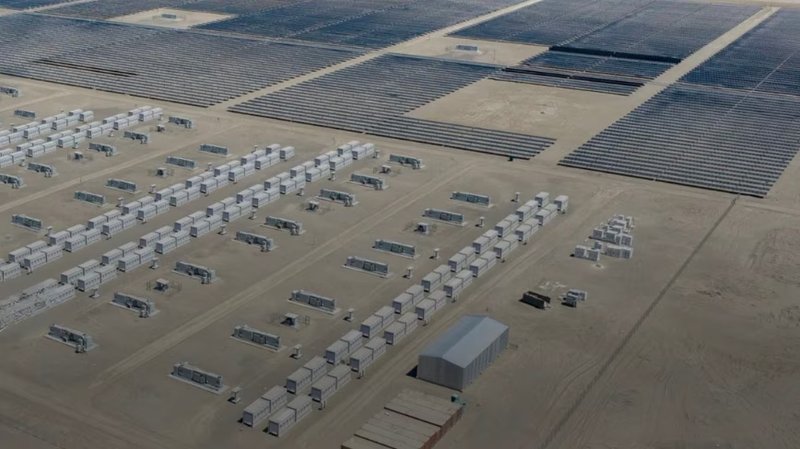
Oracle's construction of "Project Jupiter," a new artificial intelligence data center, has brought a critical issue for the expansion of technological infrastructures into the spotlight: environmental impact. Located in the rural New Mexico desert, the project has raised significant questions regarding water resource consumption, a particularly sensitive topic in arid regions.
Concerns emerged in relation to the 11 million gallons of water required for the initial fill of the facility. Although Oracle downplayed the issue, labeling this consumption as "negligible," the episode underscores the growing public and regulatory scrutiny of the ecological footprint of large-scale technology deployments, particularly those related to AI and Large Language Models (LLMs), which demand increasingly energy-intensive and resource-hungry infrastructures.
AI Infrastructures: Requirements and Local Impact
Modern data centers, especially those optimized for AI workloads, have extremely high infrastructure requirements. The training and inference of complex LLMs demand enormous computing power, which translates into significant energy consumption and, consequently, high heat generation. To maintain optimal operating temperatures, these facilities often rely on advanced cooling systems, which can include intensive water usage for evaporation or for cooling closed-loop circuits.
The choice of location for a data center of this magnitude is not random. Factors such as the availability of low-cost energy, network connectivity, and, indeed, access to adequate water resources are crucial. However, as the Project Jupiter case demonstrates, the availability of these resources must be balanced with environmental sustainability and acceptance by local communities, especially when opting for on-premise or self-hosted deployments in areas with delicate ecosystems.
On-Premise Deployments: Beyond TCO, Sustainability Matters
For CTOs, DevOps leads, and infrastructure architects evaluating on-premise solutions for their AI workloads, the issue of resource consumption extends far beyond the traditional Total Cost of Ownership (TCO). While data sovereignty, control, and compliance are often the primary drivers for choosing a self-hosted deployment, environmental impact and the availability of local resources are becoming increasingly relevant factors in the planning phase.
A comprehensive TCO analysis for an on-premise AI infrastructure must now consider not only CapEx and OpEx costs (hardware, energy, maintenance) but also indirect costs related to environmental impact and resource management. Site selection, cooling system design, and energy procurement must be evaluated with a long-term sustainability perspective. For those evaluating on-premise deployments, AI-RADAR offers analytical frameworks on /llm-onpremise to assess these complex trade-offs, including aspects related to sustainability and resource management.
Future Perspectives for Sustainable AI Infrastructure
The debate surrounding Project Jupiter is emblematic of a broader trend: the AI industry is being called upon to confront its ecological footprint. As Large Language Models become larger and more pervasive, the demand for dedicated infrastructure will continue to grow, intensifying pressure on natural resources. This scenario drives the search for more efficient and sustainable solutions for data centers.
Innovations in liquid cooling, optimization of GPU energy efficiency, and the adoption of renewable energy sources are fundamental steps. However, strategic planning for data center locations, which responsibly considers water and energy resource availability, will be crucial to ensure that AI advancement can proceed in harmony with global sustainability goals. Transparency regarding resource consumption, as highlighted in the Project Jupiter case, will be increasingly demanded by stakeholders and communities.







💬 Comments (0)
🔒 Log in or register to comment on articles.
No comments yet. Be the first to comment!