The Evolution of Interaction: From Applications to AI Agents
Microsoft continues to invest heavily in generative artificial intelligence, a commitment also demonstrated through its now-fragmented partnership with OpenAI. During the Build 2026 event, the company reiterated its "all-in" vision for AI, presenting a new software platform that promises to redefine the paradigm of user interaction and the deployment of intelligent solutions.
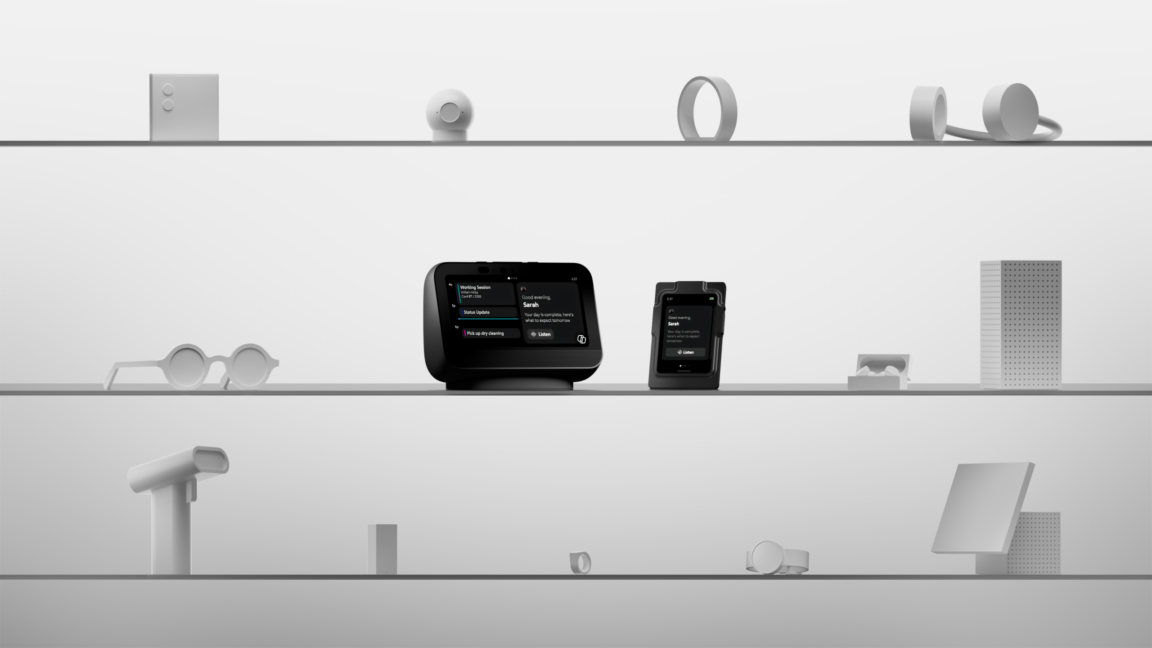
This new initiative is called Project Solara and is configured as an Android-based operating system, but with a fundamental difference: it is designed to host and manage AI "agents" rather than traditional applications. This move suggests a deep reflection on how AI will change not only software but the entire architecture of operating systems and the devices that run them.
Solara: A "Chip-to-Cloud" Platform for Specialized Devices
Project Solara, in Microsoft's vision, is a "chip-to-cloud" platform that aims to free AI agents from the need for fixed, predefined user interfaces. The idea is that Solara can operate on a myriad of specialized devices, where interfaces would be generated dynamically and "on the fly" based on the context and needs of the agent or user. This flexibility is intended to be powered by the computational strength of artificial intelligence models that, according to Microsoft and other industry players, will soon be available and capable of "explosive intelligence."
Currently, Project Solara is in a conceptual phase, limited to prototype hardware and software. It is therefore not an imminent solution that will replace current applications. However, its "chip-to-cloud" architecture highlights a strategy that embraces the entire technology stack, from the underlying silicon to cloud services, suggesting an integrated approach for managing and deploying AI agents. This type of integration is crucial for those evaluating on-premise or hybrid solutions, where control over the entire pipeline, from hardware to orchestration, can significantly influence TCO and data sovereignty.
Implications for AI Deployment and Infrastructure
The transition to new computational form factors has always required complex and expensive specialization. Microsoft itself has experienced these difficulties in the past, for example with the shift to mobile computing, where it encountered significant obstacles in terms of application availability, security, and long-term support. Project Solara appears to be a proactive response to these challenges, seeking to define the software infrastructure for the next era of AI before fragmentation becomes a problem.
For companies considering the deployment of Large Language Models (LLM) and AI agents in self-hosted or air-gapped environments, Solara's vision raises important questions. If agents require dynamic interfaces and operate on specialized devices, decisions regarding hardware, available VRAM, inference throughput, and data management will become even more critical. The ability to manage these agents locally, maintaining data sovereignty and ensuring low latencies, could require significant investments in bare metal infrastructure and edge computing solutions.
Future Prospects and the Challenges of AI Innovation
While much of Microsoft's communication about AI is still speculative, its emphasis on the need for specialized software platforms for new computational paradigms is a valid point. Solara's vision, with agents operating on dedicated devices and dynamically generated interfaces, suggests a future where AI will not just be an additional feature, but the beating heart of the operating system itself.
This approach could have a profound impact on enterprise deployment strategies. The choice between cloud and on-premise solutions for AI workloads, including agents, will require an even deeper analysis of TCO, compliance requirements, and the specific hardware needed to support these new interaction models. AI-RADAR, for example, offers analytical frameworks on /llm-onpremise to evaluate the trade-offs between different deployment options, providing useful tools for navigating these emerging complexities. Solara's success will depend on Microsoft's ability to transform this ambitious vision into a concrete reality, overcoming the technical and adoption challenges that every new platform brings.






💬 Comments (0)
🔒 Log in or register to comment on articles.
No comments yet. Be the first to comment!