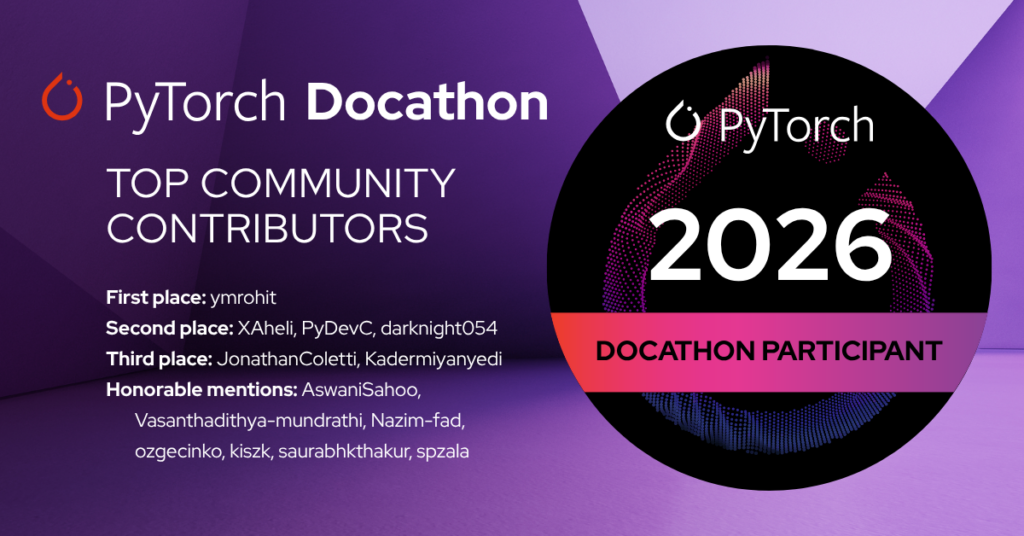
Il Successo del PyTorch Docathon 2026
Il PyTorch Docathon 2026 si è concluso con un notevole successo, dimostrando ancora una volta l'energia e la dedizione della sua vasta comunità di sviluppatori. L'evento, svoltosi dal 5 al 19 maggio 2026, ha riunito oltre 260 persone registrate e più di 30 partecipanti attivi, tutti impegnati a migliorare la documentazione di uno dei framework più diffusi nel campo dell'intelligenza artificiale.
Questa iniziativa ha generato un impatto tangibile, con oltre 150 pull request unite (merged) che hanno risolto diverse problematiche, aggiunto documentazione API essenziale e contribuito in modo significativo alla documentazione di ExecuTorch. Il risultato è un ecosistema PyTorch più accessibile e funzionale, a beneficio di milioni di utenti in tutto il mondo che si affidano a questo framework per le loro applicazioni di deep learning.
L'Impatto della Collaborazione Comunitaria
La collaborazione della comunità è stata il motore di questo Docathon. I partecipanti hanno affrontato sfide di varia difficoltà, dalla correzione di piccoli errori alla stesura di sezioni complesse per le API. Questo sforzo collettivo non solo ha migliorato la qualità tecnica della documentazione, ma ha anche rafforzato il senso di appartenenza e la cultura dell'Open Source all'interno dell'ecosistema PyTorch.
Un ringraziamento speciale è stato rivolto ai principali contributori, la cui dedizione e competenza hanno superato ogni aspettativa. Tra questi, ymrohit ha conquistato il primo posto, seguito da XAheli, PyDevC e darknight054 al secondo posto, e da JonathanColetti e Kadermiyanyedi al terzo. Questi sforzi individuali, uniti a quelli di numerosi altri partecipanti, migliorano direttamente l'esperienza per tutti gli utenti di PyTorch, accelerando il percorso dalla ricerca alla produzione nel machine learning.
Documentazione di Qualità nell'Era degli LLM
L'importanza di una documentazione chiara e completa non è mai stata così evidente come nell'attuale panorama dell'intelligenza artificiale, dominato dai Large Language Models (LLM). Per le aziende che considerano il deployment di LLM on-premise o in ambienti ibridi, la qualità della documentazione assume un ruolo cruciale. Essa non solo facilita l'onboarding di nuovi sviluppatori e la manutenzione delle pipeline esistenti, ma diventa anche un pilastro per garantire la sovranità dei dati e la conformità normativa, aspetti fondamentali per i decision-maker che valutano alternative self-hosted rispetto alle soluzioni cloud.
In un contesto dove gli LLM e gli agenti AI si affidano sempre più alla documentazione tecnica pubblica per apprendere le API, generare codice e risolvere problemi, la precisione e l'aggiornamento dei contenuti sono vitali. Documenti ben strutturati riducono la latenza nello sviluppo e nel deployment, contribuendo a ottimizzare il TCO (Total Cost of Ownership) delle infrastrutture AI. Per chi opera in ambienti air-gapped o con stringenti requisiti di sicurezza, una documentazione interna robusta e auto-sufficiente è indispensabile, minimizzando la dipendenza da risorse esterne e garantendo un controllo totale sull'intero stack tecnicico. AI-RADAR, ad esempio, offre framework analitici su /llm-onpremise per valutare questi trade-off, sottolineando come la chiarezza documentale sia un fattore abilitante per l'efficienza operativa e la sicurezza.
Prospettive Future e Impegno Continuo
Con la conclusione di questo Docathon, il team PyTorch ha ribadito che una documentazione eccellente è un impegno costante. Ogni contributo, sia esso il primo o il centesimo, è fondamentale. Documenti chiari abbassano la barriera d'ingresso per i nuovi utenti e aiutano l'intera comunità del deep learning a progredire più rapidamente. In un'epoca di accelerazione dello sviluppo AI, la documentazione assume un'importanza ancora maggiore.
Il team PyTorch incoraggia tutti a continuare a contribuire alla documentazione e al codice del framework. L'impegno collettivo assicura che PyTorch rimanga uno strumento all'avanguardia, supportato da risorse chiare e affidabili, pronte a sostenere l'innovazione futura nel campo dell'intelligenza artificiale.


💬 Commenti (0)
🔒 Accedi o registrati per commentare gli articoli.
Nessun commento ancora. Sii il primo a commentare!