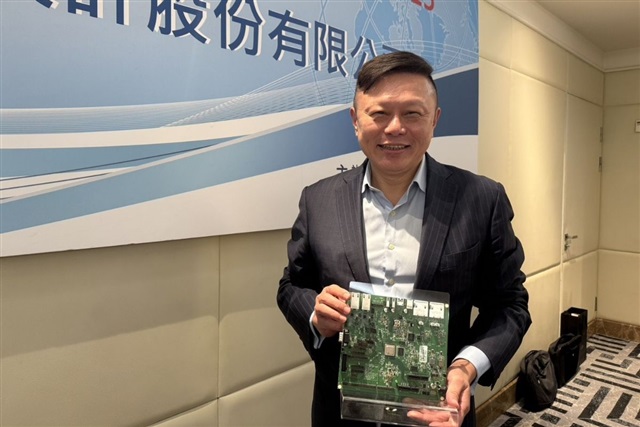
QBit Semiconductor: A New Strategic Direction in Edge AI
QBit Semiconductor, a known player in the semiconductor landscape, is undertaking a significant strategic reorganization. The company has announced a change of course, shifting its primary focus from the copier chip market, which has become increasingly oligopolistic, towards the promising edge artificial intelligence sector. This decision reflects a clear desire to adapt to market dynamics and capitalize on new opportunities offered by the growing demand for distributed AI processing capabilities.
The copier chip market, characterized by strong concentration and limited growth margins, has prompted QBit to seek new areas of expansion. Edge AI, with its emphasis on local data processing, represents a strategic frontier that addresses the needs of many organizations evaluating on-premise or hybrid deployments for their AI workloads.
The Rise of Edge Artificial Intelligence
Edge artificial intelligence refers to the execution of machine learning algorithms directly on local devices or servers, rather than relying exclusively on centralized cloud infrastructures. This approach offers several critical advantages for businesses. Firstly, it drastically reduces latency, as data does not have to travel to a remote data center for processing—an essential factor for real-time applications such as robotics or industrial computer vision.
Secondly, edge AI strengthens data sovereignty and compliance. By processing data locally, organizations can maintain tighter control over sensitive information, adhering to regulations like GDPR and mitigating risks associated with data transfer across geographical borders. Finally, it can contribute to optimizing TCO by reducing bandwidth costs and, in some scenarios, offering a more predictable and controllable alternative to cloud consumption-based spending models. For CTOs and DevOps leads, evaluating these self-hosted solutions is crucial for balancing performance, security, and costs.
From Specialization to Transformation: QBit's Journey
The transition from copier chips to edge AI is no trivial task. While QBit Semiconductor boasts solid experience in semiconductor design, the shift requires a deep understanding of specific architectures for AI inference, which often involve different requirements in terms of VRAM, throughput, and parallel computing capabilities. Edge AI chips must be optimized for energy efficiency and for operation in resource-constrained environments, while maintaining high performance.
This move positions QBit in a highly competitive yet rapidly expanding market segment, where the ability to innovate in AI-dedicated silicon will be a determining factor. The company will face industry giants and agile startups, but the demand for customized edge AI solutions, capable of supporting LLMs and other complex models with specific quantization and latency requirements, is constantly growing.
Future Prospects and Industry Implications
QBit Semiconductor's decision to focus on edge AI highlights a broader trend in the semiconductor industry: specialization for specific AI workloads. As the market for generic chips consolidates, significant opportunities emerge for manufacturers capable of offering optimized solutions for particular deployment scenarios, such as edge or air-gapped environments.
For companies planning their AI deployments, the emergence of new players and solutions in the edge hardware field offers more options to balance performance, security, and costs. AI-RADAR, for example, focuses on analyzing these trade-offs for on-premise deployments, providing analytical frameworks on /llm-onpremise to help decision-makers evaluate self-hosted alternatives versus cloud solutions. QBit's move is a signal that the AI hardware market continues to evolve, offering solutions increasingly tailored to the needs of a distributed and controlled AI infrastructure.








💬 Comments (0)
🔒 Log in or register to comment on articles.
No comments yet. Be the first to comment!