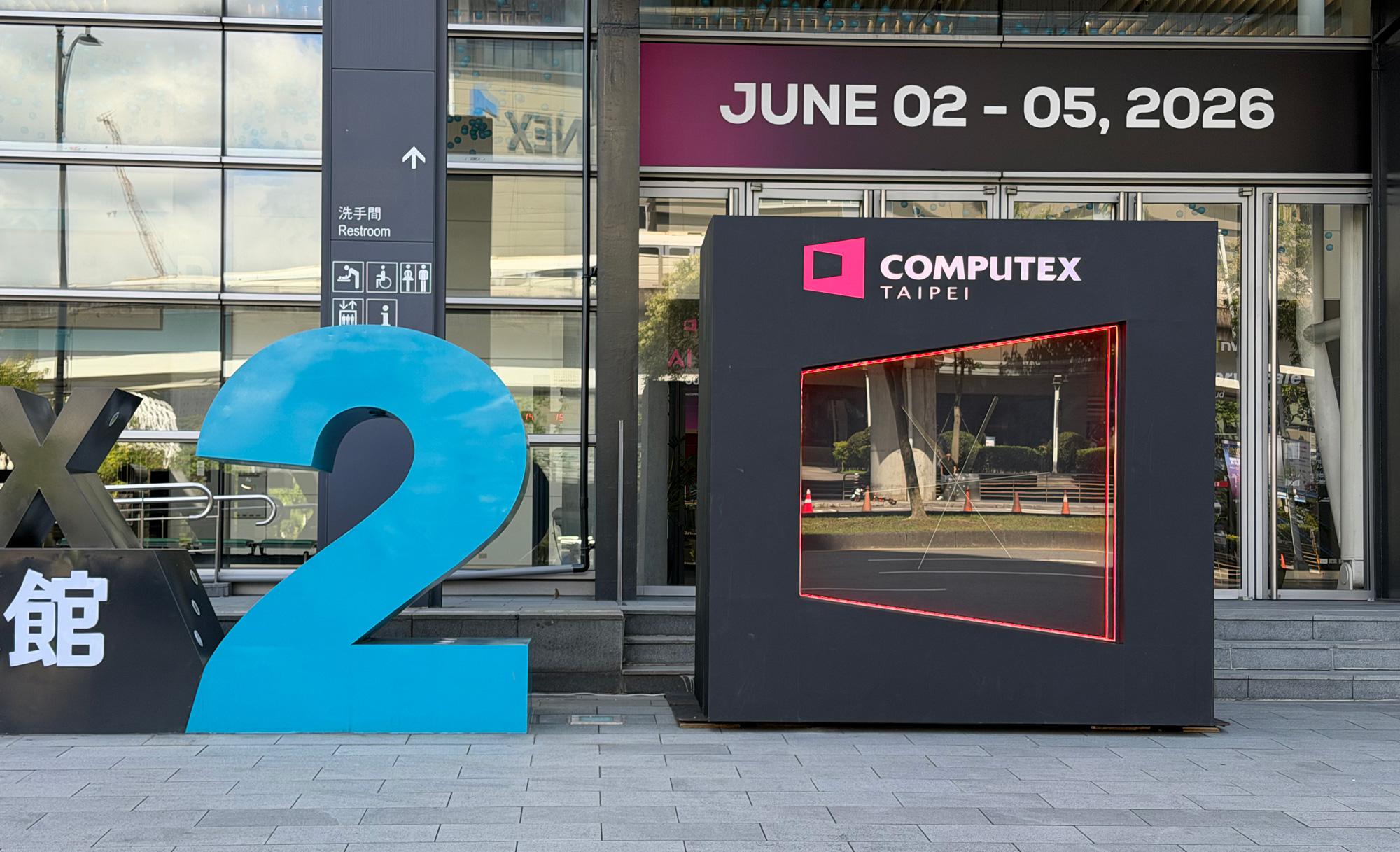
Qualcomm and the Future of AI at Computex 2026
Computex 2026 featured a key moment with Qualcomm's keynote, where CEO Cristiano Amon outlined the company's vision for the future of artificial intelligence and personal computers. The presentation specifically focused on the emerging field of agentic AI and its profound implications for consumer devices. This approach highlights a growing trend towards distributed AI processing, which shifts part of the computational load from centralized data centers to the edge and end devices.
For infrastructure decision-makers, this evolution raises crucial questions about deployment strategies. The ability to run complex AI models directly on consumer PCs or edge devices can reduce reliance on the cloud, offering benefits in terms of latency, data sovereignty, and potentially TCO for specific scenarios. Amon's discussion emphasizes how silicon innovation is fundamental to enabling these new capabilities, pushing towards hardware increasingly optimized for local AI inference.
Agentic AI and Implications for On-Premise Deployment
The concept of agentic AI, central to Amon's speech, refers to AI systems capable of perceiving their environment, making decisions, and acting autonomously to achieve specific goals. Traditionally, training and inference of complex models for agentic AI require significant computational resources, often available only in cloud environments or large on-premise data centers. However, Qualcomm's emphasis on consumer PCs suggests a clear direction: bringing agentic AI capabilities closer to the end-user.
This strategy directly resonates with on-premise deployment considerations. While consumer PCs are not data centers, their increasing computing power, particularly with the integration of dedicated NPUs (Neural Processing Units), makes them increasingly capable platforms for local inference. For companies handling sensitive data or operating in air-gapped environments, the ability to run LLMs or agentic AI models on local hardware, even at the workstation or edge server level, becomes an enabler for maintaining control and compliance. This reduces the need to transfer sensitive data to the cloud, mitigating security risks and ensuring data sovereignty.
The Role of Consumer PCs in the Distributed AI Ecosystem
Qualcomm's vision for consumer PCs as advanced AI platforms indicates a significant shift in the technological landscape. They are no longer just devices for general productivity but true computational nodes capable of handling complex AI workloads. This requires hardware evolution, with a focus on processors featuring hybrid architectures that integrate CPUs, GPUs, and NPUs to optimize energy efficiency and performance in executing AI models.
For infrastructure architects, this scenario opens up new possibilities for a distributed AI architecture. Instead of centralizing all AI operations in the cloud, some inference functions can be delegated to edge devices or user PCs, reducing the load on central servers and improving responsiveness. This hybrid approach, combining cloud resources for large-scale training and inference with on-device capabilities for local processing, offers flexibility and resilience. Managing these distributed environments requires robust frameworks and pipelines for deploying, updating, and monitoring models across a wide range of hardware.
Outlook for AI Infrastructure and Strategic Decisions
Qualcomm's keynote at Computex 2026 underscores a clear direction for the industry: AI is becoming pervasive, extending beyond data centers to reach every device. This trend compels CTOs and infrastructure architects to reconsider their AI deployment strategies. The choice between cloud, on-premise, edge, or a hybrid model has never been more complex, and the decision depends on a careful evaluation of factors such as TCO, latency requirements, security constraints, and compliance.
The emergence of agentic AI on consumer PCs highlights the importance of efficient hardware and a supporting infrastructure that can manage an increasingly fragmented AI ecosystem. For those evaluating on-premise deployments, AI-RADAR offers analytical frameworks on /llm-onpremise to assess the trade-offs between control, cost, and performance. Qualcomm's ability to push advanced AI to end devices is an indicator that the future of AI will be inherently distributed, requiring flexible and scalable infrastructure solutions that can embrace both cloud and edge.







💬 Comments (0)
🔒 Log in or register to comment on articles.
No comments yet. Be the first to comment!