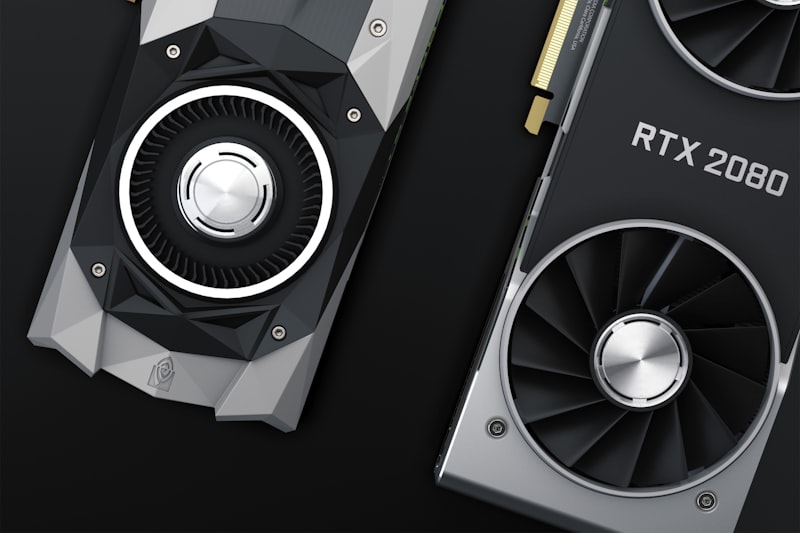
Reaching nearly 100,000 tokens of context with a 27-billion-parameter Large Language Model is a challenge that usually requires enterprise GPUs with tens of gigabytes of VRAM. Reddit user BitGreen1270 has instead shown it can be done on a single consumer card – an NVIDIA RTX 5090 with 32 GB of video memory – by quantizing the Qwen3.6-27B model to Q8 and fine-tuning the precision of the key-value cache.
The experiment doesn’t claim scientific rigor, but it offers concrete insights for those evaluating on-premise deployment of LLMs on non-datacenter hardware. The author, who uses the model for personal coding projects, had already noticed that the Q8 version gave subjectively better results than Q6 or Q5, despite a native context window of about 60,000 tokens. To push further, they worked on three different configurations, keeping the model quantization fixed and operating on the KV cache.
The KV cache trade-off
In Transformers, the KV cache stores key and value representations for all processed tokens and is the main driver of VRAM consumption as context length grows. Quantizing this cache reduces memory usage but potentially affects output quality. BitGreen1270 tested three combinations for keys and values:
- Option 1: 95K context, both keys and values at Q8_0. Free VRAM at start: 230 MB, after benchmark: 90 MB.
- Option 2: 105K context, keys at Q8_0, values at Q5_1. Free VRAM: from 320 MB to 180 MB.
- Option 3: 115K context, keys at Q8_0, values at Q4_0. Free VRAM: from 290 MB to 150 MB.
The tests ran on a headless Ubuntu server with 64 GB of system RAM, using llama-server with Flash Attention, parallelism 1, and speculative decoding (draft-mtp, max 4 drafts). Benchmarks measure inference speed and speculative draft acceptance rate.
The numbers tell an interesting story. Option 3, which stretches context to 115K tokens by quantizing values to Q4_0, achieves the best aggregate accept rate (0.6969) and lowest total wall time (14.93 seconds over 9 requests), followed by Option 1 (0.6619, 15.41 s) and Option 2 (0.6346, 15.84 s). Speed in token/s for Python coding, for example, ranges from 138.7 to 142.0, with no dramatic drop as context increases.
This behavior suggests that for Qwen3.6-27B, aggressive value quantization does not linearly penalize perceived quality – in fact, it can help exploit available memory more efficiently. The author admits they lack quantitative data on the quality of generated code, relying on subjective judgment, but the performance numbers indicate the approach is viable.
What this means for on-premise deployment
For those designing self-hosted LLM stacks, this experience highlights real-world trade-offs. With 32 GB of VRAM, a 27B model at Q8 can serve very long contexts – useful for document analysis, extended code reviews, or prolonged conversations – without requiring expensive server GPUs. KV cache quantization options (through flags like -ctk and -ctv in llama.cpp) allow granular adjustment of the memory-precision balance.
The open question remains actual output quality. The industry generally considers Qwen tolerant of quantization, but the user’s judgment – based on hands-on testing – is that Q8 is clearly preferable to Q6 or Q5. In the absence of standard benchmarks, the choice of quantization often still hinges on subjective evaluation or task-specific testing.
The mention of -b and -ub flags that shave off roughly 100 MB of VRAM shows how delicate the balancing act is when operating at the hardware limit. Even a few megabytes can make the difference between a 95K and a 115K token context.
For those assessing on-premise deployment, AI-RADAR provides analytical frameworks to map these variables onto real-world use cases. BitGreen1270’s example is not a universal recipe, but a reminder that with the right configuration levers, even a single consumer GPU can become a surprisingly capable inference platform.





💬 Comments (0)
🔒 Log in or register to comment on articles.
No comments yet. Be the first to comment!