
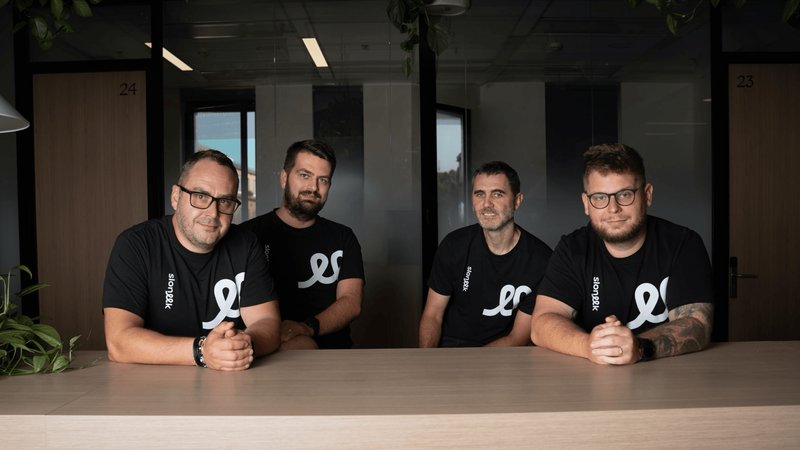
A €200 million funding round that, instead of diluting founders, increases their stake. It sounds like an anomaly in traditional venture capital, yet that's exactly what happened to Skello, a Paris-based HR software company. Bridgepoint led the round, but the real headline is that management and original owners emerged with a larger slice of the company, not a smaller one. The capital will fund European acquisitions, but the ‘how’ matters more than the ‘how much’.
The deal structure hasn't been fully disclosed, but a partial buyback from early investors or hybrid instruments likely enabled the insider gains. What remains is a powerful signal: profitability and financial discipline can flip the power dynamics of a growth round.
Why this matters for AI infrastructure builders
Skello isn't an AI company in the strict sense, but its case exposes a raw nerve in the European landscape. When a company is profitable and not reliant on constant external funding, it can plan its technology infrastructure without surrendering governance to investors pushing for cloud aggregation or forced standardization. It's the same logic that lets technical teams evaluate on-prem deployment, bare-metal servers, and air-gapped environments without pressure from business models built on growth at all costs.
Those who today decide to run LLMs on-site, on proprietary hardware, wrestle daily with the trade-off between control and complexity. A shareholder base that accepts lower dilution in exchange for stability shifts the incentives. It means the freedom to invest in local VRAM, refine self-hosted inference pipelines, and avoid the data residency constraints imposed by hyperscalers – without the board fighting back.
Profitability's role in the fight for data sovereignty
It's no accident that this news comes from France, where the discussion around digital sovereignty is more advanced thanks to initiatives like Gaia-X and companies like OVHcloud. A profitable HR startup won't tip the scales of the AI world, but it showcases an alternative funding model that could inspire the next European scale-ups in the sector. Instead of raising mega-rounds while diluting founders to near-irrelevance, you can grow with an industrial logic: profit, control, targeted acquisitions.
This trajectory carries direct implications for anyone designing compute infrastructure. A company that retains control can earmark CapEx for GPU nodes, local storage, and dedicated networking for language model inference, without justifying TCO solely on a three-month EBITDA target. The €200 million figure grabs attention, but the real story is the possibility of building a European HR tech champion without selling off the engine room. For those working on LLM on-premise, it's proof that you can bank on your own autonomy.








💬 Comments (0)
🔒 Log in or register to comment on articles.
No comments yet. Be the first to comment!