The Thermal Escalation of AI and the Cooling Challenge
The exponential advancement of artificial intelligence workloads, especially for training and inference of Large Language Models (LLMs), is redefining the infrastructural requirements of modern data centers. The computational density demanded by latest-generation GPUs, such as NVIDIA H100 or A100, entails significant power consumption and, consequently, unprecedented heat generation. This phenomenon can no longer be effectively managed with traditional air-cooling systems, pushing the industry towards more advanced solutions.
Heat dissipation has become one of the primary concerns for infrastructure architects and DevOps leads. Inadequate cooling can lead to performance throttling, premature hardware failures, and ultimately, costly operational downtime. For companies choosing to maintain control over their data and operations through on-premise deployments, thermal management represents a critical factor in the design and operation of their local AI stacks.
The Critical Role of Pump Systems in Liquid Cooling
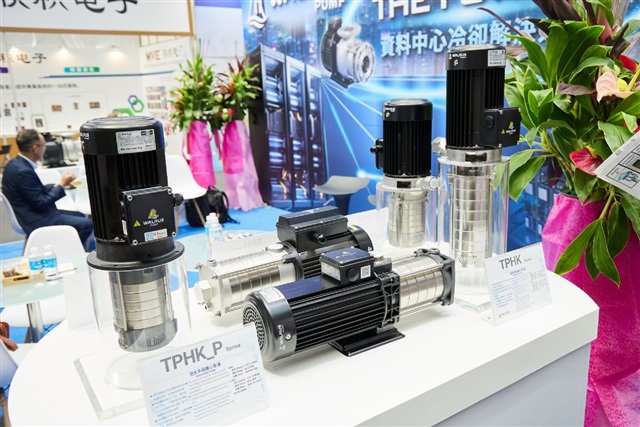
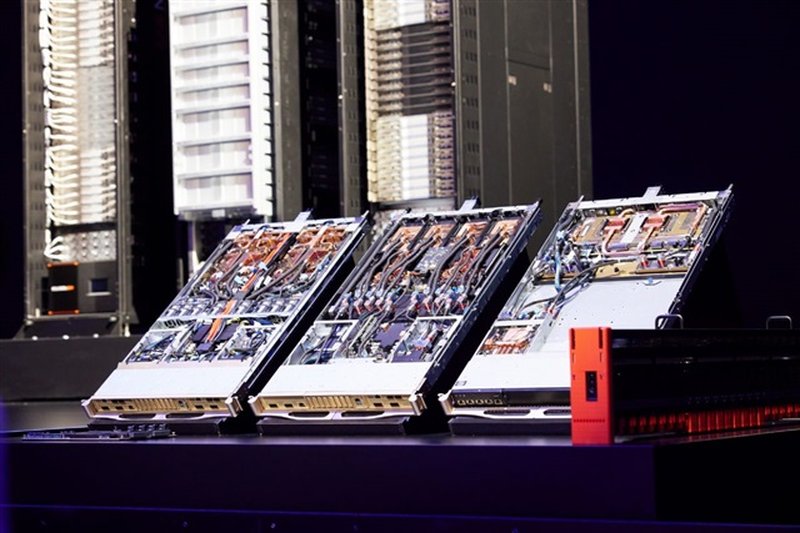
In this scenario, liquid cooling emerges as the most promising technology to address AI's thermal challenges. Systems like direct-to-chip liquid cooling or full immersion allow heat to be transferred directly from the hottest components, such as GPUs, to a coolant fluid. Within these architectures, pump systems play a fundamental role. They are responsible for the efficient circulation of the coolant through the circuits, ensuring that heat is constantly removed from the sources and dissipated elsewhere, often via external heat exchangers.
The selection and configuration of these pumps are not trivial. Factors such as flow rate (throughput), pressure, energy efficiency, and long-term reliability become key parameters. An undersized or unreliable pump system can compromise the entire cooling infrastructure, negating investments in high-end AI hardware. The focus thus shifts not only to the computational power of GPUs but also to the robustness and intelligence of the supporting infrastructure.
Implications for On-Premise Deployments and TCO
For organizations evaluating on-premise deployments for their LLM workloads, cooling management has a direct impact on the Total Cost of Ownership (TCO). Unlike cloud solutions, where the complexity of the physical infrastructure is abstracted, a self-hosted environment requires careful planning and investment in every component, including cooling systems. The energy efficiency of pumps and their maintenance significantly contribute to operational costs (OpEx).
Furthermore, data sovereignty and regulatory compliance often drive the choice towards on-premise or air-gapped solutions. In these contexts, the ability to maintain AI hardware in optimal operating conditions, without relying on external infrastructure for cooling, is crucial. Designing a data center for AI therefore requires a holistic vision that integrates computational power, electrical supply, and increasingly, advanced and reliable cooling systems. For those evaluating on-premise deployments, AI-RADAR offers analytical frameworks on /llm-onpremise to assess the trade-offs between initial costs, operational expenses, and performance requirements.
Towards a More Resilient and Efficient AI Infrastructure
The increasing demand for AI cooling is not a fleeting trend but a constant evolution that will accompany the growth of the sector. Server and data center component manufacturers are already responding with innovations in pump systems, cooling fluids, and heat dissipation architectures. The goal is to create denser, more efficient, and sustainable infrastructures capable of supporting the next generation of AI models without compromising reliability or excessively increasing TCO.
The ability to effectively manage heat will become a distinguishing factor for companies aiming to build and maintain a competitive advantage in the age of artificial intelligence. Investing in cutting-edge cooling solutions, with particular attention to the resilience and efficiency of pump systems, is now a strategic imperative for anyone looking to fully leverage the potential of LLMs and AI in an on-premise context.






💬 Comments (0)
🔒 Log in or register to comment on articles.
No comments yet. Be the first to comment!