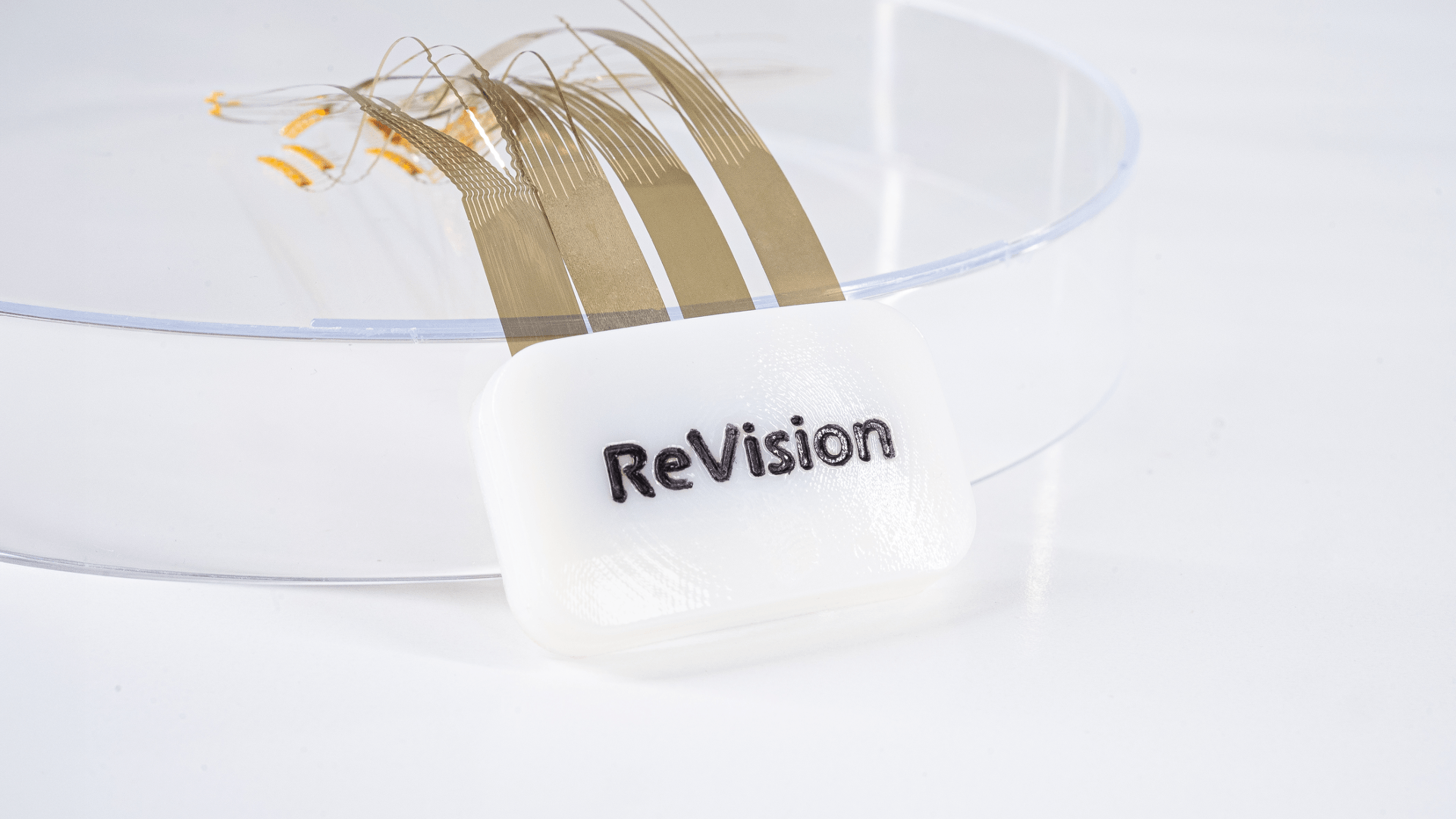
ReVision Implant: A New Impetus for Artificial Vision
ReVision Implant, a Belgian company specializing in neurotechnology, has announced the successful completion of a €4 million funding round. The capital injection, which was oversubscribed, comes from private investors, including existing and new backers, notably prominent European business leaders and medtech operators. This funding builds upon existing support from public programs, such as several highly selective European Innovation Council grants, including the €2.4 million FlairVision project, and backing from the Plug and Play and imec.istart incubators.
ReVision Implant's primary objective is the development of a cortical visual prosthesis, an innovative solution intended for individuals suffering from severe blindness. The company positions itself at the forefront of brain-computer interfaces (BCI), a rapidly evolving sector that promises to revolutionize the treatment of various neurological and sensory conditions.
The Technology Behind Vision Restoration
At the core of ReVision Implant's mission is the development of a brain-computer interface designed to restore functional vision in patients who cannot benefit from traditional retinal or optic nerve-based therapies. The system operates by interfacing directly with the brain's visual cortex. In doing so, the technology aims to bypass damage to the eye and optic nerve, enabling patients to perceive and interpret visual information.
This direct approach to the brain represents a significant step forward compared to solutions that rely on residual eye function. The ability to interact directly with the brain's visual processing centers opens new frontiers for sensory restoration, offering hope to those for whom current options are limited or ineffective. ReVision Implant's progress is part of a broader context of advancements in neurotechnology and brain-computer interfaces, with growing interest in devices designed to address conditions such as blindness, paralysis, amputations, aphasia, and locked-in syndrome.
Strategic Investment in Manufacturing Infrastructure
A crucial aspect of ReVision Implant's strategy, and a point of interest for those evaluating infrastructure control, is the decision to build its own cleanroom infrastructure. This initiative, which began several months ago, is part of preparations for future clinical trials and to ensure greater control over manufacturing and quality processes. Frederik Ceyssens, CEO of ReVision Implant, emphasized that this funding represents a key milestone as the company moves from the development phase into clinical and operational expansion.
"We are investing in our own cleanroom environment to bring important manufacturing steps in-house, while expanding our team and advancing our regulatory compliance and clinical program over the coming years," Ceyssens stated. This strategic move reflects a "self-hosting" philosophy applied to hardware production, where direct control over infrastructure and processes is fundamental for quality, security, and technological sovereignty. For companies evaluating on-premise deployment of AI solutions, the principle is analogous: maintaining direct control over hardware and data can offer advantages in terms of security, compliance, and long-term TCO optimization, although it requires a significant initial investment.
Future Prospects and Medtech Impact
With the new funding secured, ReVision Implant is preparing for the next stage of clinical development and operational scale-up. The company will continue product development and strengthen collaborations with other medtech companies, with the goal of bringing its technology to patients. This growth trajectory is emblematic of how innovation in brain-computer interfaces is maturing, moving from basic research to clinical application.
ReVision Implant's success not only highlights the potential of neurotechnologies to radically improve quality of life but also underscores the importance of an integrated approach that combines scientific research, technological development, and a robust manufacturing and compliance strategy. The ability to manage critical phases like cleanroom production in-house is a distinctive factor that can accelerate the introduction of complex solutions to the market, while ensuring the highest standards of safety and reliability.





💬 Comments (0)
🔒 Log in or register to comment on articles.
No comments yet. Be the first to comment!