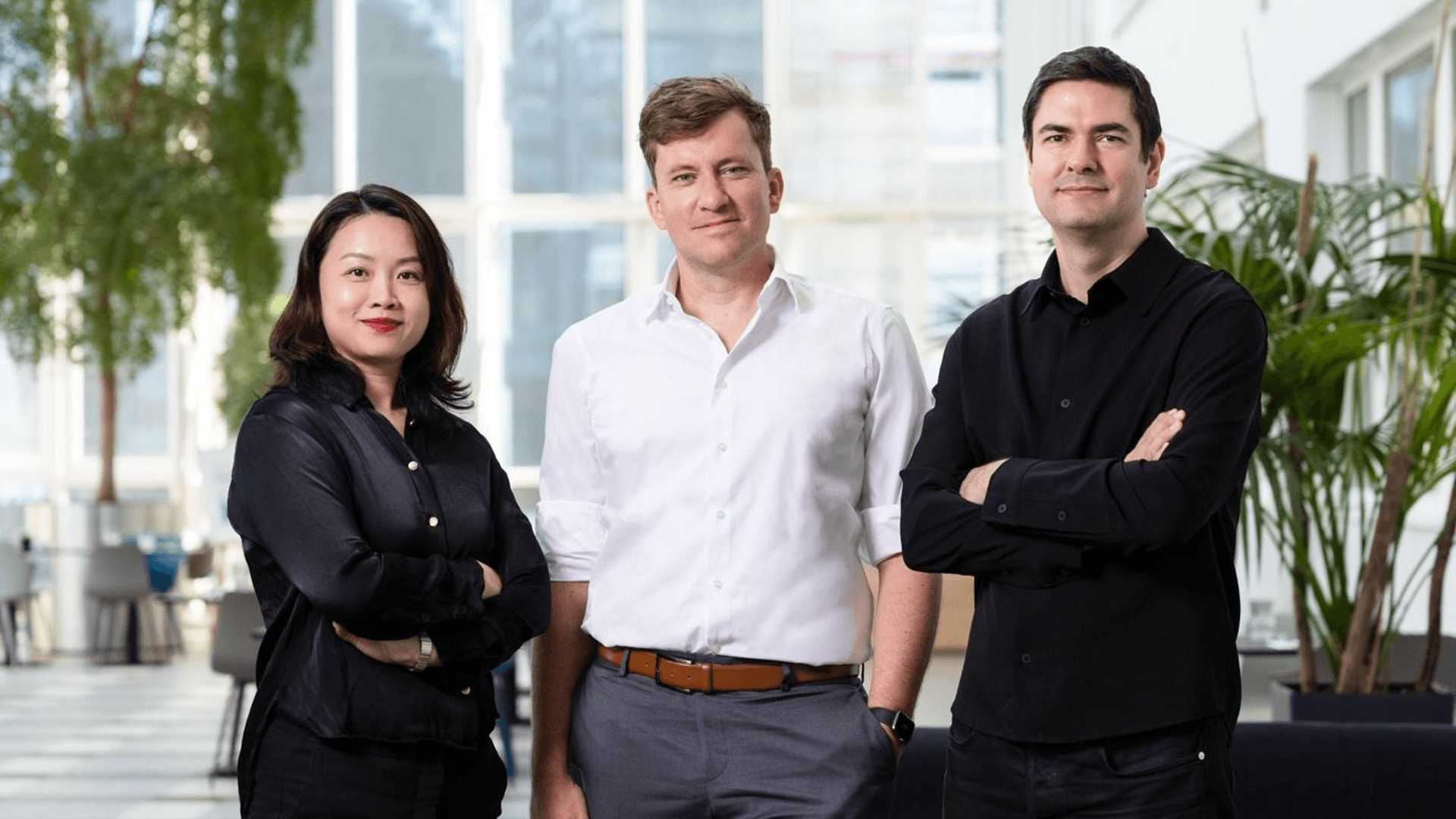
Bringing quantum programming beyond the circle of PhD physicists is not just about education: it is an industrial bottleneck problem. RhymeQ, a startup founded in 2026 by Daniel Volz (CEO), Tamás Varga (CTO) and Christina Wu (COO), has announced a $2.2 million pre-seed round led by Ground State Ventures, with participation from Vanagon Ventures, Plug and Play and Freiraum Ventures. The company comes out of stealth with Rhyme, a platform designed for developers who know Python and do not have specialized quantum physics skills.
The difficulty is not the syntax: it is the mental model. Quantum circuits operate on qubits, superposition and entanglement, and debugging requires interpreting states that have no classical equivalent. According to Volz, while vibe coding is changing the classical world, in the quantum world debugging remains the domain of physicists with doctorates. Rhyme aims to reverse this constraint: an abstraction layer allows programmers with basic Python skills to write and debug code destined for quantum machines. The platform's compilers then translate the code for the specific hardware, supporting multiple quantum processors and reducing dependence on individual suppliers.
This strategic move is not trivial. Historically, access to quantum computing has been mediated by vendors that imposed their own tools and, in part, their own hardware constraints. An abstraction layer that takes Python code and compiles it for different architectures shifts control from the hardware to the software level. It is a change in incentives: quantum processor manufacturers must compete on performance and reliability, not on their ability to lock customers into a proprietary programming model. For enterprises, this reduces lock-in risk and makes it more realistic to launch pilot projects without having to train an internal team of physicists.
But there is an even more relevant second-order effect. RhymeQ is a member of NVIDIA Inception and the platform is compatible with CUDA-Q: code can run on GPU-accelerated quantum simulators and on quantum processors from different vendors. This means that part of the quantum development cycle can happen on classical infrastructure, using GPUs as a testbed before accessing physical machines. For those already managing training or inference workloads on GPUs, this practical convergence between quantum simulation and classical capacity could lower the entry barrier and make the TCO of a quantum project more measurable, even though the source does not detail performance numbers.
The funding will go to expand the engineering team, further develop the enterprise platform and build a global community of developers. RhymeQ also plans to collaborate with quantum hardware providers to integrate their existing software libraries with Rhyme. The structural signal is clear: quantum software is starting to resemble classical toolchains, where value shifts from specialized knowledge to developer productivity. It remains to be seen whether the compilers can deliver on productivity promises without sacrificing too much fine-grained control over hardware resources, a trade-off that anyone evaluating abstraction platforms knows well.





💬 Comments (0)
🔒 Log in or register to comment on articles.
No comments yet. Be the first to comment!